
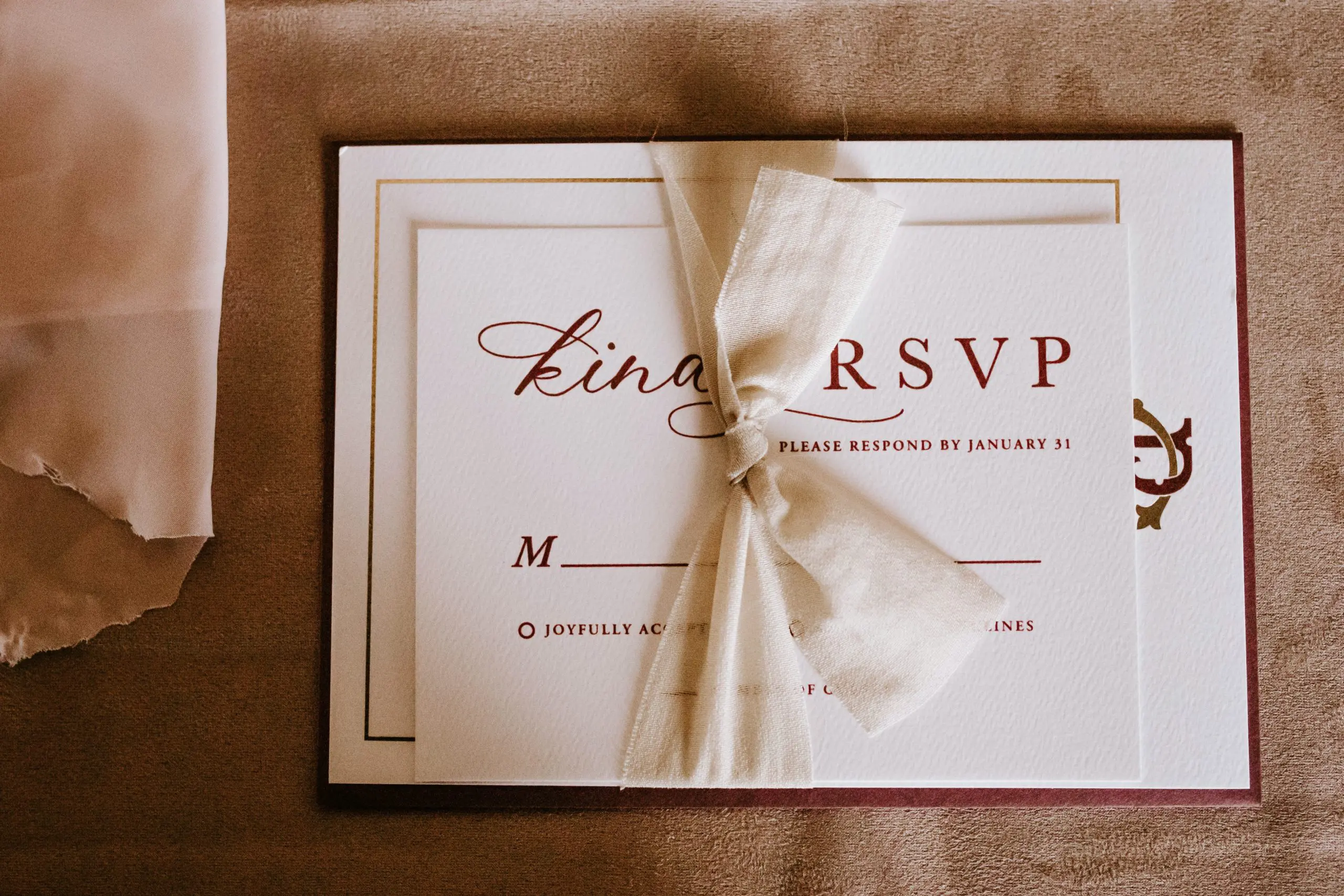
Planning a wedding involves a seemingly endless number of details. One crucial aspect is managing the guest list and sending out invitations. Efficient management of the guest list and invitations is essential in ensuring a smooth planning process and freeing you up to focus on the other tasks of preparing for your big day. We’re going to take you through lots of strategies and tips so that you’ll be well-equipped to handle your guest list and invitations like a pro.
Create a comprehensive guest list
Start by creating a comprehensive list of potential guests, including family members, close friends, and acquaintances. While your preferences as the couple getting married are certainly important, consider input from your families, as well. In order to facilitate smooth communication later on, populate your guest list with full names and contact information. This will streamline your process.
To optimize efficiency in the invitation process, categorize your guests into different groups. For example, you can have categories such as immediate family, extended family, close friends, colleagues, and acquaintances. Categorizing your guests will help you prioritize and allocate the number of invitations for each group accordingly.
Determine the wedding venue capacity
Before finalizing the guest list, make sure you know the exact capacity of your chosen wedding venue. Different venues have varying capacities, and understanding this will help ensure that the guest list aligns with the venue’s limitations. You can revise your guest list if needed after finding out how many people the venue can hold. Ideally, you should have an idea of how many guests you’d like to invite prior to booking the venue in order to prevent any oversights in this area. The last thing you want is to book a venue, realize that you have too many guests, and then need to cancel, lose your down payment, and start the search again.
Ceremony vs. reception
Determine whether you want to have a private ceremony and invite guests to just the reception, or invite everyone along for both. Additionally, it is also acceptable to invite certain guests only to the reception and not the ceremony, especially if you have limitations on venue capacity or budget constraints. However, it’s essential to communicate this clearly on the invitation so that your guests know what to expect. Avoid any confusion or disappointment by being transparent about the event they are invited to attend.
Designate a point of contact
If you do everything on your own, you’ll go crazy. Instead, assign a trusted friend or family member as the point of contact for guest inquiries. This person can answer questions, provide directions, and assist with any concerns that guests may have.
Plan for out-of-town guests
If you have guests traveling from out of town, provide them with a few accommodation suggestions, transportation information, and a list of local attractions to enhance their experience and make their visit more convenient.
Send out personalized invitations
Your invitations are a chance to showcase your unique style and personality as a couple while cluing your guests in about the tone of your big day. Craft thoughtful and aesthetically pleasing invitations that reflect the theme of your wedding. Of course, your invitations should also include all the necessary details, such as the date, time, location, dress code, RSVP info, and any additional information for guests.
Print or digital?
The choice between physical and digital invitations depends on your personal preferences and the overall theme of your wedding. Physical invitations are more elegant and formal, while digital invitations offer convenience and cost savings. That said, you can still plan a formal wedding and opt for digital invitations. Choose the option that aligns best with your vision while staying within budget.
Establish a clear RSVP system
Establish a clear RSVP system in order to effectively manage responses from guests. Make it easy for your guests by providing multiple methods of response, such as email, phone, or a dedicated wedding website–and make sure to update your master list immediately every time you receive an RSVP via any of these communication channels. We recommend keeping a google doc of all RSVP information; google docs can be easily accessed on all your devices, so if you’re out of the house when you get an RSVP, you can easily add it to the list on the go. This system will keep RSVPs from slipping through the cracks. Finally, make sure you clearly communicate the deadline for RSVPs to ensure an accurate headcount.
Excel is your friend
Maintain a spreadsheet or a dedicated tool to organize your guest list. Include columns for names, contact information, RSVP status, dietary restrictions, and any other relevant details. This will help you stay organized and easily track responses.
Utilize digital tools and wedding websites
Take advantage of digital tools and wedding websites to streamline the guest list and invitation process. These platforms provide templates, tracking features, and organizational tools, making it easier to manage and communicate with guests.
Managing dietary restrictions
Pay close attention to any dietary restrictions or allergies mentioned by guests during the RSVP process. This information will be crucial when planning the reception menu. It’s imperative to make sure that you have something delicious available for everyone, even if your great aunt Mary is a vegetarian who’s allergic to gluten, dairy, eggs, and sunlight.
To this end, you should also ask your venue or caterers when you first meet them about what options they have for various diets. Make sure they have tasty-sounding, well-rounded meal options for vegans, vegetarians, and people who suffer from various allergies. Additionally, consider asking whether they have experience tailoring menu options to specific fad diets, such as keto and paleo.
Finalizing the guest list and seating arrangements
As the RSVP deadline approaches, finalize the guest list. Aim to do so around 4-6 weeks before the wedding. When you have your final guest list, begin organizing seating arrangements, preferably at least 3-4 weeks prior to the wedding day.
Thoughtful seating arrangements
When making the seating arrangements, make sure to consider factors like relationships between guests, family dynamics, and any specific requests or preferences, and strategically place guests at tables where you expect they will feel comfortable and enjoy the company of those seated nearby.
Charting out the floor plan
In creating your seating chart, start by obtaining a floor plan or layout of your reception venue. This will give you a visual representation of the available space, tables, and any potential constraints you need to consider while arranging the seating. As you begin thinking about who should sit together beyond just people who know each other, aim for a balanced mix of personalities and backgrounds at each table. Anticipate which guests may not get along, and avoid seating them together.
Traditional head table vs. sweetheart table
When making your seating chart, you should also decide whether you would like a traditional head table with the wedding party or a sweetheart table just for you and your partner. Consider the layout and visibility of the head table, ensuring all guests can see and interact with you during the reception.
Utilize wedding seating chart tools
If you’re planning a medium-sized or large wedding, utilize a seating chart template or online tool to simplify the process. These tools often allow you to drag and drop names, move tables, and make adjustments more efficiently. They can also generate printable or digital versions for easy communication with your guests. Once you’ve finalized the seating arrangements, remember to create seating cards or a seating chart to display at the reception venue in order to help guests easily find their seats and minimize confusion.
Dealing with unexpected changes and last-minute additions
Be prepared for unexpected changes and last-minute additions to the guest list, as these things are more probable than a remote possibility. The key to every aspect of wedding planning is to maintain flexibility, and that applies here as well. Have backup plans at the ready in case of emergencies or unexpected circumstances. For example, when finalizing the guest list, leave a small buffer capacity so that you can still accommodate a few more if need be, while still staying within the parameters set by the venue. You should also have an extra table on standby just in case. It’s also possible that some guests could cancel, so have a waiting list ready of people you’d like to invite should some slots free up.
Addressing invitation etiquette
Familiarize yourself with proper invitation etiquette. If your wedding is formal, take care to address invitations correctly, using proper titles and formal language. Send invitations well in advance to give guests ample time to respond and make necessary arrangements.
Communicate effectively with guests
Make it a point to maintain clear, timely communication throughout the wedding planning process. Keep guests informed about any updates or changes, such as venue modifications or accommodation recommendations, and respond promptly to any inquiries or concerns from them.
Managing plus-one invitations
Decide on the plus-one policy and communicate it clearly to avoid any confusion. Determine whether guests are allowed to bring a date or if plus-ones are limited to married or long-term couples or to a select few important guests. Also, be sensitive to single guests who aren’t likely to know anyone else. If at all possible, allow them to bring plus-ones.

Frequently Asked Questions (FAQs) about wedding guest lists and invitations
Q: How far in advance should wedding invitations be sent?
A: Wedding invitations should ideally be sent out six to eight weeks before the wedding date. This allows guests enough time to respond and make necessary arrangements.
Q: How do I handle guests who don’t RSVP?
A: Don’t assume that a lack of RSVP means it’s a no unless you’re prepared to have a potentially uncomfortable conversation if they RSVP too late. Instead, follow up with any guests who don’t RSVP by the deadline. Reach out and obtain a definite response before you count them as a yes or a no. Protip: Keep your real RSVP deadline a secret, and allow for two weeks of wiggle room by setting the RSVP deadline on your invitations to two weeks prior to when you really need to know. People can be real flaky, and anticipating that will save you some stress.
Q: Can I invite additional guests if some of the invited guests decline?
A: If some invited guests decline, you can consider inviting additional guests from your backup list. However, try to get RSVPs early on enough that your backup guests won’t get suspicious and realize their last-minute invitation is because they weren’t your first choices.
Q: Should I include a dress code on the wedding invitations?
A: Yes! Don’t forget this. Let your guests know the theme of your wedding and what kind of attire they are expected to wear.
Q: How do I handle last-minute dietary restrictions?
A: Ask your caterer or venue in advance what they plan to do should you need to accommodate any last-minute dietary restrictions. Make sure they have a plan in place, and work together to make one if not. Again, flexibility is everything, and it’s very important that each guest can enjoy a nice meal. Make sure that you’re ready to pivot in order to make that happen–even if they don’t let you know until the last minute.
Q: What if someone RSVPs and then cancels at the last minute?
A: This is unfortunate, but it happens. Last-minute cancellations are challenging to handle, especially if they impact your seating or catering arrangements. In such cases, communicate with your venue and caterer to explore possible solutions. Depending on the circumstances, you may need to adjust the seating plan.
The bottom line on wedding guests and invitations
Managing wedding guest lists and invitations requires careful planning, organization, and attention to detail. Start early, follow the advice above, and commit to being as flexible as possible. Don’t forget to check out online tools to make your life easier. There are tons of free options available nowadays. In being thoughtful with your wedding guests and invitations plan, you’ll not only make your life easier but you’ll also keep your guests satisfied, and ultimately put together a well-organized and meaningful celebration. Happy planning!

Nicole Sheehey is the Head of Legal Content at HelloPrenup, and an Illinois licensed attorney. She has a wealth of knowledge and experience when it comes to prenuptial agreements. Nicole has Juris Doctor from John Marshall Law School. She has a deep understanding of the legal and financial implications of prenuptial agreements, and enjoys writing and collaborating with other attorneys on the nuances of the law. Nicole is passionate about helping couples locate the information they need when it comes to prenuptial agreements. You can reach Nicole here: Nicole@Helloprenup.com
0 Comments