
The all-inclusiveNorth Carolina prenup
Get aligned before your big day in the easiest and most affordable way.








What is a North Carolina prenup?
Everything to know about North Carolina prenups.
Prenuptial agreements (sometimes called "premarital agreements" in North Carolina) are contracts entered into before marriage between a couple. They outline things like property ownership, property division, alimony, taxes, pets, rings, and many other topics. Prenups can be emotional documents as much as they are practical ones. They help set expectations and boundaries for a couple prior to entering into marriage, which in turn can create a stronger foundation for the marriage.
Prenuptial agreements in North Carolina are governed by the state's version of the Uniform Premarital Agreement Act, N.C. Gen. Stat. §§ 52B-1 through 52B-11, with appellate decisions like Howell v. Landry, 96 N.C. App. 516 (1989) filling in how courts weigh timing, voluntariness, and financial disclosure. Below, everything you need to know, organized exactly the way a North Carolina family law attorney would walk you through it.



HelloPrenup proprietary data
North Carolina prenups by the numbers
What real North Carolina couples actually put in their prenups, pulled from HelloPrenup's own customer data. Every figure below reflects HelloPrenup users in North Carolina.
What do North Carolina couples actually put in their prenups?
- Average age of North Carolina couples getting a prenup
- 36.4
- Median debt disclosed by North Carolina couples
- $32,992
- North Carolina users who own a home
- 44.21%
- North Carolina users who want joint bank accounts
- 77.61%
- North Carolina couples who waive spousal supportWhether totally, based on time, or based on children
- 89.4%
- North Carolina couples who waive spousal support only if they have no childrenIf the couple has kids, either party may seek spousal support
- 31%
- North Carolina users who keep intellectual property separate
- 77%
- Average savings for North Carolina users with HelloPrenup's $599 prenupVersus the $8,000 average combined cost for separate counsel, per a North Carolina prenup attorney's estimate
- $7,401
In short: among HelloPrenup users in North Carolina, the average couple getting a prenup is 36.4 years old and discloses a median of $32,992 in debt. 44.21% own a home and 77.61% want joint bank accounts. 89.4% waive spousal support in some form, and about 31% waive it only if they do not have children. About 77% keep any intellectual property they own as separate property. North Carolina users save an average of $7,401 with HelloPrenup's $599 prenup.
Source: HelloPrenup internal customer data since 2021. Figures reflect HelloPrenup users in North Carolina. Savings compare HelloPrenup's $599 base price against the $8,000 average combined cost for separate counsel, based on an estimate from a North Carolina prenup attorney.
The controlling statute & cases
What law governs prenups in North Carolina?
North Carolina handles premarital agreements through its own version of the Uniform Premarital Agreement Act, found in Chapter 52B of the North Carolina General Statutes (N.C. Gen. Stat. §§ 52B-1 through 52B-11). This chapter lays out how an agreement gets formed, what it can cover, and the narrow set of reasons a court might refuse to honor it. North Carolina's appellate courts have also weighed in on agreements that predate the Act's coverage or that raise disclosure questions, with Howell v. Landry, 96 N.C. App. 516 (1989) often cited on that front.
Is North Carolina a UPAA state?
It is. North Carolina lawmakers modeled Chapter 52B directly on the Uniform Premarital Agreement Act (UPAA), and the legislature changed very little from the original uniform law. In particular, North Carolina did not materially alter the UPAA's provisions governing what a premarital agreement may cover.
North Carolina courts have, however, clarified the scope of permissible prenup terms. In Stewart v. Stewart, the court held that retirement accounts constitute "property" under North Carolina's UPAA, meaning couples may contract regarding their respective rights in retirement accounts. North Carolina courts have also recognized professional licenses acquired during marriage as valid subjects of a premarital agreement.
One notable modification appears in N.C. Gen. Stat. § 52B-7(b), which addresses spousal-support waivers. Like the UPAA, North Carolina law permits a court to require support where enforcement of a provision modifying or eliminating spousal support would cause a spouse to qualify for public assistance. North Carolina adds an additional safeguard: before ordering support on that basis, the court must determine that the spouse qualifies as a "dependent spouse" under § 50-16.1A and that the statutory requirements for postseparation support under § 50-16.2A or alimony under § 50-16.3A are satisfied.

Requirements for a North Carolina prenup
What are the requirements for a prenup in North Carolina?
Chapter 52B keeps the formation rules simple: N.C. Gen. Stat. § 52B-3 requires the agreement to be written and signed by both people, and no separate consideration is needed beyond the upcoming marriage itself. From there, § 52B-7 sets the bar for enforcement; the signing has to be voluntary, and the deal can't be unconscionable at the point where one side lacked fair financial disclosure, didn't sign a written waiver of that disclosure, and genuinely couldn't have known the other person's financial picture some other way. North Carolina doesn't build a countdown clock into the statute requiring a set number of days before the ceremony, and notarization isn't a precondition to validity either.
Requirements:
- In writing
- Signed by both parties
- Enforceable without separate consideration beyond the marriage itself
- Signed voluntarily
- Fair and reasonable disclosure of each party's property and financial obligations, or a written waiver of that disclosure
Does a prenup need to be notarized in North Carolina?
Chapter 52B doesn't demand it. A North Carolina couple can have a fully binding agreement without ever seeing a notary. Even so, plenty of North Carolina family law attorneys suggest doing it anyway, since a notarized signature block gives everyone a cleaner record of exactly when and by whom the document was signed, which can head off arguments later about authenticity.
Do both parties need a lawyer for a prenup in North Carolina?
There's no rule in Chapter 52B or in relevant North Carolina prenup case law forcing either person to retain a lawyer, including for a support waiver. What matters more is whether each side had a real shot at getting legal advice if they wanted it, that fact feeds directly into whether a judge later decides the agreement was voluntary and adequately disclosed under § 52B-7. Going without counsel won't sink a North Carolina prenup by itself, but it hands the other side an easier argument if the marriage ends and the agreement gets challenged.
What makes a prenup invalid in North Carolina?
Under § 52B-7, a court can refuse to enforce a North Carolina prenuptial agreement if the person fighting it proves they didn't sign it of their own free will, or that it was unconscionable when signed and paired with a real gap in financial disclosure that wasn't properly waived in writing. An agreement that skipped the basic writing-and-signature formality in § 52B-3 in the first place never gets off the ground to begin with.
How long before the wedding should I sign a prenup in North Carolina?
North Carolina hasn't written a minimum lead time into its statute. Practically speaking, though, cutting it close to the wedding date is a bad idea, the tighter the timeline, the stronger the argument becomes later that someone felt cornered into signing, which is precisely the kind of involuntariness claim § 52B-7 lets a court act on.
The North Carolina Court of Appeals addressed this issue directly in Howell v. Landry, 96 N.C. App. 516, 386 S.E.2d 610 (1989), holding that the shortness of the time interval between the presentation of a premarital agreement and the wedding date, when combined with a threat to call off the marriage if the agreement is not signed, is not sufficient per se to invalidate the agreement. The court further held that the mere shortness of the time interval between presentation and the wedding date is alone insufficient to permit a finding of duress or undue influence. This means that even a last-minute signing will not automatically void a prenuptial agreement in North Carolina, though it may be one factor a court considers.


You're writing your life story together. Make sure you're on the same page.
Start your prenup for freeWhat can & can't be in a North Carolina prenup
Does cheating void a prenup in North Carolina?
No, cheating does not automatically void a prenuptial agreement in North Carolina. Under North Carolina's Uniform Premarital Agreement Act (UPAA), N.C. Gen. Stat. §§ 52B-1 et seq., the grounds for invalidating a prenup are limited to specific circumstances surrounding the agreement's formation, not subsequent marital conduct such as adultery. However, if the prenup itself contains an infidelity clause, cheating may trigger specific financial consequences as expressly agreed upon by the parties.
Are infidelity clauses enforceable in North Carolina?
According to North Carolina-licensed prenup attorney, Megan Marfione, of Aspen Legal Studio:
The case she's referring to is Stoeckel v. Stoeckel, No. COA24-865 (N.C. Ct. App. Oct. 1, 2025). The agreement there said it became void "if Husband commits adultery or engages in any form of illicit sexual behavior as defined by North Carolina law." The husband argued that "adultery" should be limited to conduct before separation, the way North Carolina's alimony statutes are. The Court of Appeals refused to read in a limit the parties hadn't written, applied the plain definition of adultery, and voided the entire agreement based on post-separation conduct. The lesson is that a North Carolina court will enforce an infidelity clause exactly as drafted, which cuts in both directions depending on how carefully the triggering language was written.
Can a prenup include child custody in North Carolina?
No. Custody in North Carolina turns on the child's best interests under N.C. Gen. Stat. § 50-13.2, and a judge has to look at how things actually stand when custody becomes a live issue, not how a couple guessed things might look 5, 10, 20 years down the road, on their wedding day. A prenup agreement can't lock those terms in years ahead of time, since a private contract isn't a substitute for the court's individualized look at the child's situation when it matters.
Can a prenup protect a business in North Carolina?
Yes. Chapter 52B lets engaged couples spell out each person's rights in property, wherever and whenever it's acquired, and that reach extends comfortably to business ownership. A North Carolina prenup can designate a business someone owned going into the marriage or a business created during the marriage, plus whatever it grows into or eventually sells for, as that person's separate property rather than something folded into the marital estate. Spelling business interests out clearly in the prenuptial agreement is what keeps that property separate.
Can a prenup protect inheritance in North Carolina?
Yes. North Carolina's equitable distribution statute, N.C. Gen. Stat. § 50-20, already treats property one spouse receives by gift, devise, or descent as separate property outside the divisible pool in a divorce. That default protection can slip away, though, if inherited money gets mixed into joint accounts or if marital effort visibly grows its value. A North Carolina prenup agreement lets a couple nail down, in plain written terms, that inherited or gifted assets, and whatever they grow into, stay with the person who received them.
Marital property in North Carolina
Is North Carolina a community property state?
No. North Carolina divides property under an equitable distribution model, and it comes with a built-in starting point: N.C. Gen. Stat. § 50-20(c) directs courts toward an equal split of marital and divisible property unless equal turns out not to be equitable given the specific facts. So while it isn't automatic like a community property presumption, North Carolina courts do start from something close to fifty-fifty before adjusting, as necessary, based on the couple's situation.
How is property divided in a divorce in North Carolina without a prenup?
N.C. Gen. Stat. § 50-20 governs the process, and North Carolina has a feature many states skip: a distinct category called "divisible property," covering things like passive growth in the value of marital assets after separation, or a bonus earned during the marriage but paid out afterward. Courts weigh factors including the length of the marriage, each spouse's income and debts, and contributions to the marital estate, generally aiming for an equal division unless that would be unfair. Separate property, meanwhile, generally covers what a spouse owned coming into the marriage and anything received individually by gift or inheritance. A house bought during the marriage with either spouse's paycheck, for instance, would typically count as marital property split between them, regardless of whose name sits on the deed.
Does a prenup override equitable distribution in North Carolina?
Yes. A properly executed agreement under Chapter 52B lets a couple write their own rules instead of relying on § 50-20's default framework. That can mean spelling out ahead of time which assets are off-limits to division, how future acquisitions will be labeled, and how anything built together during the marriage gets split, replacing the court's equal-division starting point with whatever terms the couple actually agreed to.
What is separate property in North Carolina?
N.C. Gen. Stat. § 50-20(b)(2) defines it as property either spouse owned before the wedding, plus anything received individually during the marriage through gift, devise, or descent. Put plainly: what you brought into the marriage, and whatever's given or left to you alone rather than to the couple, generally stays out of the divisible pool, unless it gets blended with marital funds closely enough that its separate identity is lost. For example, about 77% of North Carolina HelloPrenup users choose to keep any intellectual property they own as separate property, meaning it is not part of a divorce settlement in the event of a separation.

Spousal support in North Carolina
Can a prenup waive spousal support in North Carolina?
Yes. N.C. Gen. Stat. § 52B-4 specifically lets North Carolina couples agree in advance to modify or eliminate spousal support altogether. That waiver still has to clear the same bar as everything else in the agreement under § 52B-7, voluntary signing, adequate disclosure, and no unconscionability, before a court will actually honor it. For example, about 31% of North Carolina couples agree to waive spousal support, but only if children are not had in the marriage, meaning that if the couple has kids, either party may seek spousal support. This is often used as a protection for stay-at-home moms who may need support after forgoing a career to stay home.
How is alimony determined in North Carolina without a prenup?
Absent a prenup, N.C. Gen. Stat. § 50-16.3A governs alimony (also known as spousal support) and fault plays an unusually direct role compared to most states. Courts weigh things like:
- The length of the marriage
- Each spouse's income, property, and debts
- Each spouse's age and physical, mental, and emotional health
- The standard of living the couple established
- Each party's contribution to the other's education, training, or earning power
- The needs of each spouse, including a dependent spouse's need for training or education
- Marital misconduct, including adultery, which carries mandatory consequences rather than merely discretionary weight
That last point sets North Carolina apart: proven adultery by the dependent spouse bars them from receiving alimony outright, and proven adultery by the supporting spouse requires the court to award alimony to the dependent spouse, regardless of how the other factors line up.
How much does a prenup cost in North Carolina?
How much does a prenup cost in North Carolina?
According to North Carolina-licensed prenup attorney, Megan Marfione, of Aspen Legal Studio:
Pricing depends heavily on how complicated a couple's finances are and who's drafting it, but a fairly standard North Carolina prenup, drafted and reviewed by an attorney, tends to land somewhere between $1,500 and $8,500+ per couple.
What is the cheapest way to get a prenup in North Carolina?
Generally, the least expensive route is building the agreement on an online prenup platform first, then paying a North Carolina-licensed attorney a flat fee just to review the finished draft, rather than paying hourly for an attorney to draft everything from a blank page. HelloPrenup is one option that lets couples work through a guided questionnaire on their own and then loop in a licensed attorney for review and explanation afterward. North Carolina users save an average of $7,401 with HelloPrenup's $599 prenup, based on the $8,000 average combined cost for separate counsel based on the estimate from North Carolina prenup attorney Megan Marfione above.
How much does a prenup lawyer cost in North Carolina?
The average North Carolina attorney charges $316 per hour. Attorneys handling premarital agreements in North Carolina generally bill somewhere between $250 and $400 an hour, with Charlotte and the Raleigh-Durham area often sitting toward the top of that range. A basic agreement with straightforward assets typically needs fewer billable hours than one involving a business valuation, a trust, or a lot of back-and-forth between attorneys.

Want some guidance? Book a free consultation
Learn more about how HelloPrenup works and what to expect about the process. We're thrilled to answer any questions you have and help you get started.
Book a consultationHow to get a prenup in North Carolina
How do I get a prenup in North Carolina?
Most couples end up choosing between two routes: hiring separate attorneys for each person, where one drafts and the other reviews and negotiates, or using an online prenup platform to build the agreement first and bringing in attorney review afterward. The first option usually costs more and takes longer, since an attorney bills for drafting on top of everything else. Building the initial draft online and saving attorneys for review tends to be quicker and cheaper.
Can I write my own prenup in North Carolina?
Generally, yes, nothing in Chapter 52B or case law forces either person to hire a lawyer. That said, going fully solo raises the stakes if the marriage ever ends, since vague language or gaps in financial disclosure make an agreement much easier to challenge under § 52B-7. Plenty of couples split the difference: they draft the substance themselves through a guided platform, then bring in an attorney just to look it over before anyone signs.
How long does it take to get a prenup in North Carolina?
Timelines run anywhere from a couple of weeks to a couple of months, depending mostly on how quickly both people pull together their financial documents and how busy their attorneys are. That is if you're going the traditional route of hiring two attorneys. If you go the online route, it tends to take much less time, since you're typically working with an online questionnaire. In addition, since fair disclosure is central to enforceability under North Carolina's premarital agreement act, it's worth taking the time to gather account statements, property records, and debts properly rather than rushing that part.
Do I need a lawyer to get a prenup in North Carolina?
No. North Carolina law does not require either party to have an attorney to create a valid prenuptial agreement. Under the North Carolina Uniform Premarital Agreement Act (UPAA), the only formal requirements are that the agreement be in writing and signed by both parties. However, while legal representation is not legally mandated, the absence of counsel can be a relevant factor in a court's analysis of whether the agreement was voluntarily executed and is therefore enforceable. (Jordan v. Neptune, No. COA25-84, 2026 WL 2248391 (N.C. Ct. App. Aug. 5, 2026)).

Caselaw & enforceability
Are prenups enforceable in North Carolina?
Yes, provided the agreement clears the requirements set out in Chapter 52B. Someone trying to get out of an agreement has to prove either that they didn't sign voluntarily, or that the deal was unconscionable at signing combined with inadequate financial disclosure. North Carolina courts have also examined issues of fairness and disclosure in agreements falling outside the Act's coverage, as in Howell v. Landry, 96 N.C. App. 516 (1989).
How hard is it to break a prenup in North Carolina?
Fairly hard. The person challenging it carries the burden and has to actually prove one of the narrow grounds in § 52B-7, that the signing wasn't voluntary, or that the terms were unconscionable when signed and paired with a real disclosure failure. Simply wishing the deal had gone differently, without evidence tied to how the agreement was actually reached, won't get an otherwise properly executed North Carolina prenup thrown out.
Can a judge throw out a prenup in North Carolina?
Yes, but only for one of the reasons § 52B-7 actually recognizes, not because the terms look lopsided in hindsight. A North Carolina judge decides unconscionability as a matter of law, weighing whether the signing was voluntary and whether both sides had a fair picture of each other's finances at the time. An agreement that clears both of those hurdles is tough to unwind.
For example, in Tiryakian v. Tiryakian, 91 N.C. App. 128, 370 S.E.2d 852 (1988), a North Carolina judge threw out a prenup for a lack of financial disclosure. One day before the couple's wedding, the husband called his wife and asked her to come to his attorney's office to sign "a legal document." He gave her the agreement in a parking lot; she never read it, never consulted an attorney, and returned the signed copies within forty minutes. The court found that "the husband failed to make a full disclosure of his financial status" and that the wife "signed without knowledge of its contents and without seeking independent legal advice."
What can void a prenup in North Carolina?
A North Carolina premarital agreement can fall apart for a fairly short list of reasons:
- It was never put in writing or signed by both people
- It wasn't signed voluntarily
- It was unconscionable when signed and paired with a lack of fair financial disclosure that wasn't properly waived
- A term violates public policy or calls for something illegal
Outside those situations, North Carolina courts tend to hold couples to what they agreed to.
You're writing your life story together. Make sure you're on the same page.
Start your prenup for freeDuration & after-marriage
How long does a prenup last in North Carolina?
A valid North Carolina premarital agreement generally stays in force for as long as the marriage does, unless the couple adds an expiration date clause (sometimes called a "sunset clause"). Some couples add a "sunset clause" that ends parts of the agreement, such as alimony provisions, or all of the agreement, after a certain number of years, often as a nod to the idea that a long marriage eventually becomes financially intertwined enough that the original terms no longer make as much sense.
Can you get a prenup after marriage in North Carolina?
Not exactly, by definition, a prenuptial agreement has to be signed before the wedding. If a North Carolina couple already married wants something similar, they're generally looking at a marital or separation agreement instead, which falls under a different part of state law. N.C. Gen. Stat. § 52-10 governs contracts between spouses and these require formalities, including a certificate of acknowledgment, that Chapter 52B doesn't impose on prenuptial agreements. In practice, that means a North Carolina couple looking to sort out property or support after the wedding is working under a somewhat different, and in some ways stricter, set of rules than an engaged couple signing a prenup. Couples in that position often look at a postnuptial agreement instead.
Can you change a prenup in North Carolina?
Yes. N.C. Gen. Stat. § 52B-6 allows amendment or revocation, but only through a new written agreement signed by both spouses, and no fresh consideration is needed to make the change stick. North Carolina doesn't impose a waiting period on the original agreement or on later changes, but it's worth giving both people real time to look over any proposed update before signing, since a rushed amendment invites the same kind of voluntariness challenge the original agreement would face under § 52B-7.
Cross-border & recognition
Is a prenup signed in another state valid in North Carolina?
North Carolina law, through § 52B-4, specifically permits couples to write a choice-of-law clause into their agreement, naming another state's law to govern how it's interpreted. Even so, a North Carolina court asked to enforce that out-of-state agreement will still check whether it meets North Carolina's own baseline requirements under § 52B-7 and whether enforcing a given term would clash with North Carolina public policy, regardless of which state's law the couple picked.
What happens to my North Carolina prenup if I move to another state?
It depends on how the new state handles choice-of-law clauses and its own prenup rules. Since plenty of other states also follow the UPAA, many will recognize and apply a North Carolina choice-of-law provision without much friction. States built around a different framework may still respect the couple's choice as a matter of general contract law, while carving out exceptions for anything that runs against their own public policy. For a couple currently rooted in North Carolina but open to relocating down the road, a clearly written choice-of-law clause improves the odds that North Carolina law keeps governing the agreement, though it's not a guarantee everywhere.
North Carolina caselaw
Important prenup case law in North Carolina
Five North Carolina decisions that shape how courts evaluate prenups. Click any case for the full opinion.
N.C. Court of Appeals · 1989
Howell v. Landry
96 N.C. App. 516, 386 S.E.2d 610 (1989)
North Carolina's leading timing case. A short interval between presentation and the wedding, even with a threat to call off the marriage, is not enough on its own to prove duress or undue influence.
N.C. Court of Appeals · 1988
Tiryakian v. Tiryakian
91 N.C. App. 128, 370 S.E.2d 852 (1988)
Threw out an antenuptial agreement signed the day before the wedding, where the husband failed to fully disclose his finances and the wife signed without reading it or getting her own lawyer.
N.C. Court of Appeals · 2000
Stewart v. Stewart
141 N.C. App. 236 (2000)
Held that retirement accounts are "property" under North Carolina's UPAA, so couples can contract about their rights in those accounts. Also treated a professional license as separate property.
N.C. Court of Appeals · 2025
Stoeckel v. Stoeckel
No. COA24-865 (N.C. Ct. App. 2025)
Voided an entire prenup under its own infidelity clause, refusing to read a pre-separation time limit into language the parties never wrote. North Carolina courts enforce a cheating clause exactly as drafted.
N.C. Court of Appeals · 2026
Jordan v. Neptune
No. COA25-84, 2026 WL 2248391 (N.C. Ct. App. 2026)
Upheld a premarital agreement against a claim that the absence of independent counsel made the signing involuntary, where the party never asked for more time or sought a lawyer before signing.
How it works
Easy, all-in-one solution designed to
complete an enforceable agreement in about a day
Step 1
Fill out your questionnaires
Both you and your partner will fill out your own North Carolina-specific questionnaires on your own HelloPrenup accounts. The questions cover separate property, gifts & inheritance, debts, pets, businesses, and the issues that matter most under North Carolina's premarital agreement act, like fair and reasonable financial disclosure.

Step 2
Align on clauses together
Compare answers with your partner and align on differences to build your custom North Carolina clauses together. Negotiate openly without back-and-forth attorney emails.

Step 3 (optional)
Review with a North Carolina attorney
Under N.C. Gen. Stat. § 52B-7, fair and reasonable financial disclosure is the single biggest enforceability lever you can pull in North Carolina, and courts also weigh whether each partner had independent counsel. Add a North Carolina attorney directly in your account for $799 flat, per partner. That's well below the $1,500 to $8,500+ typical for a traditional North Carolina prenup.

Step 4
Review & notarize your prenup
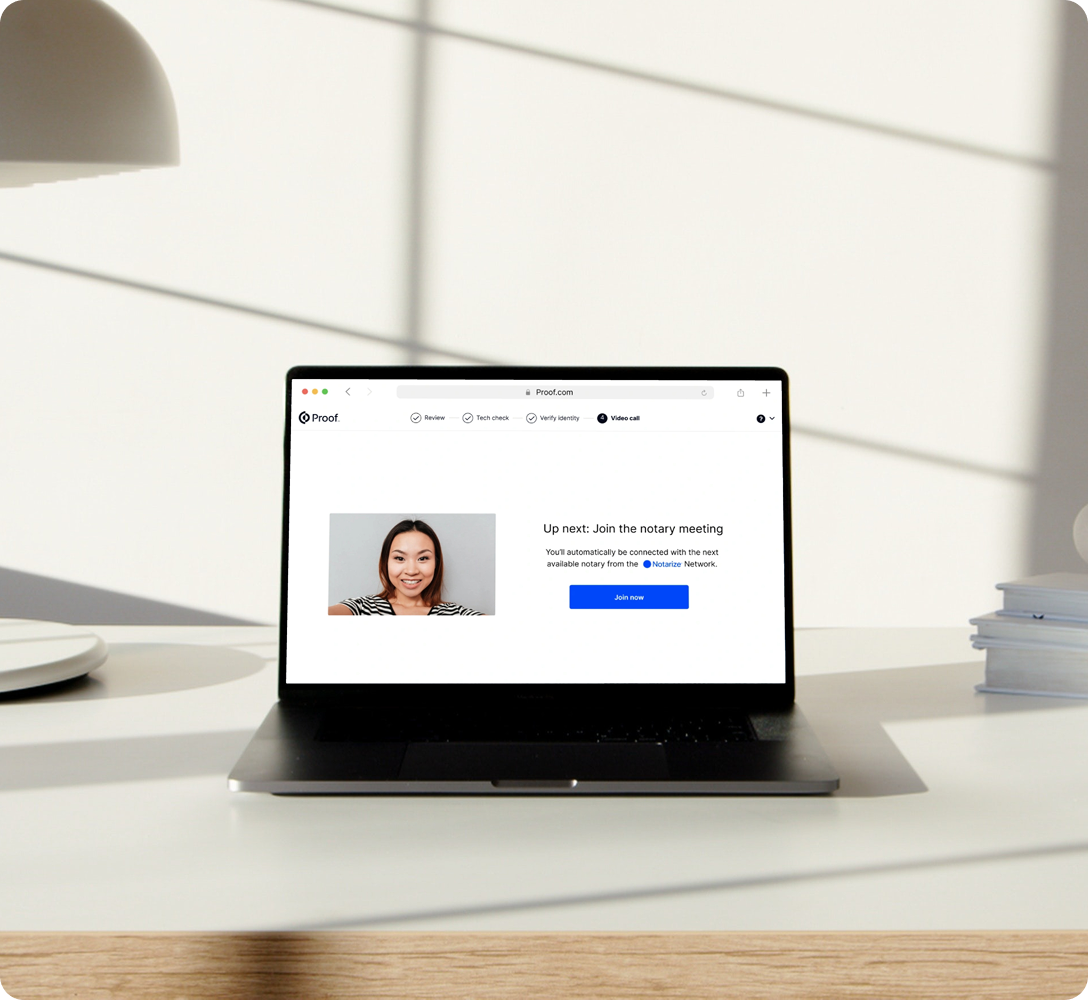
Review your completed North Carolina prenup and notarize it easily online through our partner, Proof. Notarization isn't required in North Carolina, but it's a sensible extra step that helps confirm who signed and when.
Humanizing the legal experience without expensive price tags
HelloPrenup has partnered with over 100 elite attorneys across the country, including North Carolina-licensed family lawyers. Every attorney meets our strict standards for quality services.
Under N.C. Gen. Stat. § 52B-7, having a North Carolina attorney review your agreement is one of the biggest enforceability levers you can pull. You can add North Carolina attorney services directly in your account.
Attorney services are optional* peace-of-mind add-ons

Why choose HelloPrenup?

Attorney-backed
Our prenups are created by licensed attorneys and tailored to North Carolina's specific laws, including the disclosure standard in Chapter 52B.

A guided, stress-free process
No awkward conversations or confusing legal jargon. Our platform walks you through every North Carolina-specific decision, together.

Built for complex assets
North Carolina earners hold more than salaries. HelloPrenup includes clauses tailored to stock options, RSUs, vesting equity, retirement accounts, and business interests in any LLC, partnership, or sole proprietorship.
A TRUSTED PRENUP THAT'S AFFORDABLE
We value full financial transparency
We encourage every couple to enter their marriage with full financial transparency and we're starting our relationship with you the same way. Our prenup packages are flexible to adapt to exactly what you and your partner need.
It's free to start creating and then requires a flat payment of $599 to complete. Along the way, you can add on additional services as needed, any time. Availability of these services is dependent on your state. Use the calculator to get an estimate.
You can also choose to sign now and pay later with:


Coming soon to your state!
We're live in 49 states. Join the waitlist to be notified.
Your customized total per couple
Same-day completion
$599
Prenups across North Carolina
Local guides to prenups and prenup lawyers in North Carolina cities, all grounded in North Carolina law.
It's all in a state of mind
 Alabama
.svg)
 Ohio
Ohio
 Florida
 Georgia
.svg) Massachusetts
Massachusetts
 Mississippi
 New York
North Carolina (you're here)
New York
North Carolina (you're here)
 Tennessee
 Texas
Texas
Frequently asked questions about North Carolina prenups
Direct answers to the most common questions about prenuptial agreements in North Carolina, with statute and case citations.
Articles on North Carolina prenups
See all prenup articles
When Adultery Voids the Prenup: North Carolina Court Enforces Strict Language in Stoeckel v. Stoecke
In a recent family-law decision from North Carolina, the state's courts underscored a lesson that should be front and center for anyone considering a prenuptial agreement. Specificity matters.…

Do I Need a Lawyer for a Valid Prenup in North Carolina?
You're getting married in North Carolina! Whether you're planning a ceremony in the Blue Ridge Mountains, saying “I do” by the beaches of the Outer Banks, or celebrating in the historic charm of Raleigh or Charlotte, this state has a way of making weddings unforgettable.…

Are Prenuptial Agreements Enforceable in North Carolina?
Planning a wedding in North Carolina? Congratulations! Before saying, ‘I do,’ don't forget to add ‘Get a prenup’ to your wedding to-do list.…

The information on this page was last updated in October, 2026. HelloPrenup provides a platform for self-help. The information provided by Hello Prenup along with the content on our website related to legal matters ("Legal Information") is provided for your private use and does not constitute legal advice. We do not review any information you provide us for legal accuracy or sufficiency, draw legal conclusions, provide opinions about your selection of forms, or apply the law to the facts of your situation. If you need legal advice for a specific problem, you should consult with a licensed attorney. Neither Hello Prenup nor any information provided by Hello Prenup is a substitute for legal advice from a qualified attorney licensed to practice in an appropriate jurisdiction.