
The all-inclusiveFlorida prenup
Get aligned before your big day in the easiest and most affordable way.







What is a Florida prenup?
Everything to know about Florida prenups.
Prenuptial agreements (sometimes called "premarital agreements" in Florida) are contracts entered into before marriage between a couple. They outline things like property ownership, property division, alimony, taxes, pets, rings, and many other topics. Prenups can be emotional documents as much as they are practical ones. They help set expectations and boundaries for a couple prior to entering into marriage, which in turn can create a stronger foundation for the marriage.
Prenuptial agreements in Florida are governed by Fla. Stat. § 61.079 and the relevant state case law that helps shape the laws around prenups. Below, everything you need to know, organized exactly the way a Florida family law attorney would walk you through it.


HelloPrenup proprietary data
Florida prenups by the numbers
What real Florida couples actually put in their prenups, pulled from HelloPrenup's own customer data. Every figure below reflects HelloPrenup users in Florida.
What do Florida couples actually put in their prenups?
- Average age of Florida couples getting a prenup
- 37.7
- Median debt disclosed by Florida couples
- $29,341
- Florida users who own real estate
- 41.2%
- Florida users who have a business
- 30.6%
- Florida users who want joint bank accounts
- 76.8%
- Florida couples who waive spousal supportWhether totally, based on time, or based on children
- 88.5%
- Florida couples with an infidelity clause in their prenup
- 33.8%
- Average savings for Florida couples with HelloPrenupOr $1,303 when both partners add optional attorneys
- $2,901
In short: among HelloPrenup users in Florida, the average couple getting a prenup is 37.7 years old and discloses a median of $29,341 in debt. 41.2% own real estate and 30.6% have a business. 76.8% want joint bank accounts, 88.5% waive spousal support, and 33.8% include an infidelity clause. Florida couples save an average of $2,901 with HelloPrenup, or $1,303 even when both partners add optional attorneys.
Source: HelloPrenup internal customer data since 2021. Figures reflect HelloPrenup users in Florida. Savings compare HelloPrenup's $599 base price, or $2,197 with two $799 attorney add-ons, against the $3,500 flat fee Florida attorneys typically charge for a prenup.
The controlling statute & cases
What law governs prenups in Florida?
Florida prenuptial agreements are governed by statutes such as Fla. Stat. § 61.079 and case law (i.e., court opinions that help interpret statutes). Under Fla. Stat. § 61.079, the legislature has laid out the requirements for a valid and enforceable agreement, including what may be included in prenups. Case law takes it a step further and helps fill in any gaps in the law that the statute doesn't already cover. (See Casto v. Casto, 508 So.2d 330 (1987)).
Is Florida a UPAA state?
Yes, Florida is one of the 28 states, plus D.C., that have adopted (in whole or in part) the Uniform Premarital Agreement Act (UPAA). The UPAA is a uniform statute made by the Uniform Law Commission in an attempt to standardize the laws surrounding prenuptial agreements across the U.S. When the majority of states have adopted the UPAA, it makes it easier for couples with cross-border prenups to enforce their agreements in other states.

Requirements for a Florida prenup
What are the requirements for a prenup in Florida?
According to Fla. Stat. § 61.079, prenups must be in writing and signed, be voluntarily entered into, not be unconscionable, and include fair and reasonable financial disclosure. Prenups must also be free from fraud, duress, coercion, deceit, and overreaching. (Casto v. Casto, 508 So.2d 330, 333 (Fla. 1987)). Disclosure covers debts as well as assets: among HelloPrenup couples in Florida, the median debt disclosed is $29,341.
Further, two witnesses are typically included for prenups in Florida. While they are not strictly required for a prenup, they are strictly required when parties are waiving rights to one another's estates in death. (Fla. Stat. § 732.702). Thus, many Florida legal practitioners include two witnesses as the standard for all prenuptial agreements as an additional safeguard.
Requirements:
- In writing
- Signed
- Witnessed (two witnesses, required if waiving estate rights in death, standard practice for all Florida prenups)
- Fair and reasonable financial disclosure
- Entered into voluntarily
- Not unconscionable
- Free from fraud, duress, coercion, deceit, and overreaching
Does a prenup need to be notarized in Florida?
Notarization is not statutorily required in Florida to create a valid and enforceable prenuptial agreement. However, many lawyers strongly recommend that prenups be notarized anyway. It is an affordable and easy way to add an additional layer of protection to the agreement to deter arguments that one party didn't sign it or that they didn't know they were signing a prenup. Notarization differs from witnessing because a licensed notary public attests to the authenticity of the signatures. On the other hand, when we talk about "witnesses," we refer to layperson witnesses, who are two people who are not part of the agreement.
Do both parties need a lawyer for a prenup in Florida?
Lawyers are not required for a valid prenup in Florida. In the landmark Florida prenup case, Casto, the Florida Supreme Court explicitly rejected the concept that lawyers are essential for a valid prenup. The court stated, "to hold that competent counsel is essential for a valid property settlement agreement is inconsistent with our prior holding that a complaining spouse need not have legal counsel for a valid agreement" (Casto v. Casto, 508 So.2d 330 (1987)).
What makes a prenup invalid in Florida?
A prenuptial agreement can be deemed invalid in Florida for several key reasons. First, a prenup may be deemed invalid if it was improperly executed, i.e., lacked signatures or witnesses for an estate waiver. Second, it can be deemed invalid if there was no fair and reasonable financial disclosure and a lack of a proper waiver of such. Third, if the agreement is deemed unconscionable (i.e., overly unfair). Fourth, if the agreement was a product of duress, coercion, or some other bad act by either of the parties.
How long before the wedding should I sign a prenup in Florida?
There is no strict requirement regarding when a prenup should be signed before the wedding in Florida. However, prenup attorneys in the state often recommend signing the agreement 30 days before the wedding to avoid arguments of duress or coercion later on. However, prenups signed less than 30 days before the wedding are often enforced. For example, in Gordon v. Gordon, a Florida Appellate Court upheld a prenuptial agreement that was signed only 10 days before the wedding, despite the wife arguing that she was pressured into signing and that the husband failed to fully disclose his assets. (Gordon v. Gordon, 25 So. 3d 615 (Fla. Dist. Ct. App. 2009)).


You're writing your life story together. Make sure you're on the same page.
Start your prenup for freeWhat can & can't be in a Florida prenup
Does cheating void a prenup in Florida?
No, cheating does not void a prenup in Florida. Prenuptial agreements are analyzed based on whether they are created with the proper formalities (such as signatures and witnesses), the conduct of the parties in creating the contract (i.e., is there a lack of fraud and duress), and the fairness of the agreement. When courts examine the parties' conduct, they look for fraud, duress, coercion, overreaching, deceit, or concealment of information. (Casto v. Casto, 508 So.2d 330 (1987)). They are not looking for infidelity.
Are infidelity clauses enforceable in Florida?
If infidelity clauses are drafted in a particular way, they may be able to be upheld in Florida. For example, in Weymouth v. Weymouth, 87 So.3d 30 (Fla. App. 4th Dist. 2012), the court upheld a provision for alimony in a prenup if the basis for divorce was adultery. In addition, Fla. Stat. § 61.08 says that courts may take into consideration adultery when awarding alimony. However, infidelity clauses that impose hefty financial penalties for cheating may not be enforced in Florida. In practice, some practitioners may include infidelity clauses, but still advise their clients that they may not hold up. On the other hand, some practitioners may be squarely against it as they do not believe it is worth the risk of including an unenforceable clause (unless it is drafted like the clause in the Weymouth case). Despite that uncertainty, 33.8% of HelloPrenup couples in Florida include an infidelity clause in their prenup.
Can a prenup include child custody in Florida?
No, prenups in Florida cannot include child custody clauses. According to Fla. Stat. § 61.079(4), only matters surrounding property, debt, estate rights, spousal support, life insurance, and choice of law may be included in a prenup. Including child custody clauses would be against public policy in Florida because child custody must be determined based on the best interests of the child at the time of the custody decision, not by agreement between the parents.
Can a prenup protect a business in Florida?
Yes, a Florida prenup can protect businesses by ensuring they stay separate property of the business owner. Through a valid and enforceable prenuptial agreement, couples can outline ownership of business interests, equipment, equity, income, and debt. This includes the existing business assets and future growth of the business, as well. You may even include protections for businesses that don't exist yet, but may in the future. Business owners are a sizable share of the Florida couples doing this: 30.6% of HelloPrenup users in Florida report owning a business.
Can a prenup protect inheritance in Florida?
Yes, a Florida prenup can protect people's future inheritances. One of the most common reasons for getting a prenup is to protect family money that will be passed down one day during the marriage. Prenuptial agreements can effectively protect inheritances that parties expect to receive in the future as part of their families' estates. Marking any future inheritances as separate property in an enforceable agreement can protect this money to ensure it is not divisible in a divorce.
Marital property in Florida
Is Florida a community property state?
No, Florida is not a community property state, it is an equitable distribution state. This means that property acquired during the marriage is not automatically split 50-50, but instead, divided equitably based on a list of statutory factors and judicial discretion. On the other hand, community property states generally split any property acquired during the marriage 50-50, without taking into account the surrounding circumstances.
How is property divided in a divorce in Florida without a prenup?
In Florida, property is divided equitably rather than equally (though sometimes property may end up being divided equally). A judge determining the property division under Fla. Stat. § 61.075 looks to a set of factors, including:
- Each spouse's contributions to the marriage
- Each spouse's financial situation
- Length of the marriage
- Career/education sacrifices
- Whether one spouse supported the other's career/education
- Keeping certain assets intact (such as a business)
- Each spouse's contributions to assets and debts
- Keeping the marital home for children or fairness reasons
- Waste/misuse of marital money
- Any other factor necessary for fairness
A court will look at the above factors to determine how to divide up property, and it may not be 50-50, it may instead be slightly uneven in order to facilitate a fair outcome. That discretion is why real estate is so often the asset couples want a prenup to settle in advance; 41.2% of HelloPrenup users in Florida own real estate.
Does a prenup override equitable distribution principles in Florida?
Yes, a valid and enforceable prenup in Florida will override the default equitable distribution principles in Fla. Stat. § 61.075. Instead of letting a judge consider factors and make a decision based on the circumstances, a prenup can divide property according to how the couple wants it distributed in a divorce. In fact, among Florida HelloPrenup users, about 46% of customers chose to make marital property divided by contribution, directly overriding equitable distribution principles in Florida.
What is separate property in Florida?
"Separate property" is the term for property that is owned by one individual in the marriage separately from their partner. In Florida, this term is referred to as "Non-marital property," but it has the same meaning. Non-marital property (or property owned by only one spouse), is considered:
- Property/debt acquired prior to the marriage, and anything later exchanged for the same property/debt.
- Gifts or inheritances received individually by one spouse, and anything later exchanged for the same property.
- Income earned from separate property during the marriage, unless the couple treated or relied on that income as marital property.
- Debts created by one spouse through forgery or unauthorized signatures.
- Certain inherited or gifted real estate that remains titled solely in one spouse's name and was not converted into jointly owned marital property.
- Any property properly excluded by prenup or postnup.
See Fla. Stat. § 61.075(4)(b) for the fine print on what is considered non-marital property in Florida.

Alimony in Florida
Can a prenup waive alimony in Florida?
Yes, a prenuptial agreement can waive alimony in Florida. Interestingly, about 89% of HelloPrenup users in Florida chose to waive alimony in some way or another in their HelloPrenup prenup. An alimony waiver is an agreement between the parties that neither party will seek out financial support from the other person (i.e., alimony) in the event of a divorce. As long as the prenup is valid and enforceable, then the waiver of alimony will hold up in court. If the validity of the waiver is challenged, a court may look to whether it was induced through any type of fraud, overreaching, duress, etc. If not, then it's likely that the waiver will stand and the other party will not be able to receive alimony.
Does a prenup prevent spousal support in Florida?
Yes, a prenup can prevent spousal support (alimony) in Florida if it is drafted to do so. Prenups are drafted to meet the needs of the couple. If a couple wants to include an alimony waiver in their prenup, they can do so. If they want to keep alimony on the table in the event of a divorce, perhaps because one party is a stay-at-home parent, then it is within their rights to do so, as well.
How is alimony determined in Florida without a prenup?
According to Fla. Stat. § 61.08, alimony is determined by inquiring whether there is one spouse who actually needs the alimony and whether the other spouse has the means to pay it. If that is established, then the court considers a variety of factors to determine the type of alimony, how much, and for how long.
Here are the factors that may be considered by a court:
- Length of the marriage
- Standard of living during the marriage
- Each spouse's age
- Each spouse's health
- Each spouse's financial situation
- Each spouse's earning capacity and employability
- The contributions each spouse made to the marriage (this includes childcare)
- The childcare responsibilities after divorce
- Any other factor the court deems relevant to achieve fairness
As you can see, each case of alimony will be very different depending on the circumstances. For example, courts tend to award more and longer-duration alimony for longer marriages.
How much does a prenup cost in Florida?
How much does a prenup cost in Florida?
The cost of a prenup can vary. According to Florida family law attorney Adalbert Martinez, they typically average around a $3,500 flat fee. However, depending on the complexity of the assets, high net worth clients, or if they expect a lot of back-and-forth negotiation, attorneys may likely bill hourly, between $300 to $600 per hour. In addition, with the introduction of online prenup platforms, you can also get a more affordable prenup online for much cheaper flat rates. For example, a Florida prenup with HelloPrenup costs $599. Measured against that $3,500 flat fee, Florida couples save an average of $2,901 with HelloPrenup, or $1,303 even when both partners add optional attorneys.
What is the cheapest way to get a prenup in Florida?
Generally, the cheapest way to get a valid and enforceable prenup is through online prenup platforms. There are two ways to get a prenup: (1) through the use of traditional attorneys or (2) through the use of reputable online prenup platforms. Either way can yield an enforceable agreement in Florida; it mostly depends on your preferences and budget. With some online prenup platforms, you may be able to do a hybrid of both methods: downloading a prenup online while having a real lawyer review it.
How much does a prenup lawyer cost in Florida?
The average cost of a lawyer in Florida is $353 per hour. What determines this hourly rate varies in Florida, depending on the geographic location (Miami vs. Jacksonville), the attorney's accolades/experience, and the complexity of the customer's case. When lawyers charge hourly for prenups, the cost can quickly rack up when the customer has a complex situation, such as intricate finances, lots of drafting requests, and/or back-and-forth negotiations. All of these factors can drive up the price of a prenup in Florida.

Want some guidance? Book a free consultation
Learn more about how HelloPrenup works and what to expect about the process. We're thrilled to answer any questions you have and help you get started.
Book a consultationHow to get a prenup in Florida
How do I get a prenup in Florida?
You can get an enforceable prenup by hiring two attorneys or using a reputable online prenup platform. With some online prenups, you may be able to draft your agreement online and hire an attorney to review it. For example, HelloPrenup allows you to generate a Florida prenup and then gives you the option to hire Florida attorneys at flat rates to review that agreement. This is often the most affordable and efficient way to get a prenup these days.
Can I write my own prenup in Florida?
It is theoretically possible to write your own prenup in Florida and have it hold up in court, but it's safer to rely on an attorney or a reputable online prenup platform to ensure your agreement is enforceable. There is no statutory or court-opinion-based requirement to have a lawyer represent you in order to create a valid agreement. Instead, a valid prenup requires signatures, witnesses, proper financial disclosure, voluntariness, reasonableness, and a lack of fraud, duress/coercion, and overreaching.
How long does it take to get a prenup in Florida?
Getting a prenup in Florida largely depends on each fiancé's commitment to the process. With HelloPrenup, the process typically takes a few days. When customers add on attorneys, that extends the time it takes customers to about a week. When couples decide to go the traditional route of hiring two lawyers, the timeframe varies based on attorney availability, speed, and the customer's dedication to finalizing the document. For example, if customers take several weeks to gather financial statements and complete their financial disclosures, the overall timeline will be extended accordingly.
Do I need a lawyer to get a prenup in Florida?
No, a lawyer is not technically required for a valid and enforceable prenup in Florida. (Casto v. Casto, 508 So.2d 330 (1987)). While the presence of an attorney may be one factor that a court considers when evaluating whether there was fraud, duress, or overreaching, it's not a requisite factor to enforcing a prenup in Florida. The policy behind this is to encourage parties to decide their own finances and avoid lengthy divorce disputes down the road.

Caselaw & enforceability
Are prenups enforceable in Florida?
Yes, prenups are enforceable in Florida under Fla. Stat. § 61.079, Florida's version of the Uniform Premarital Agreement Act (UPAA). There are rules for enforcement, such as ensuring the document is in writing, signed, witnessed if estates upon death are being waived, financial disclosure, voluntariness, and lack of unconscionability. With these factors in place, Florida courts are very likely to enforce your prenuptial agreement.
How hard is it to break a prenup in Florida?
It is challenging to break a prenup in Florida, though it is not impossible. Since Florida has adopted a version of the Uniform Premarital Agreement Act under Fla. Stat. § 61.079, it tells us what we need to know about "breaking" a prenup in Florida. In addition, we can look to case law, such as in Casto v. Casto, 508 So.2d 330 (1987), where court opinions help shape and interpret the laws on prenups. A spouse who wants to break a prenup in Florida must show that the agreement was not entered into voluntarily (that there was fraud, overreaching, duress, coercion), show inadequate financial disclosure, that the agreement was not executed properly, or is unconscionable.
Can a judge throw out a prenup in Florida?
Yes, a judge in Florida can technically throw out a prenup, but not for just "any" reason. There needs to be a reason rooted in Florida law in order for a divorce court judge to throw out the prenup. The reasons a court may throw out a prenup in Florida include:
- Failure to execute the agreement properly (lack of signatures or witnesses for certain waivers)
- Lack of fair and reasonable financial disclosure
- Entering into the agreement involuntarily through duress, coercion, fraud, etc.
- Unconscionability of the agreement
- The agreement is against some other law or public policy in Florida
If a party can show any of the above, then it is possible for a judge to throw out the prenup.
You're writing your life story together. Make sure you're on the same page.
Start your prenup for freeDuration & after-marriage
How long does a prenup last in Florida?
A prenup lasts "forever" in Florida, as long as you don't include an expiration date in the agreement. Parties may choose to include an "expiration date" in the prenup. An "expiration date" clause is sometimes called a "sunset clause" which "sunsets" the agreement at a particular date. Oftentimes, couples will choose a set anniversary date to sunset the agreement, such as their 15th wedding anniversary. Couples may choose to include sunset clauses if they feel that a certain length of time married is sufficient enough to warrant a mixing of assets without protection from a prenup. It may also be used as a negotiation chip if one party is against the prenup or certain clauses.
Can you get a prenup after marriage in Florida?
No, you cannot get a prenup after marriage in Florida. Instead, you can get a postnuptial agreement. Prenuptial agreements must be signed before the wedding day, otherwise they may not be considered valid. However, postnuptial agreements are valid and enforceable in Florida and may be entered into during the marriage. Postnups in Florida are enforceable similar to how prenups are enforced, using the framework laid out in Casto. A postnup (or prenup) may be invalidated if it was signed due to fraud, duress, coercion, misrepresentation, or overreaching, or if the agreement is unfair and one party didn't have proper financial disclosure. But this case also makes clear that making a bad bargain is not enough to invalidate a postnup (or prenup). (Casto v. Casto, 508 So.2d 330 (1987)).
Can you change a prenup in Florida?
Yes, you can change (amend) a prenuptial agreement in Florida, according to Fla. Stat. § 61.079(6). This statute specifically states that prenups in Florida may be amended as long as they are in writing and signed by both parties, and witnesses will also be required if estate rights in death are being waived. Furthermore, the prenup amendment must be free of fraud, duress, and other bad acts, in the same way as prenups.
Cross-border & recognition
Is a prenup signed in another state valid in Florida?
Yes, prenups signed in other states can be considered valid in Florida, but it depends on the situation. For example, in Gordon v. Russell, a Florida court ultimately applied Florida law to a prenup signed in New Jersey. The court explained that under choice-of-law principles, Florida had enough of a relationship to the dispute to apply Florida law. And, under Florida law, the prenup was still valid. (Gordon v. Russell, 561 So.2d 603 (1990)).
What happens to my Florida prenup if I move to another state?
It will depend on the laws of the state you move to. Generally speaking, most states honor a prenup properly executed in its original state. However, there are some states that will apply substantive state law to define the terms within the agreement. For example, if a Florida prenup includes a waiver of alimony that would be enforceable in Florida, but the couple later divorces in California, a California court may apply California substantive law and scrutinize whether the waiver is unconscionable at the time of enforcement.
Florida caselaw
Important prenup case law in Florida
Four Florida decisions that every Florida prenup should be drafted to satisfy. Click any case for the full opinion.
Fla. Supreme Court · 1987
Casto v. Casto
508 So.2d 330 (Fla. 1987)
The landmark Florida prenup case. Sets the framework for evaluating validity, including formalities, voluntariness, fraud, duress, overreaching, and unconscionability. Confirmed that legal counsel is not required for a valid agreement.
Fla. Dist. Ct. App. · 2009
Gordon v. Gordon
25 So. 3d 615 (Fla. Dist. Ct. App. 2009)
A Florida Appellate Court upheld a prenup signed only 10 days before the wedding, despite the wife arguing pressure to sign and incomplete asset disclosure. Demonstrates that last-minute signings can still be enforced.
Fla. Dist. Ct. App. · 2012
Weymouth v. Weymouth
87 So.3d 30 (Fla. App. 4th Dist. 2012)
The court upheld a prenup provision conditioning alimony on the basis for divorce being adultery. Demonstrates that carefully drafted infidelity-related clauses can hold up in Florida.
Cross-border · 1990
Gordon v. Russell
561 So.2d 603 (Fla. Dist. Ct. App. 1990)
A Florida court applied Florida law to a prenup signed in New Jersey after determining Florida had a sufficient relationship to the dispute under choice-of-law principles. The prenup was upheld.
How it works
Easy, all-in-one solution designed to
complete an enforceable agreement in about a day
Step 1
Fill out your questionnaires
Both you and your partner will fill out your own Florida-specific questionnaires on your own HelloPrenup accounts. The questions cover separate property, gifts & inheritance, debts, pets, businesses, and the issues that matter under Florida law, like fair and reasonable financial disclosure.

Step 2
Align on clauses together
Compare answers with your partner and align on differences to build your custom Florida clauses together. Negotiate openly without back-and-forth attorney emails.

Step 3 (optional)
Review with a Florida attorney
Under Casto, lawyers are not required for a valid Florida prenup, but adding independent counsel is one of the strongest enforceability levers in Florida. Add a Florida attorney directly in your account for $799 flat, per partner. That's far below the $3,500 average for a traditional Florida prenup.

Step 4
Review & notarize your prenup
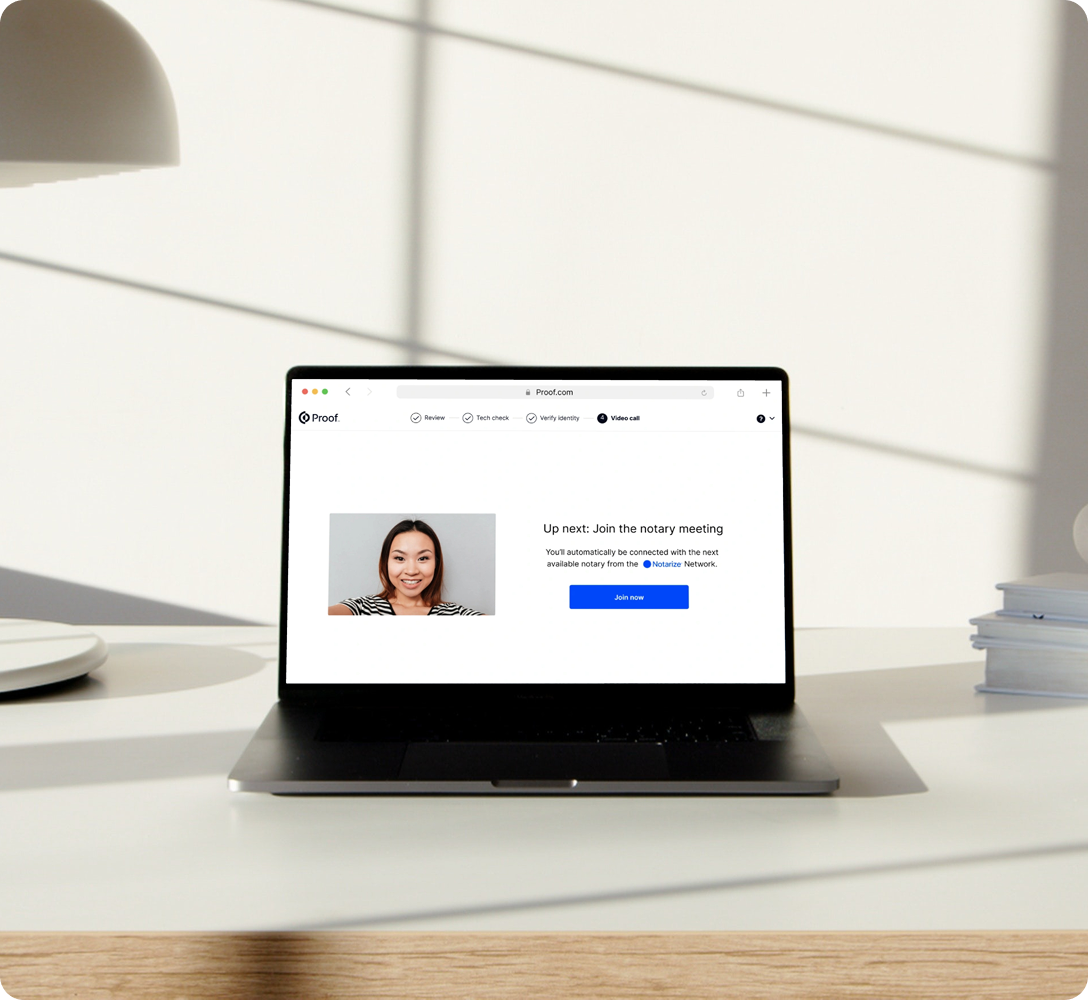
Review your completed Florida prenup and notarize it easily online through our partner, Proof. Notarization isn't strictly required in Florida, but it's strongly recommended and standard practice. Two witnesses are provided as needed for Florida agreements that waive estate rights.
Humanizing the legal experience without expensive price tags
HelloPrenup has partnered with over 100 elite attorneys across the country, including Florida-licensed family lawyers. Every attorney meets our strict standards for quality services.
Under Casto, lawyers are not required for a valid Florida prenup, but independent counsel is one of the strongest enforceability levers you can pull. You can add Florida attorney services directly in your account.
Attorney services are optional* peace-of-mind add-ons

Why choose HelloPrenup?

Attorney-backed
Our prenups are created by licensed attorneys and tailored to Florida's specific laws, including the Casto framework.

A guided, stress-free process
No awkward conversations or confusing legal jargon. Our platform walks you through every Florida-specific decision, together.

Built for complex assets
Florida earners hold more than salaries. HelloPrenup includes clauses tailored to stock options, RSUs, vesting equity, retirement accounts, and business interests in any LLC, partnership, or sole proprietorship.
A TRUSTED PRENUP THAT'S AFFORDABLE
We value full financial transparency
We encourage every couple to enter their marriage with full financial transparency and we're starting our relationship with you the same way. Our prenup packages are flexible to adapt to exactly what you and your partner need.
It's free to start creating and then requires a flat payment of $599 to complete. Along the way, you can add on additional services as needed, any time. Availability of these services is dependent on your state. Use the calculator to get an estimate.
You can also choose to sign now and pay later with:


Coming soon to your state!
We're live in 49 states. Join the waitlist to be notified.
Your customized total per couple
Same-day completion
$599
Prenups across Florida
Local guides to prenups and prenup lawyers in Florida cities, all grounded in Florida law.
.svg)
It's all in a state of mind


.svg)


Frequently asked questions about Florida prenups
Direct answers to the most common questions about prenuptial agreements in Florida, with statute and case citations.
Articles on Florida prenups
See all prenup articles
Property Division in Florida Without a Prenup
How does Florida divide property without a prenup? Understand marital assets, equitable distribution, and what happens in a divorce.

Breaking Down Prenup Pricing in Florida
How much does a prenup cost in Florida? We break down the factors that influence the price, from simple agreements to complex estates, and what it means for your financial future.

Do I need a lawyer for a valid prenuptial agreement in Florida?
You can create a valid prenup in Florida without hiring a lawyer, but should you? Learn Florida's legal requirements and when a lawyer can help you avoid problems down the road.

The information on this page was last updated in October, 2026. HelloPrenup provides a platform for self-help. The information provided by Hello Prenup along with the content on our website related to legal matters ("Legal Information") is provided for your private use and does not constitute legal advice. We do not review any information you provide us for legal accuracy or sufficiency, draw legal conclusions, provide opinions about your selection of forms, or apply the law to the facts of your situation. If you need legal advice for a specific problem, you should consult with a licensed attorney. Neither Hello Prenup nor any information provided by Hello Prenup is a substitute for legal advice from a qualified attorney licensed to practice in an appropriate jurisdiction.