
The all-inclusiveCalifornia prenup
Get aligned before your big day in the easiest and most affordable way.







What is a California prenup?
Everything to know about California prenups.
Prenuptial agreements (or "antenuptial agreements" as they're called in California) are contracts entered into before marriage between a couple. They outline things like property ownership, property division, alimony, taxes, pets, rings, and many other topics. Prenups can be emotional documents as much as they are practical ones. They help set expectations and boundaries for a couple prior to entering into marriage, which in turn can create a stronger foundation for the marriage.
Prenuptial agreements in California are governed by Cal. Fam. Code §§ 1600–1617 and the relevant state case law that helps shape the laws around prenups. Below, everything you need to know, organized exactly the way a California family law attorney would walk you through it.


The controlling statute & cases
What law governs prenups in California?
California prenuptial agreements are governed by statute and case law. The statutory requirements for prenups in the state come from Cal. Fam. Code §§ 1600–1617. These statutes tell us what is required for a valid and enforceable prenup in California and what may or may not be included in them. There are also several cases that help interpret these statutes and explain how California courts analyze certain prenup issues, such as financial disclosure requirements, independent legal counsel issues, and unconscionability. (See In re Marriage of Howell, 195 Cal.App.4th 1062 (2011); In re Marriage of Facter, 212 Cal.App.4th 967).
Is California a UPAA state?
Yes, California is one of the states that has adopted the Uniform Premarital Agreement Act (UPAA). The UPAA is a uniform statute that attempts to create consistency for prenup laws across the U.S. More than half of the states have adopted some form of the UPAA, making it much easier for courts to analyze and enforce prenuptial agreements across state lines. The UPAA tells state legislatures how to draft their prenup statutes, including how a prenup should be validly created, enforced, and what it may include.

Requirements for a California prenup
What are the requirements for a prenup in California?
In California, a prenuptial agreement must be in writing and signed (Cal. Fam. Code § 1611), there must be proper financial disclosure (Cal. Fam. Code § 1615), the parties entered into the agreement voluntarily (In re Marriage of Bonds, 24 Cal.4th 1 (2000)), the agreement is not unconscionable (Cal. Fam. Code § 1615), and the parties waited 7 calendar days between the final draft of the agreement and the signing of it (Cal. Fam. Code § 1615). While notarization is not statutorily required, it is strongly recommended and standard practice in California to do so. In addition, if parties are waiving legal counsel, they must have a valid waiver (Cal. Fam. Code § 1615). And if parties are waiving their right to spousal support, they must also have been represented by counsel (Cal. Fam. Code § 1612).
Requirements:
- In writing
- Signed
- Full financial disclosure
- Entered into voluntarily
- Not unconscionable
- 7-day waiting period between final draft and signing
- Valid counsel waiver (if waiving legal representation)
- Independent counsel required for both parties if waiving spousal support
Does a prenup need to be notarized in California?
It is strongly recommended and standard practice for prenuptial agreements to be notarized in California. While it's not statutorily required, courts regularly expect to see notarization on prenuptial agreements. Notarization is the act of signing your agreement in the presence of a notary public. It is an affordable, quick, and easy way to add a layer of protection to your agreement.
Do both parties need a lawyer for a prenup in California?
It depends. If both parties are waiving their right to spousal support, then, yes, an attorney is required for both, according to Cal. Fam. Code § 1612. This statute says that, "Any provision in a premarital agreement regarding spousal support, including, but not limited to, a waiver of it, is not enforceable if the party against whom enforcement of the spousal support provision is sought was not represented by independent counsel at the time the agreement containing the provision was signed."
If the parties are not modifying or waiving spousal support in their prenuptial agreement then they do not need a lawyer, as long as they properly waive their right to counsel (Cal. Fam. Code § 1615(c)(1)). A proper waiver of legal counsel is simply stating in the prenup itself that the parties understand their right to counsel and that they are giving up that right.
What makes a prenup invalid in California?
A prenuptial agreement may be deemed invalid in California if it is not properly executed (not in writing or no signatures), if the parties did not enter into it voluntarily, if the agreement is unconscionable, if there is not proper financial disclosure, or if the agreement was signed less than seven calendar days before the wedding (Cal. Fam. Code §§ 1611, 1615).
How long before the wedding should I sign a prenup in California?
According to Cal. Fam. Code § 1615(c)(2), prenuptial agreements executed after January 1, 2020, must have followed the California "7-day rule," which requires there to be seven calendar days between the final draft of the agreement and the signing of the agreement. This allows couples enough time to seek counsel if they want it, contemplate the terms, and really understand what they are agreeing to.


You're writing your life story together. Make sure you're on the same page.
Start your prenup for freeWhat can & can't be in a California prenup
Does cheating void a prenup in California?
No, cheating does not void a prenuptial agreement in California. In California, courts do not take into consideration the fault or misconduct of the parties when determining divorces, and the same principle applies to the prenuptial agreement. (Diosdado v. Diosdado, 97 Cal.App.4th 470 (2002)). In the Diosdado case, an agreement requiring one spouse to pay $50,000 for cheating was unenforceable due to California's no-fault divorce laws. The court explained that the agreement attempted to place a fine on emotional distress for infidelity, directly conflicting with California's public policy underlying no-fault divorce and the goal for courts not to be required to look into spouses' misconduct during a divorce.
Are infidelity clauses enforceable in California?
No, infidelity clauses are not enforceable in California. (Diosdado v. Diosdado, 97 Cal.App.4th 470 (2002)). In the Diosdado case, a California court explained why infidelity clauses should not be enforced. The court said that because of California's no-fault divorce policy, it also cannot allow financial penalties for infidelity. If they did allow infidelity clauses to be enforced, it would improperly reintroduce fault and marital blame into divorce proceedings, which is directly contrary to the state's decision to base divorce on marital breakdown rather than spousal behavior and misconduct.
Can a prenup include child custody in California?
No, prenups in California cannot include child custody clauses. This is the right of the child that is to be determined based on the best interests of the child at the time of the divorce proceedings. (Cal. Fam. Code § 3011). Parents may not contract away the rights of a child in a prenup, years before a custody hearing may even be relevant. For example, if a prenup is signed ten years before custody proceedings are relevant, then the decision of the parents at the time of the prenup may be totally inappropriate by the time custody hearings are necessary.
Can a prenup protect a business in California?
Yes, prenuptial agreements in California may be drafted to protect the business interests of the parties. According to Cal. Fam. Code § 1612, parties may contract as to "any of the property of either or both of them whenever and wherever acquired or located." This also includes business interests. Parties may protect the assets of existing or future business interests, including appreciation and growth of the business or potential buyouts. Delineating business interests as "Separate Property" in the prenuptial agreement is key to ensuring the property stays separate.
Can a prenup protect inheritance in California?
Yes, a prenuptial agreement in California may be drafted to protect the inheritances and gifts of either party. Even though Cal. Fam. Code § 770 states that inheritances and gifts to one party are considered separate property by default, they can still accidentally end up in the community property categorization and ultimately be divided in a divorce if there are marital efforts/contributions to the inheritance or commingling. It is important to use a prenuptial agreement to reiterate that the parties desire to keep the inheritance separate and protect against commingling or marital efforts that may muddy the ownership rights in the inheritance.
Can a California prenup include embryo clauses?
Yes. 1 in 6 couples struggle with infertility. This increase in infertility means an increase in ways to conceive a child besides running into the bedroom on your honeymoon. Embryo clauses are for folks who have existing embryos or if you plan to have embryos in the future.
Don't know if you'll have embryos?
👉 Infertility is a lot like "the d-word." No one plans on it happening, but you may want to prepare for it just in case you fall into the ~42% of adults seeking fertility treatments.
By adding Embryo Clauses to your prenup, you'll likely:
- Save money: Bundle embryo provisions into your prenup and avoid costly legal fees later on.
- Build a strong foundation: Talking about embryos now helps you and your partner understand each other's perspectives on family planning.
- Protect your wishes: Put your wishes in writing to ensure they're respected, no matter what life throws your way.
What can we contract to? HelloPrenup Embryo Clauses are designed to address each of your wishes, from what happens to your embryos in case of divorce to who's responsible for storage fees. We even allow you to address legal parenthood of the embryos in case of death or divorce.
Marital property in California
Is California a community property state?
Yes, California is one of nine community property states. (Cal. Fam. Code § 760). This means that almost all new debt and assets acquired during the marriage (starting from the day of the marriage ceremony) are considered community property and divided equally at a divorce, regardless of how the asset was acquired or how it is held. In other words, everything made, earned, or acquired during marriage is considered 50/50 in a divorce. This is opposed to equitable distribution states, where property isn't automatically considered 50/50, but is divided equitably, based on the circumstances and the discretion of the judge.
How is property divided in a divorce in California without a prenup?
According to Cal. Fam. Code § 2550, community property acquired during the marriage is generally divided equally in a divorce, unless it is deemed separate property (which could be premarital assets, inheritances, gifts, or property otherwise excluded by prenup/postnup/other agreement). For example, if John and Melissa both had brokerage accounts prior to marriage and then purchased a home together with income made during the marriage, the brokerage accounts would likely be considered separate, but the home would be considered community property and divided 50-50 in a divorce. This is because they used income earned during the marriage to purchase a home. It generally doesn't matter whose name is on the deed or who put more money down.
Does a prenup override community property in California?
Yes, a valid and enforceable prenup can override community property laws in California if it is drafted to do so. For example, couples may opt to keep all premarital assets separate but continue to create community property in some capacity, which is in line with the laws of the state. On the other hand, couples may also opt to create no community property in the marriage, which totally overrides community property laws in the state. Thus, whether or not the prenup overrides the laws is dependent on (1) how the agreement is drafted and (2) whether it is an enforceable agreement.
What is separate property in California?
Separate property in California is governed by Cal. Fam. Code § 770, which states that separate property includes assets/debt acquired before the marriage, plus appreciation of such, and property received during the marriage by gift/inheritance. In other words, property that you own before you tie the knot, and the growth of that property, plus any gifts or inheritances you receive at any point (before or during the marriage) is considered your separate property, not divisible in a divorce.

Spousal support in California
Can a prenup waive spousal support in California?
Yes, a prenuptial agreement can waive spousal support in California. However, according to Cal. Fam. Code § 1612(c), if parties are waiving their right to spousal support, they must also hire a lawyer to represent them and advise them on the agreement. This is because California wants to ensure parties understand the gravity of waiving spousal support and ensure the party waiving their right to support truly understands the legal impact of their choice. In other words, if you waive spousal support in California, you must hire an attorney for it to be considered valid.
Attorney signatures required to waive spousal support in California
Under Cal. Fam. Code § 1612(c), a spousal support waiver is unenforceable unless the party against whom enforcement is sought was represented by independent legal counsel at signing. Each side needs their own attorney signing as counsel of record.
HelloPrenup offers California-licensed attorney representation for each partner directly through your account at $699 flat per partner, so the waiver is enforceable without leaving the platform.
Does a prenup prevent spousal support in California?
It can if that is how you draft the agreement. Prenups are private contracts that are drafted to meet the unique needs of each individual couple. If a couple wants to prevent spousal support, then they may do so with a California prenuptial agreement by including a waiver of such. However, in order to be valid and enforceable, there must be legal representation for the party losing out on the right to spousal support. (Cal. Fam. Code § 1612(c)).
How is alimony determined in California without a prenup?
Under California law, spousal support (alimony) is determined by a judge evaluating a list of statutory factors under Cal. Fam. Code § 4320 to decide whether support should be awarded, in what amount, and for how long.
The court's primary goal is to allow both spouses to maintain (as much as possible) the standard of living that they had during the marriage while also encouraging the supported spouse to eventually become self-supporting. Here are some of the factors that judges consider:
- Each spouse's earning capacity
- Education
- Work history
- Marketable skills
- Property and debt
- Health and age
- The supporting party's ability to pay spousal support
- Duration of the marriage
- Tax consequences
- Childcare responsibilities
- History of domestic violence
- Whether one spouse supported the other's career
Ultimately, California spousal support outcomes are highly fact-specific and up to the court to decide on a case-by-case basis. No single factor of the above controls the outcome, and courts may consider any circumstances they believe are fair.
How much does a prenup cost in California?
How much does a prenup cost in California?
According to California prenup attorney Susan Scherman, "The approximate median cost to draft, review, and sign a prenup in California, working with an experienced attorney, generally ranges from $4,500.00 to $10,000.00, depending on the level of detail required, and can go as high as $20,000.00."
Through a survey conducted with attorneys across the U.S., the average national cost for a prenup is $8,000 per couple. Given that California has a higher cost of living, you can expect a prenup in California to cost somewhere in the $2,000 to $8,000 range, or more, depending on the couple's unique circumstances and the attorneys' rates.
What is the cheapest way to get a prenup in California?
Generally, the cheapest and most efficient way to get a prenup in California is to use reliable online prenup platforms coupled with flat-rate priced lawyers. This process involves generating a prenup with the online prenup platform, and then having a licensed California attorney review it. HelloPrenup offers the option to hire California-licensed attorneys directly through the platform, giving you the best of both worlds.
How much does a prenup lawyer cost in California?
In 2026, the average prenup lawyer in California charges about $422 per hour. The cost of hiring a prenup attorney can vary depending on the rates that the attorney is charging and how many hours the prenup will take the attorney. If a couple has particularly complex finances, unique drafting requests, or lengthy negotiations, this will take more of the attorney's time, and thus cost the couple more money. Attorneys may charge more or less than $422 per hour depending on their geographic location in California and their accolades/experience.

Want some guidance? Book a free consultation
Learn more about how HelloPrenup works and what to expect about the process. We're thrilled to answer any questions you have and help you get started.
Book a consultationHow to get a prenup in California
How do I get a prenup in California?
There are two main ways to get a prenup in California: (1) Hire two attorneys to draft and redline the agreement for you and your partner or (2) Use a reputable online prenup platform with optional attorney add-on. If you go the traditional route of hiring two attorneys, you will need to find a local attorney to draft the agreement and then your partner will need to hire their own attorney to review the drafted agreement. If you go the route of using an online prenup platform, you and your partner can fill out a questionnaire to generate an agreement and then the attorneys will review, explain it to you, and make suggestions if necessary. The online prenup route skips the step where the attorney drafts the agreement, saving you money and time.
Can I write my own prenup in California?
It depends. If you are waiving spousal support, then you will still need to hire legal counsel to review and advise you, according to California law. However, if you are not waiving spousal support, you can technically write your own prenup, as long as you properly waive your right to legal counsel in the agreement according to Cal. Fam. Code § 1615. California courts don't strictly require legal representation, but they do require a proper waiver and if you are waiving spousal support then you do have to hire an attorney.
How long does it take to get a prenup in California?
On average, it can take a few days to a few weeks to get a prenup in California. It depends on how committed each party is to completing the document and the availability of your attorney if you are hiring one. For example, part of the prenup process requires financial disclosure. This means each party must share all of their finances with the other party. This may require you to gather financial documents, loan statements, deeds, and other information in order to properly disclose assets/debts, which can take some time. As another example, if you are hiring attorneys and they have a heavy case load at the time, it may take them a few weeks to draft the agreement.
Do I need a lawyer to get a prenup in California?
Hiring a lawyer is not required, as long as you properly waive your right to counsel and are not waiving spousal support. Properly waiving your right to counsel means you draft a statement in the prenup itself stating you understand your right to counsel and that you are giving that up. (Cal. Fam. Code § 1615). In addition, if you want to prevent either spouse from requesting spousal support in a divorce, then you will need to hire a lawyer to make that enforceable. (Cal. Fam. Code § 1612(c)).

Caselaw & enforceability
Are prenups enforceable in California?
Yes, prenuptial agreements are enforceable in California as long as they meet the requirements laid out by the California Family Code and applicable case law. Prenups in California can be challenged on limited grounds, such as invalidity (not following the statutory requirements such as the 7-day rule), involuntariness, unconscionability, or lack of proper financial disclosure. (Cal. Fam. Code § 1615). For example, California courts have explained through case law that voluntariness may be considered when entering into a prenup and courts will look at the totality of the circumstances when deciding if each party entered the agreement voluntarily. (See In re Marriage of Bonds, 24 Cal.4th 1 (2000)).
How hard is it to break a prenup in California?
It is not easy to break a prenup in California, but it's not impossible. The person who wants to break the prenup must show in court that the agreement was not properly executed in some way or another, either through statutory requirements such as improper financial disclosure, lack of signatures, improper application of the 7-day rule, or through other theories such as voluntariness or conscionability. (Cal. Fam. Code § 1615).
Can a judge throw out a prenup in California?
Yes, it is possible for a judge to throw out a prenup in California, but that is true of any type of contract, in any state. However, judges cannot throw out prenups for just any reason, there needs to be a statutory or policy reason for doing so. (Cal. Fam. Code § 1600 et al.). For example, if the prenup does not meet statutory requirements in California, such as the 7-day rule or if parties did not properly sign the agreement. In addition, courts may look to previous court opinions to determine if the agreement is enforceable, and some notable cases include In re Marriage of Bonds, 24 Cal.4th 1 (2000) and In re Marriage of Howell, 195 Cal.App.4th 1062 (2011).
What can void a prenup in California?
There are only a handful of reasons a prenup may be voided in California. Here are the ways a prenup can be voided in the state:
- Lack of signatures
- Not in writing
- Improper financial disclosure
- Not complying with the 7-day rule
- Lack of voluntariness
- Unconscionability (i.e., overly unfair)
- Lack of counsel coupled with improper legal representation waiver and/or spousal support waiver
In addition, if the agreement is totally against public policy, such as requiring illegal acts, the agreement will also be voided.
You're writing your life story together. Make sure you're on the same page.
Start your prenup for freeDuration & after-marriage
How long does a prenup last in California?
A valid and enforceable prenuptial agreement lasts forever in California, unless drafted otherwise. Technically, couples can choose an expiration date for their prenuptial agreement, such as on a certain wedding anniversary. For example, sometimes couples include what is known as a "sunset clause" that "sunsets" the agreement on a certain date, such as a 10th wedding anniversary. Couples sometimes include this as a bargaining chip, or to recognize that the marriage has become long-term and their finances and lives have become more intertwined over time that contractual obligations are no longer necessary.
Can you get a prenup after marriage in California?
No, prenuptial agreements in California should be signed before the marriage begins. If you are already married without a prenuptial agreement then you should consider looking into a postnuptial agreement. Postnuptial agreements in California are valid and enforceable, as long as you follow the laws required to create one. Prenups and postnups are both ways to outline financial obligations within a marriage, but they are not treated equally in the eyes of the law in California. For example, there are more requirements to make a valid postnup than there are for prenups. And courts may apply stricter scrutiny when analyzing a postnup that would not otherwise apply to a prenuptial agreement in the same situation (Cal. Fam. Code § 721).
Can you change a prenup in California?
Yes, you may change a prenuptial agreement in California (prenup amendment), as long as you follow the requirements that are mandated for the original prenup. (Cal. Fam. Code § 1614). Under Cal. Fam. Code § 1614, a prenup may be amended as long as it is in writing and signed and consideration is not required. While the 7-day rule doesn't strictly apply to prenuptial agreement amendments, it's often recommended by legal practitioners in the state as an added layer of security. The same principle applies to notarization of prenup amendments.
Cross-border & recognition
Is a prenup signed in another state valid in California?
Under Cal. Fam. Code § 1612, California law specifically permits parties to include choice of law provisions in their prenup agreements. A "choice of law provision" means that couples can add language to their prenup that states another state's law will govern the construction and interpretation of their agreement. Note that you generally cannot "forum shop" when choosing a state, it must be a state the parties have a connection to. It's also important to understand that even with a choice of law provision, California courts can still apply its public policy limitations and enforceability standards when determining whether to enforce the agreement.
What happens to my California prenup if I move to another state?
This will depend on the new state's laws and whether or not they will honor a choice of law provision. For example, in an Oregon case, known as In re Marriage of Proctor, a couple signed a prenuptial agreement with a choice of law clause that stated California was the governing law and then they later moved to Oregon and got a divorce there. The Oregon court was then tasked with analyzing the agreement, where it ultimately declined to fully apply California law and instead evaluated property division under Oregon law. However, it's crucial to understand that the prenup was still largely upheld, the question was which state law applied in interpreting the meaning. (In re Marriage of Proctor, 235 Or. App. 641 (2010)).
The takeaway for couples is that if you live in California now, but may move somewhere else later, a California choice-of-law clause can provide helpful guidance and increase the likelihood that California law will apply, but it is not an absolute guarantee.
California caselaw
Important prenup case law in California
Five California decisions that every California prenup should be drafted to satisfy. Click any case for the full opinion.
Cal. Supreme Court · 2000
In re Marriage of Bonds
24 Cal.4th 1 (2000)
The leading California case on voluntariness. Courts look at the totality of the circumstances when deciding whether each party entered the prenup voluntarily.
Cal.App. · 2011
In re Marriage of Howell
195 Cal.App.4th 1062 (2011)
Key interpretation of California's financial disclosure and independent counsel requirements under the Premarital Agreement Act.
Cal.App. · 2013
In re Marriage of Facter
212 Cal.App.4th 967 (2013)
Interprets unconscionability under California's Premarital Agreement Act and the standards courts use to evaluate fairness at signing and at enforcement.
Cal.App. · 2002
Diosdado v. Diosdado
97 Cal.App.4th 470 (2002)
Infidelity-penalty clauses are unenforceable in California. The court refused to enforce a $50,000 cheating clause as contrary to no-fault divorce policy.
Cross-border · 2010
In re Marriage of Proctor
235 Or. App. 641 (2010)
Oregon court analyzed a California choice-of-law clause in a prenup and ultimately applied Oregon law for property division, while still upholding the agreement.
How it works
Easy, all-in-one solution designed to
complete an enforceable agreement in about a day
Step 1
Fill out your questionnaires
Both you and your partner will fill out your own California-specific questionnaires on your own HelloPrenup accounts. The questions cover separate property, gifts & inheritance, debts, pets, businesses, and the issues that matter under the Bonds test, like full financial disclosure.

Step 2
Align on clauses together
Compare answers with your partner and align on differences to build your custom California clauses together. Negotiate openly without back-and-forth attorney emails.

Step 3 (optional)
Review with a California attorney
Under the Bonds test, legal representation is the single biggest enforceability lever in California. Add a California attorney directly in your account for $699 flat, per partner. That's far below the $2,500–$5,000 typical for a traditional California prenup.
If you waive or modify spousal support, you'll need to complete attorney representation for each of you as part of your agreement, directly in your account.

Step 4
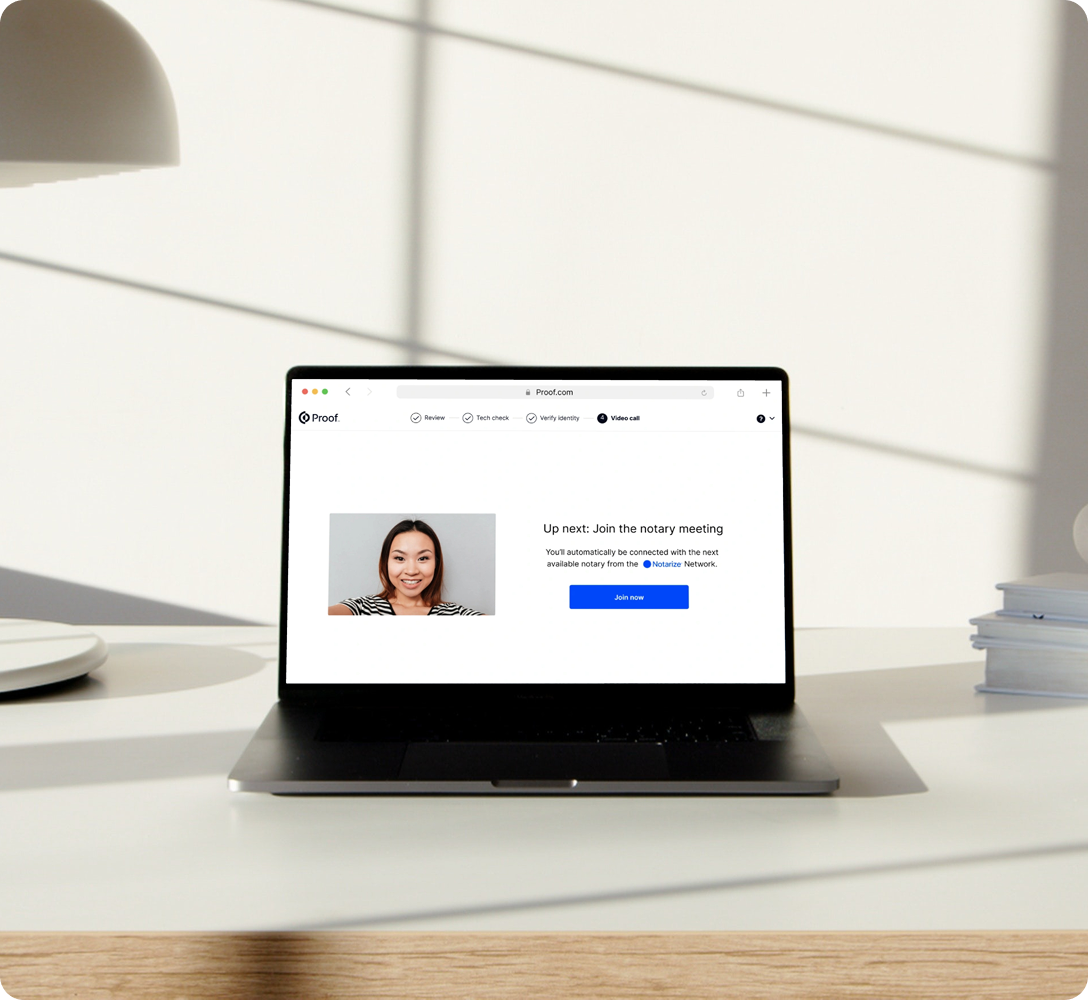
Review & notarize your prenup
Review your completed California prenup and notarize it easily online through our partner, Proof. Notarization isn't strictly required in California, but it's strongly recommended and standard practice.
Humanizing the legal experience without expensive price tags
HelloPrenup has partnered with over 100 elite attorneys across the country, including California-licensed family lawyers. Every attorney meets our strict standards for quality services.
Under the Bonds test, having a California attorney is the single biggest enforceability lever you can pull. You can add California attorney services directly in your account.
Attorney services are optional* peace-of-mind add-ons

Why choose HelloPrenup?

Attorney-backed
Our prenups are created by licensed attorneys and tailored to California's specific laws, including the Bonds test.

A guided, stress-free process
No awkward conversations or confusing legal jargon. Our platform walks you through every California-specific decision, together.

Built for complex assets
California earners hold more than salaries. HelloPrenup includes clauses tailored to stock options, RSUs, vesting equity, retirement accounts, and business interests in any LLC, partnership, or sole proprietorship.
A TRUSTED PRENUP THAT'S AFFORDABLE
We value full financial transparency
We encourage every couple to enter their marriage with full financial transparency and we're starting our relationship with you the same way. Our prenup packages are flexible to adapt to exactly what you and your partner need.
It's free to start creating and then requires a flat payment of $599 to complete. Along the way, you can add on additional services as needed, any time. Availability of these services is dependent on your state. Use the calculator to get an estimate.
You can also choose to sign now and pay later with:


Coming soon to your state!
We're expanding to 47 states. Join the waitlist to be notified.
Your customized total per couple
Same-day completion
$599
It's all in a state of mind

.svg)


.svg)


Frequently asked questions about California prenups
Direct answers to the most common questions about prenuptial agreements in California, with statute and case citations.

The information on this page was last updated in May, 2026. HelloPrenup provides a platform for self-help. The information provided by Hello Prenup along with the content on our website related to legal matters ("Legal Information") is provided for your private use and does not constitute legal advice. We do not review any information you provide us for legal accuracy or sufficiency, draw legal conclusions, provide opinions about your selection of forms, or apply the law to the facts of your situation. If you need legal advice for a specific problem, you should consult with a licensed attorney. Neither Hello Prenup nor any information provided by Hello Prenup is a substitute for legal advice from a qualified attorney licensed to practice in an appropriate jurisdiction.