
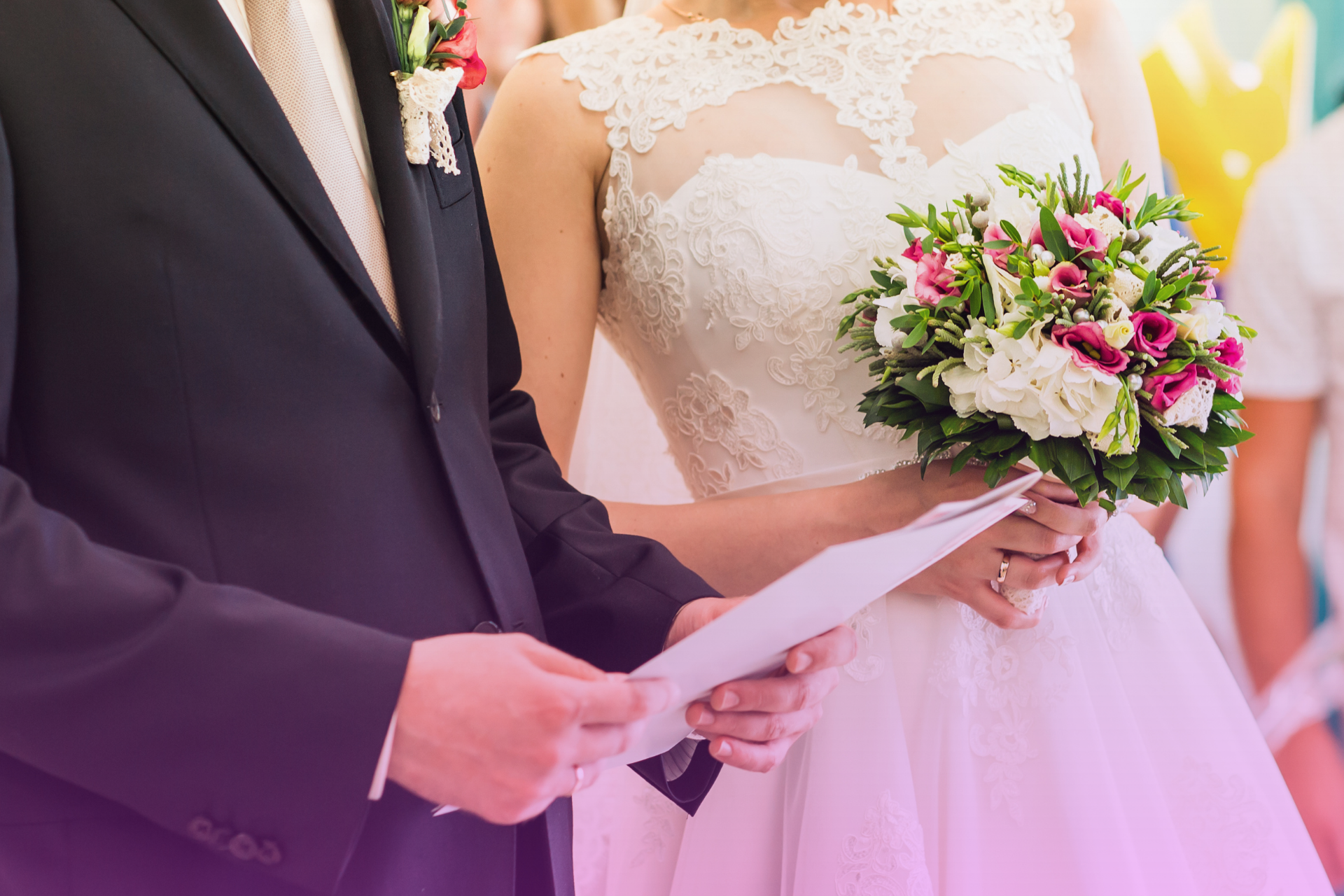
What comes to mind when you think about wedding planning? Choosing a venue, finding the perfect wedding dress or tuxedo, selecting a cake, and agreeing on a theme for the ceremony and reception decor are all usually top of mind for most couples. On the other hand, completing state-mandated paperwork is probably the last thing you envisioned. I mean, let’s face it. Interacting with your local government officials is by far the least glamorous task, regardless of the occasion. But we’re here to tell you that it’s arguably the most important part of the entire wedding planning process! So, before you get bogged down by creating the perfect wedding reception playlist and selecting your floral arrangements, let’s take a look at what you need to make sure you accomplish before and after you both say, “I do!”
What is a marriage license?
A marriage license is a document that allows you and your fiancé to get married. Generally, it is issued by a state authority such as the county courthouse. A marriage license is issued before your wedding ceremony is performed. The marriage certificate documents the specific date, time, and location of your wedding ceremony. It often includes the name of the officiant who conducted the marriage in various jurisdictions. To ensure your union is legally recognized, it’s crucial to complete two key steps: signing your marriage license before your wedding ceremony and obtaining a marriage certificate afterward.
How is a marriage license different from a marriage certificate?
A marriage certificate is a document that proves you are legally married. It is issued after your wedding ceremony. A marriage license permits you to get married. Why would you want a marriage certificate to prove your marriage, you ask? You may need a marriage license to assist with a variety of tasks, including changing your last name to your spouse’s name, adding your spouse to your health insurance, or even filing taxes jointly.
When do I need to apply for a marriage license?
This answer will vary from state to state, especially depending on your desired wedding date. For example, in California, you can proceed with your wedding ceremony as soon as you receive your wedding license. In New York, your wedding ceremony cannot take place until 24 hours after you receive your marriage license. However, this waiting period can be waived by the county’s family court judge if necessary.
Mandatory waiting periods
Some states, like Florida, have a mandatory three-day waiting period for Florida residents. This means that if you’re a Florida resident, you would have to wait for at least three days after the court issues your license before you could get married. Alternatively, Florida residents can opt out of this mandatory waiting period by attending a four-hour premarital course by a registered provider. Be sure to check with your local court clerk to understand your state’s requirements.
License expiration dates
When it comes to wedding planning, it seems like there’s always just one more task to knock out before the wedding day. You may be tempted to apply for your marriage license way in advance just to check one of the seemingly never-ending tasks off your list. But you might want to hold your horses if you’re considering applying for your license several months before your wedding date.
In some states, a marriage license application can expire after 90 days, so it’s equally as important not to apply too early if your wedding date is outside that timeframe. While it is admittedly a bit of a balancing act, a good rule of thumb would be to apply for your license no earlier than 90 days before your wedding date and no later than one week before your wedding date.

What are the requirements to apply for a marriage license?
You’ll need to clear a few hurdles before you can get your marriage license. Let’s take a look at some of the most common requirements, shall we?
Age requirement
Most states require couples to be at least 18 years old to obtain a marriage license without parental consent. If one or both applicants are under 18, some states require the applicant’s parents to be present as well at the time of application. Parents may also be required to provide their written consent to the marriage license application.
Residency
Residency requirements vary from state to state. In some states, if you are not a state resident, you would need to apply for a marriage license in the county where your marriage ceremony will take place. Just make sure to research your state’s requirements ahead of time!
Payment
Processing fees for a marriage license application vary from state to state and even between counties within the same state. Average fees can range from $16 to $120 because, of course, you need one more expense to worry about. Ahhh, the joys of wedding planning! Double check with your local court clerk; some states may offer discounts for couples attending a premarital education course.
Identification
Applicants typically must present valid federal or state government photo identification with their legal name, date of birth, and signature. Acceptable forms of ID usually include a driver’s license, passport, U.S. military ID, state identification card, alien registration card, or a naturalization certificate.
Blood test
Virtually all states have eliminated the blood test requirement before a couple can get married. Historically, if an applicant tested positive for sexually transmitted diseases or viral infections, they would have to seek medical treatment before they could qualify for a marriage license. Nowadays, some states require applicants to read a brochure about inherited and sexually transmitted diseases and how to obtain testing for these ailments.
Record of divorce or annulment or death certificate from prior marriage
If this isn’t your or your fiancé’s first rodeo, you will need to provide a copy of your divorce decree or annulment from your previous marriage. If your previous spouse has passed away, then you may need to provide their death certificate.
What do we do with the marriage license after the wedding ceremony?
Again, this will vary by state. But you’ll still want to pay very close attention to this part. You are not, I repeat NOT, legally married once you receive your marriage license. It has to be completed and signed by your wedding officiant after your ceremony. This next step is key, fiancés! Once you return the completed and signed license to the courthouse, it will be officially recorded by a county clerk. Some states require the officiant to return the license within 10 days after the ceremony is performed. Be sure to double-check with your state and your officiant about getting your license filed on time!
The bottom line on marriage licenses
It’s easy to let the marriage license application process play second fiddle to the more dreamy parts of wedding planning. But don’t fall into that trap! Remember to prioritize your wedding license application so that you have plenty of time to understand your state’s requirements and plan accordingly. Future you will thank you!

Nicole Sheehey is the Head of Legal Content at HelloPrenup, and an Illinois licensed attorney. She has a wealth of knowledge and experience when it comes to prenuptial agreements. Nicole has Juris Doctor from John Marshall Law School. She has a deep understanding of the legal and financial implications of prenuptial agreements, and enjoys writing and collaborating with other attorneys on the nuances of the law. Nicole is passionate about helping couples locate the information they need when it comes to prenuptial agreements. You can reach Nicole here: Nicole@Helloprenup.com
0 Comments