
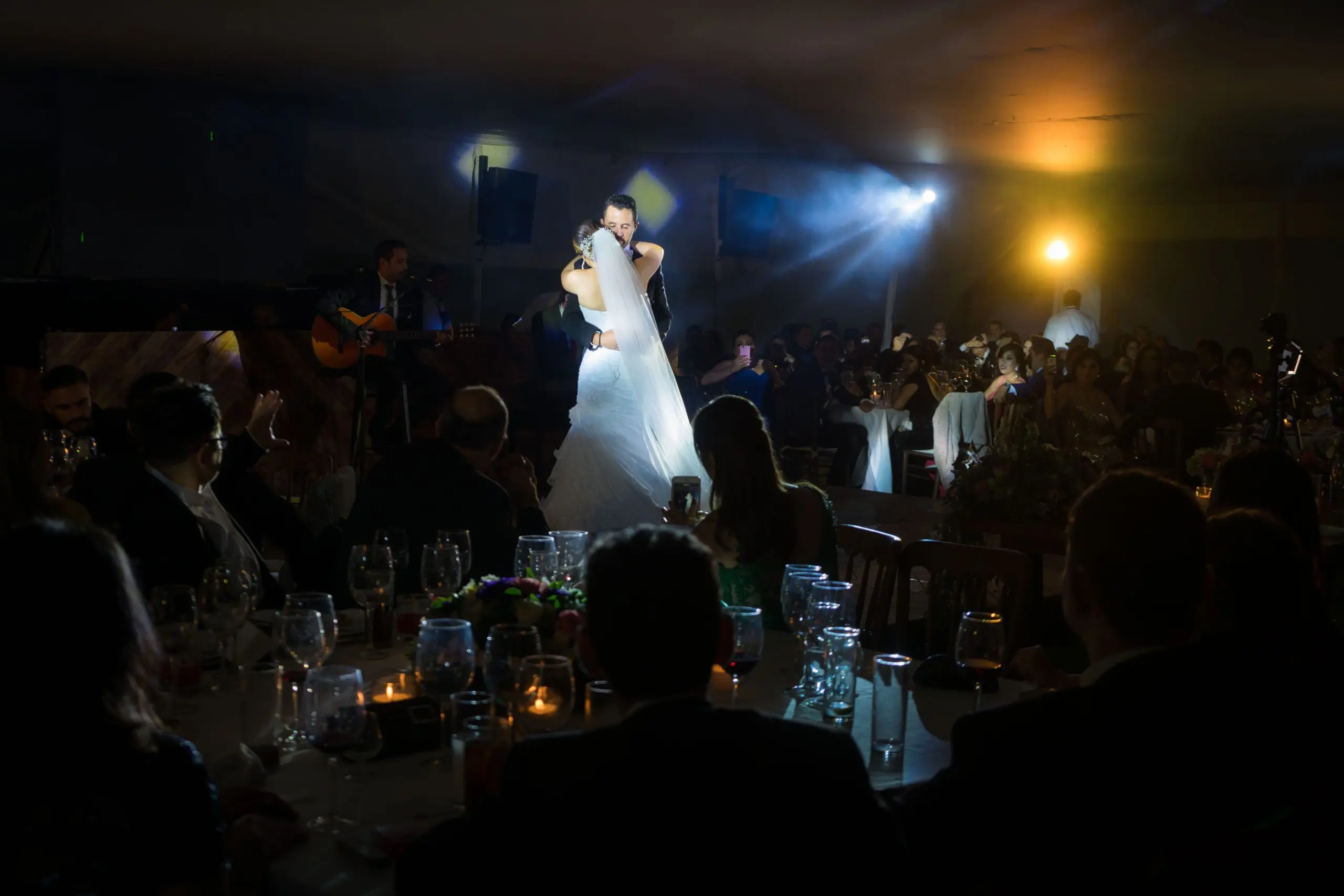
Have you ever found yourself at a wedding, eyeing the dance floor and psyching yourself up to impress everyone with your smooth moves? Or perhaps you’ve felt the opposite–trepidation and an urge to slip out the door without anyone noticing and sentencing you to a night of moving your body around and wondering, “Am I doing it right?”
Not everyone who gets married likes dancing…but dancing is kind of mandatory at a wedding. Especially when it’s your wedding. Whether you’re a natural dancer or a robot with two left feet, you’re going to need to prepare yourself to dance with your new husband or wife at your wedding. Here is our definitive guide to choosing the right dance style, mastering the dance floor together, adding flair, and overcoming nervousness in order to have the most memorable dance of your life.
Choose the right dance style
You should first consider the overall theme and atmosphere of the wedding when selecting a dance style. If the wedding has a traditional feel, a classic waltz or foxtrot might be appropriate. For a more modern and upbeat wedding, you could opt for a lively salsa or swing dance. Choose a style that resonates with both you and your partner, as well as the vibe of the wedding itself. Here’s your cheat sheet for common dance styles for weddings:
Wedding Theme:
- Classic Elegance: Waltz – Graceful, flowing, perfect for formal venues. Think ballrooms or historic estates.
- Versatile & Timeless: Foxtrot – Works for slow ballads or faster songs and suits a range of wedding styles.
- Latin Spice: Salsa – Lively, passionate, brings the party! Great for a festive, fun-loving atmosphere.
- Energetic & Playful: Swing – Upbeat and interactive, ideal if you want a dance that gets guests smiling.
Dance Difficulty:
- Waltz: Challenging for beginners. Requires lessons & practice for that smooth, gliding look.
- Foxtrot: Moderate difficulty. It is easier to master the basics, but it still looks elegant.
- Salsa: Advanced moves. Best if you’re up for a challenge and love those hip movements!
- Swing: Some moves are tricky. But it’s adaptable, so you can keep it simple or get fancy.
Music Matters:
- Waltz: Think ¾ time signature (think “ONE-two-three”) and flowing melodies. “Come Away With Me” by Norah Jones is a good modern Waltz option!
- Foxtrot: 4/4 time, works with jazz, pop, or traditional ballroom tunes. “I Want To Be Loved By You” by Sinead O’Connor is a great, upbeat option.
- Salsa: Upbeat Latin rhythms with strong percussion and brass. “Baile Inolvidable” by Bad Bunny is a newer, upbeat option!
- Swing: Pairs well with big band, rock ‘n roll, or even gypsy jazz! “I Love Her So” by Ray Charles is a lovely option for a wedding swing dance.
How to prepare for your wedding dance
You’ve picked your dance style; now make it shine! Here’s how to prepare your wedding dance to make your special day perfect:
Practice Makes Perfect:
- Start Early: Don’t cram! Regular practice builds muscle memory and confidence. For example, you may want to start rehearsing for the big day 3 months ahead of time to give yourself time to feel really prepared. (Feeling prepared calms the nerves!)
- Mimic Your Venue: If possible, find a space with similar flooring for realistic practice. For example, if you are getting married in a huge ballroom, you may want to get some practice in a similar type of room.
- Focus on the Basics: Master the core steps before adding fancy moves.
Outfit Check:
- Style & Movement: Coordinate your looks, but prioritize freedom of movement for both of you. For example, if you are doing salsa, you want to have enough room to dance and move around quickly, so a super tight dress or pants may not be the best idea.
- Footwear Matters: Practice in shoes similar to what you’ll wear on the big day. For example, if you’re doing salsa, you’ll want to practice in shoes that have similar feel as you are moving your feet back and forth a lot. If you practice in gym shoes and then the big day you are in heels, that may throw you off!
Song Choice:
- Meaningful & Danceable: Pick a song you love that matches your chosen dance style. For example, if you are doing a slow dance, you will want to pick a slower song that holds meaning to your relationship.
- Share the Story: If the song holds special significance, let your guests know why! Before getting out there, maybe get on the mic and tell the crowd why you chose the song you chose.
Take it Up a Notch:
- Turns & Spins: Add visual excitement, but practice for smooth execution. You may want to skip if you can’t get the fancy turns and spins down-pat. We wouldn’t want a messy fall on the dance floor!
- Elegant Arms: Experiment with hand holds and arm positions, keeping them relaxed. Too stiff of arms look unnatural and awkward, so let those arms go.
- Feel the Music: Connect your movements to the beat and emotion of the song. Really feeeeel the music. Listen to it. Feel it. Move your body!
- Memorable Ending: Plan a dip, spin, or pose to leave the crowd cheering and starting the reception on a super high note!
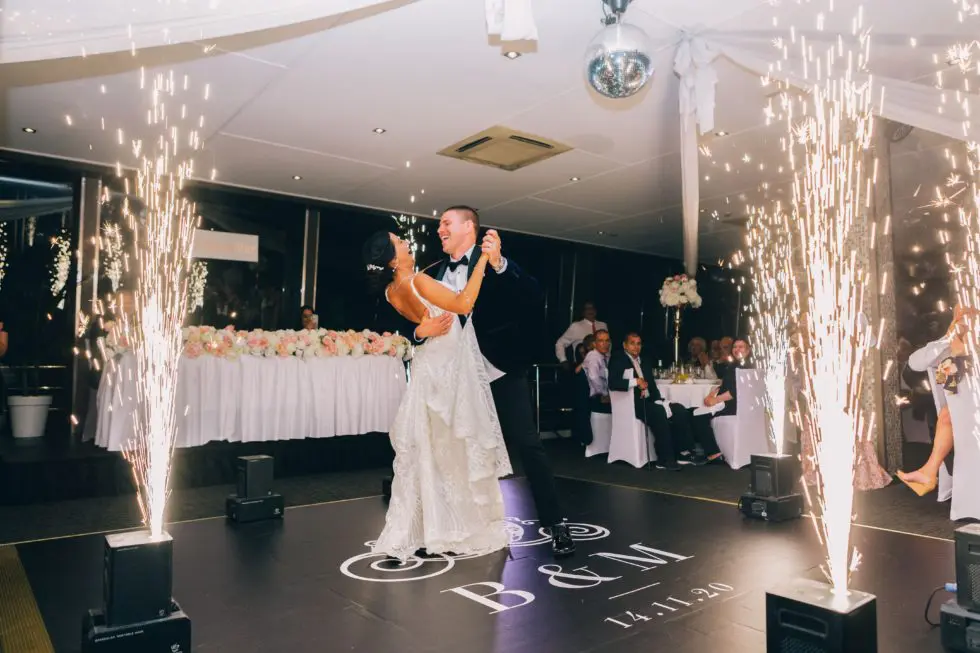
Dance floor jitters? Here’s how to boost your confidence
It’s normal to feel butterflies, but don’t let them ruin your moment. Try these tips to boost your confidence:
Calm Your Body Before:
- Deep Breaths: This is a simple but powerful technique to calm yourself. You can try box breathing, which involves a 4-count inhale, 4-count hold, 4-count exhale, and 4-count hold. Do this multiple times until you feel yourself calming down.
- Mindful Stretching: Gently release tension in your muscles before you dance by doing some stretching. You can even try finding a good YouTube video that shows you how to stretch for nervousness.
Mental Rehearsal:
- Picture Success: Imagine yourself nailing your dance, smiling, and feeling happy. The more detailed, the better! This is a version of manifestation, and bringing to life your best self by imagining it first!
- Practice the Moves: If your dance has some choreography to it, you may want to mentally practice the steps in your head beforehand. One-two-three-four, One-two-three-four, you got this!
Positive Mindset:
- Be Your Own Cheerleader: Replace harsh criticism with encouraging words. Focus on the joy, not the fear of mistakes. Things like “I got this, I’m going to kill it.” Or “I am an awesome dancer!”
Remember the Big Picture:
- This is About Love: Your dance celebrates your connection, not perfection. Guests are there to support you, not judge!
- Nobody Remembers the Dance Anyway: In 10, 20, or 30 years, no one will remember how good or bad you danced, just that you and your future spouse loved each other enough to get up there and dance!
Final thoughts on how to dance with your partner on your wedding day
Whether dancing comes naturally to you or not, the bottom line is that the time spent dancing at your wedding with your partner should be enjoyable. Do whatever you need to do to make that happen, whether it means taking lessons in advance, making things up as you go, adding your own style and flair, or anything else. So, let your inhibitions fade and relax into the magic of your wedding day. Happy wedding and dancing!
Frequently Asked Questions (FAQs) about dancing at your wedding
Still have questions on how to plan your wedding dance? Read on:
Q: What if I have two left feet? Can I still dance at a wedding?
A: You bet! Dancing is not about being perfect; it’s about enjoying yourself and having fun. Take it one step at a time, practice, and embrace your unique style. The most important thing is to let go and enjoy the experience.
Q: How do you hold your partner when dancing?
A: There are several ways to hold your partner when dancing. One traditional way to hold your partner when dancing is to have the husband hold the wife’s left hand in his right hand while his left hand is on her right hip. Then, she will put her right hand on your shoulder. Another way is to put both hands on her waist while she puts both hands around the husband’s neck.
Q: Is it necessary to take dance lessons before a wedding?
A: It’s not strictly necessary, but dance lessons are certainly beneficial, especially if you want to learn specific dance styles or feel more confident on the dance floor.
Q: How long should we practice before the wedding?
A: The amount of practice depends on your comfort level and the complexity of the dance routine. Start practicing at least six weeks in advance to give yourself enough time to learn the steps and build confidence. Aim for regular practice sessions to maintain consistency and improvement.
Q: Can we improvise our dance, or should we have a choreographed routine?
A: Both options are valid. If you prefer a more spontaneous and relaxed approach, improvising is fine. However, if you want a polished and well-coordinated performance, choreographing your routine is the way to achieve that. Choose what feels right for you as a couple.
Q: Can we include our own personal touches in the dance?
A: Absolutely! Adding personal touches, such as inside jokes, special moves, or surprises, makes your dance even more meaningful and memorable. Let your personalities shine through, and create a dance that reflects your unique love story and vibe as a couple.

Nicole Sheehey is the Head of Legal Content at HelloPrenup, and an Illinois licensed attorney. She has a wealth of knowledge and experience when it comes to prenuptial agreements. Nicole has Juris Doctor from John Marshall Law School. She has a deep understanding of the legal and financial implications of prenuptial agreements, and enjoys writing and collaborating with other attorneys on the nuances of the law. Nicole is passionate about helping couples locate the information they need when it comes to prenuptial agreements. You can reach Nicole here: Nicole@Helloprenup.com
0 Comments