
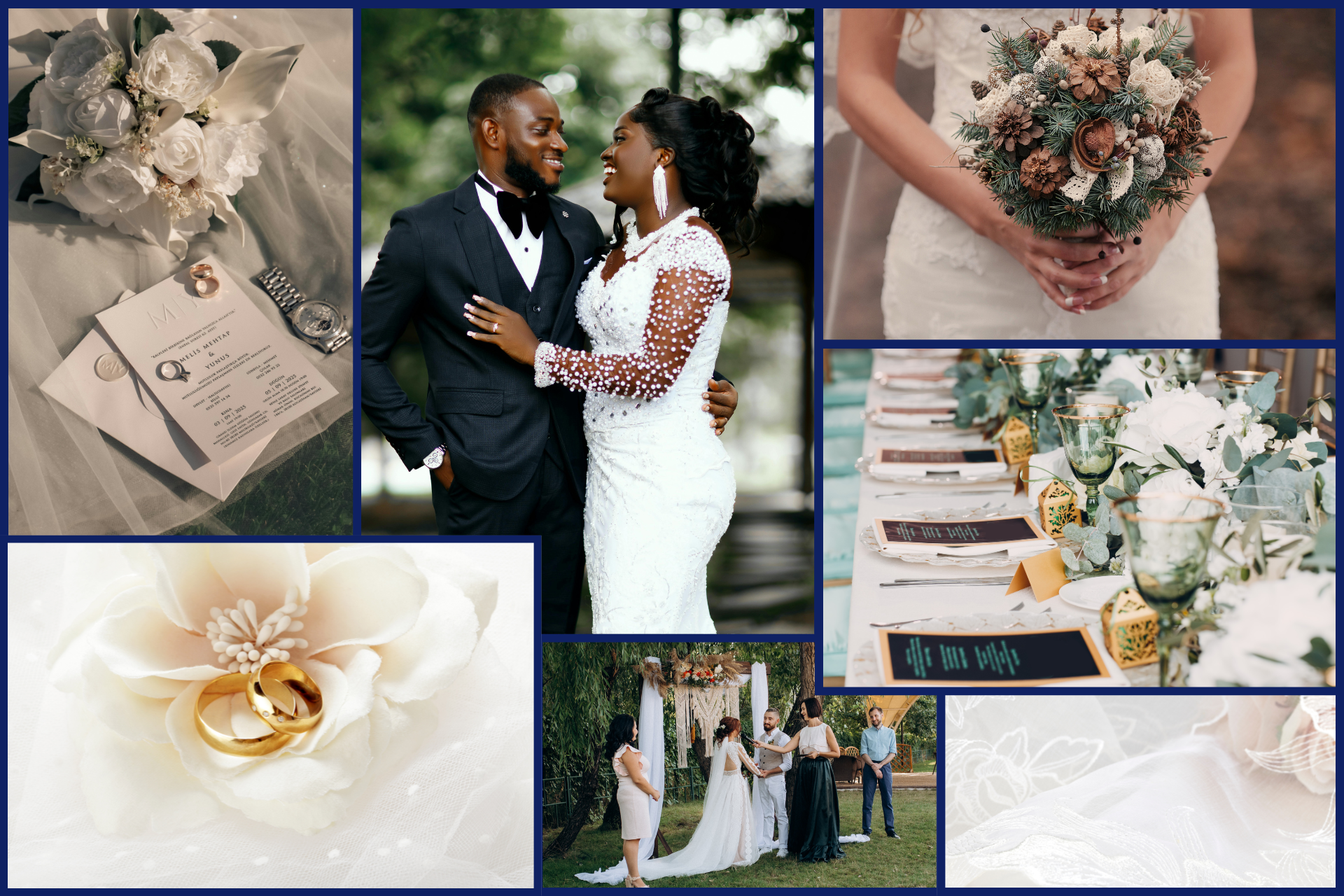
If you’ve ever fallen down the Pinterest rabbit hole of weddings, you already know: a wedding vision board can start off fun and exciting and quickly spiral into your biggest source of stress. One second you’re pinning peonies and champagne towers, the next you’re three hours deep in a debate with yourself about whether your color palette should be “sage” or “eucalyptus.”
But vision (or Pinterest) boards are not all bad; at its core, a wedding vision board isn’t just a collage of pretty ideas—it can also be a psychological tool. It can help you organize your thoughts, calm your nervous system, and communicate more clearly with your partner and vendors. The trick is learning how to make it work for you, not overwhelm you.
In this article, we’ll explore how to create a wedding vision board that actually helps: one that channels your excitement, reduces stress, and keeps you anchored to what matters most. We’ll talk about the psychology behind visual planning, the practical steps to build a board that feels grounded, and how to use it in a healthy way.
Why your brain loves visuals
Humans are wired to think in images. Dual coding theory shows that visual cues help our brains organize and retrieve information faster than text alone. That’s great news! Because when you create a wedding vision board, you’re not just creating a pretty idea; you’re helping yourself focus, channel your creativity, and engage your memory.
In other words, when you see your ideas laid out visually, your brain goes, Ah, I get it now. That’s why a well-organized vision board can make wedding planning feel less chaotic.
Vision boards can have a calming effect. Well-known strategies, like visualization in Mindfulness-based therapies, have been shown to reduce stress and help improve emotional regulation. Being able to visualize what you’re working towards can help you manage the other stressors in the process.
Creating a helpful board
Here’s how to build a board that inspires you—without losing your mind or Pinterest password in the process.
Step 1: Start with emotion, not aesthetics
Rather than starting with aesthetics (“What’s my color palette?”), try shifting to a more intentional starting point with the question: What do I want the day to feel like?
Do you want your wedding to feel intimate and cozy? Joyful and high-energy? Glamorous and cinematic? Anchoring your board in emotion helps you choose visuals that resonate at a deeper level, rather than being a recreation of something you saw online.
This also helps to reframe the process to one of personal meaning, helping to decrease the chances of wanting “perfection” or comparison. The goal is to design an emotional experience that represents you and your fiancé, and that value-aligned behavior will result in higher levels of satisfaction for both of you.
So, before adding any actual images or looking at a wedding, brainstorm all the ways to describe your ideal day. And then use those words to help search and filter for images to add to your board.
Step 2: Choose your format (digital, physical, or hybrid)
There’s no one “right” way to create a vision board. Each format has its own psychological perks:
- Digital boards: Pinterest, Canva, Notion, or even Google Slides are great for organization and accessibility. You can share them with vendors or your partner, update them on the go, and keep them visually tidy. The digital format eliminates many logistical barriers, which is a huge plus once you’re in the thick of wedding planning.
- Physical boards: Magazines, fabric swatches, and printed photos engage your sensory system. The tactile process of cutting, pinning, and arranging can be surprisingly grounding. Touching different textures, moving things around, can help enhance the decision-making experience.
- Hybrid boards: Who says you have to choose (at least in this case)?! Combine the best of both worlds. You might use a digital mood board for efficiency and ease, while keeping a version of a tangible board for materials and key images can help keep you focused and de-stressed.
The key? Choose the format that keeps you most engaged, not the one you think you should be using.
Step 3: Include more than just décor
A truly helpful vision board includes both visual inspiration and emotional anchors. Yes, add the florals, tablescapes, and dress silhouettes, but don’t forget to add in:
- Atmosphere images: the type of lighting, music, or energy you want (e.g., candlelit dinner, dance floor chaos, sunset ceremony). These don’t have to come from wedding photos; any image that captures the vibe you’re going for works perfectly!
- People and emotion shots: Images that capture how you want the day to feel and not just how you want it to look are important. A hug between grandparents, laughter between friends, or a quiet look between you and your partner are examples of this. Even abstract art—black and white shapes, colorful splatters.
- Values cues: What are your personal values or values as a couple? Things that speak to that (adventure, family, culture), like a quote, a photo of a home, or an image of your family tree, have power.
Not only do these details help you create a clearer picture of what you both envision for your wedding day, but they can also turn your vision board into a grounding tool. Your brain begins to associate the feelings it evokes—calm, joy, excitement—with your wedding and the planning process itself, which can be a huge help along the way.
Step 4: Curate, don’t collect
That rush you get from saving pretty images is real (hello, dopamine hit!), but it can actually backfire. Having too many choices increases feelings of indecision and anxiety. When we’re flooded with options, it often leads to decision paralysis—and even when we finally choose something, it can still feel a little unsatisfying.
So, take the time to curate. Regularly narrow your board down to about 20–30 images. When that anxious little thought pops up—telling you to keep everything just in case—remind yourself that you can always find and re-pin it later if you change your mind. In the long run, making these small decisions consistently will set you up for success. Think of it like editing a story: your vision board should have a clear point of view, not read like a rough draft.
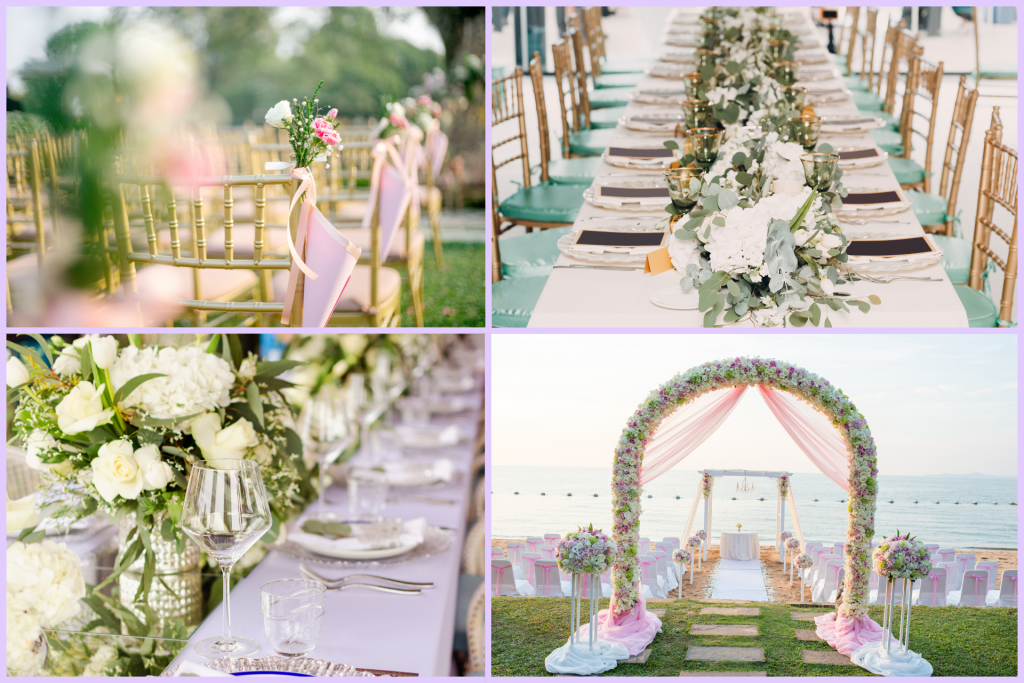
Step 5: Use it as a communication channel
A vision board isn’t meant to live in a private folder forever. Use it to its full advantage—share it with your partner, planner, or even your florist. It can become a visual language for expressing what’s hard to put into words; after all, pictures really do say a thousand words.
Visuals remove the guesswork. It can help ensure you and your fiancé are on the same page, and your support/planning team gets a clearer picture. Plus, collaborating on a board can strengthen your relationship. When you’re co-creating a vision, you’re not just picking colors—you’re rehearsing how to make decisions as a team.
Pro tip: Schedule a “vision date night.” Pour some wine, open your laptop, or grab your scissors, and build your board together.
Step 6: Revisit and refine
Your board shouldn’t be static. As planning evolves, so will your vision. Check in with it every month or so to see what still feels right and what doesn’t. The goal isn’t to have every detail figured out—it’s to have a visual compass that keeps you grounded.
Step 7: Use your board for self-regulation
Wedding planning, even under the best conditions, activates the same stress circuits as other major life events. Between family expectations, budget negotiations, and decision fatigue, your nervous system can become frayed. When you notice your stress rising, take a few minutes to look at your board and use it as a way to center yourself. Let it remind you of the feelings and core values you’re aiming for—not the exact shade of linen or style of plate. Pair it with a few deep breaths, and you’ve got a built-in mindfulness moment.
When your vision board becomes the problem
If your board starts triggering more pressure than pleasure, it’s time to pause. Difficulties curating, comparing, and feeling overwhelmed can make your vision board something stressful, rather than helpful.
Do you feel calmer or more stressed after looking at it? Are you comparing your board to others instead of focusing on your own preferences? Is your partner starting to feel left out or overwhelmed by it? If so, it might be time to strip it back or pause altogether. Tuck a physical board in the closet, remove a digital one from your phone, or even start fresh. Sometimes the best way to reconnect with your vision is to un-pin everything, take a break, and rebuild—this time, from your gut.
Final thoughts: Reframe how you use a vision board
A great wedding vision board isn’t about aesthetic perfection—it’s about capturing the essence of why you’re getting married and creating a visual reminder of that. When used with intention, it can calm your stress, clarify decisions, and keep you focused on what matters most: building a celebration that feels like you two. Whether your board lives on Pinterest, a corkboard, or your kitchen table, keep it simple, meaningful, and emotionally true. Because when the big day arrives, no one will remember the chairs—they’ll remember how it felt to be there, celebrating your next season of life.

Dr. Vivian Oberling is a licensed clinical psychologist with degrees from UCLA, Harvard, and Stanford. In her private telehealth practice, she works with adults navigating anxiety, identity shifts, and relationship dynamics—whether they’re dating, partnered, or parenting. She also provides executive coaching and behavioral health advisory support to tech startups and legal tools reshaping how we think about love, marriage, and psychological safety. Dr. Oberling combines 10+ years of clinical expertise with modern, real-world insight to help people move through uncertainty with clarity and connection.
0 Comments