
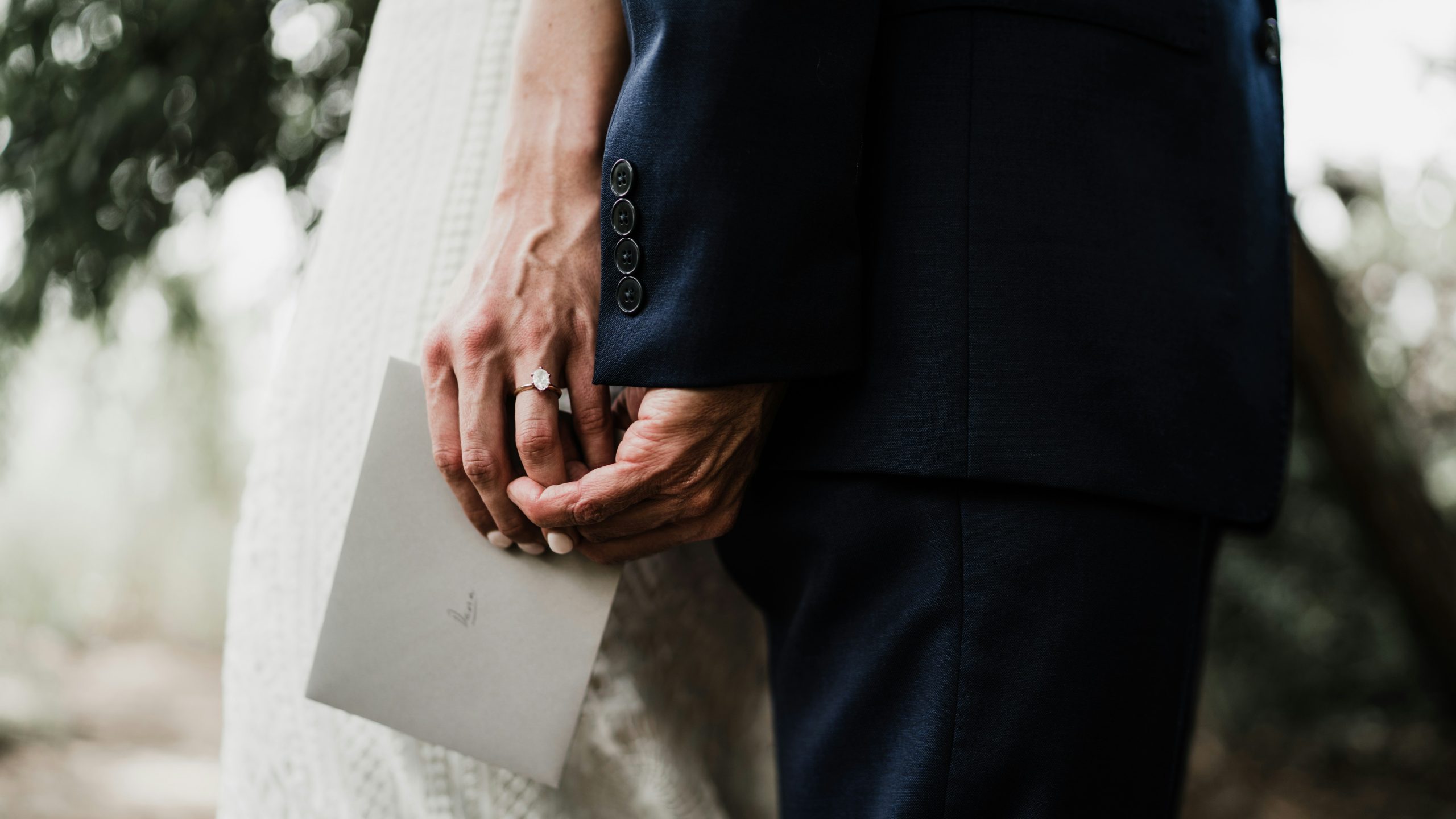
In all the hubbub of a wedding day, it’s easy to get swept up and miss the small moments that make a lasting impression. Don’t let that happen to you. Build in moments of intention so the day doesn’t pass you by too quickly.
Wedding day letters are one of the simplest and most meaningful ways to stay present and feel connected to your partner. A few minutes of stillness. A moment of grounding. A reminder of why you’re doing all of this in the first place.
They’re not just sweet, Instagrammable traditions. From a psychological perspective, writing a letter like this strengthens attachment, reinforces commitment, and lowers stress by activating the “felt sense of security” we get from emotionally attuned communication. In other words, it’s not only romantic—it’s a genuine stress reliever on a day you’ll likely need it most.
In this guide, we’ll walk you through how to write the perfect wedding day letter—what to say, what to avoid, how to find that emotional sweet spot, and how to make it feel personal and real. You’ll also get research-backed tips drawn from couples’ work to help your words land exactly the way you want them to.
The importance of wedding day letters
A wedding day is a cocktail of excitement, adrenaline, stress, nostalgia, grief, and joy. That mix is beautiful, but it can also be emotionally overwhelming. Many couples assume their connection will naturally shine through the chaos, but big events have a way of pulling you into the details and away from the present.
A letter helps you slow things down. It’s a way to regulate, to connect, to actually feel and experience the day, even if you’re not physically together in that moment.
Research supports this, too. One study found that emotionally expressive writing enhances relationship satisfaction by deepening shared meaning and strengthening intimacy. Think of it as a way to stay anchored to your bond on a day that can be both extraordinary and intense.
Start with the emotional tone
Rather than starting with the actual words (I know, it feels counterintuitive), start with the feelings that come up when you think about your partner or your relationship. What’s your relationship’s vibe? Are you two sentimental? Dry-humored? Teasing? Adventurous? Sweet?
Beginning here matters because the perfect letter isn’t about finding the fanciest phrasing—it’s about capturing the feeling underneath it. The most meaningful wedding day letters reflect the couple’s emotional culture.
Need a little guidance? Ask yourself:
- What tone feels like “us”?
- What helps my partner feel most seen?
- What emotional energy do I want to set for them today?
If you two laugh your way through every conflict, a letter dripping in poetic vulnerability may feel off-brand. If your partner is deeply sentimental, leaning into heartfelt emotion might land best. Choose a tone that feels like home.
The anatomy of the perfect wedding day letter
Now that you have the tone, let’s break the letter into smaller, actionable steps. Do what feels right for you, and feel free to skip or add steps as needed.
A warm opening
Start with something that brings your partner instantly into the moment. It doesn’t need to be poetic or elaborate; it just needs to feel real. You might say something like, “Good morning, my love. You’re probably sitting on the edge of the bed right now trying not to cry,” or “If you’re reading this, it means we’re actually doing this. Wild.” Even a simple line like, “I’m writing this knowing that in a few hours, I get to marry you, and I can’t wait,” can set the perfect tone. This opening eases them into the day and the rest of the letter.
A snapshot of your journey
You’re not writing a novel, but reflecting on the emotional or relational highlights gives a meaningful nod to how far you’ve come together. You might mention a small moment that changed how you saw them, a challenge you overcame as a team, a memory that perfectly captures the essence of your relationship, or something they recently did that reminded you exactly why you chose them. These small reflections are where intimacy really deepens; nostalgia is powerful and can increase closeness and optimism.
What you love most about them
Specificity is everything. While saying “you’re amazing” is always nice, something like “you’re the only person who can make me laugh when I’m on the verge of losing my mind” will land even more so. Focus on their character, the way they show love, how they make you feel, and the parts of them not everyone gets to see. This is your chance to reflect their strengths back to them in a way that feels personal and meaningful.
What you’re excited for in marriage
This is where you shift the letter toward the future. Keep it grounded, while still leaving room for a bit of dreaming. You might say something like, “I can’t wait for the tiny routines we’ll build without even realizing it, like our Sunday coffee ritual or your terrible attempts at folding laundry,” or “I’m excited to choose you over and over again, especially on the days it’s harder.” This part is really about the life you’ll build together, not just the wedding day itself.
A reassurance or grounding message
Wedding days can spike anxiety for both of you, so adding a line that soothes and calms your partner can be significant. You might say something like, “Today is going to be a whirlwind, but just look for me. I’m right there with you,” or “Take a breath. We’re in this together. Forever!” These small reassurances provide emotional safety, which forms the foundation of a secure attachment.
A closing that feels real, and you
Try to avoid clichés and focus on an ending that mirrors your dynamic; whether that’s a line from an inside joke, a private nickname, a meaningful promise, or a simple heartfelt statement. Something like, “See you at the end of the aisle. I’ll be the one trying not to ugly-cry,” can leave the perfect final vibe.
When these pieces come together, your letter will be a meaningful moment your partner won’t forget.
What to avoid
Let’s chat about some things you should probably not include in your wedding day letter to your partner.
Don’t include heavy topics or unresolved conflict
This is not the moment to say, “By the way, I’m still upset about the rehearsal dinner seating chart, but lol!” If it requires processing, handle it after the wedding, not within a letter intended for emotional connection for the day.
Avoid overly polished, Pinterest-y prose
While it can be tempting to use tools (like quotes or ChatGPT), if the letter doesn’t sound like you or something you would say out loud, cut it.
Don’t make predictions you can’t promise
Saying something like “Marriage will always be easy with you” is sweet, but probably not true. You can absolutely share your hopes and dreams, but try to avoid promising perfection. Aim for sincerity instead.
Skip things that require context
Skip anything that requires extra context. If it needs explanation, it will likely pull your partner out of the emotional flow. With so much already happening on the wedding day, simplicity is key.
With these in mind, you can avoid these common missteps, and your words can land with more clarity, warmth, and emotional impact.
Additional tips to make your letter meaningful
Here’s where psychology can help. These are the nuances that make letters land on a deeper level.
Use concrete examples
Instead of vague traits (“You’re thoughtful”), highlight specific moments (“You refill my water bottle without asking”). This specificity strengthens emotional memory and reinforces what psychologists call emotional salience, which helps your partner in a memorable and impactful way.
A little vulnerability goes a long way
Sharing a moment of vulnerability, even if it feels awkward or uncomfortable, can have a big impact. Saying something your partner may already know but doesn’t often hear out loud can strengthen intimacy and deepen your attachment. Vulnerability begets vulnerability, and opening up in this way encourages your partner to meet you at the same depth, enhancing the bond between you.
Remember about the nerve of the day
It’s natural to be nervous or stressed on the day, so keep that in mind. Is today the best day to write a 5-page letter? Maybe not. For the most part, learning to write in shorter paragraphs and with a simple structure can be helpful for emotional regulation.
Don’t feel pressured to do all these things, but keeping them in mind can help you write a letter that feels most meaningful for this day.
A letter doesn’t always have to be a handwritten letter
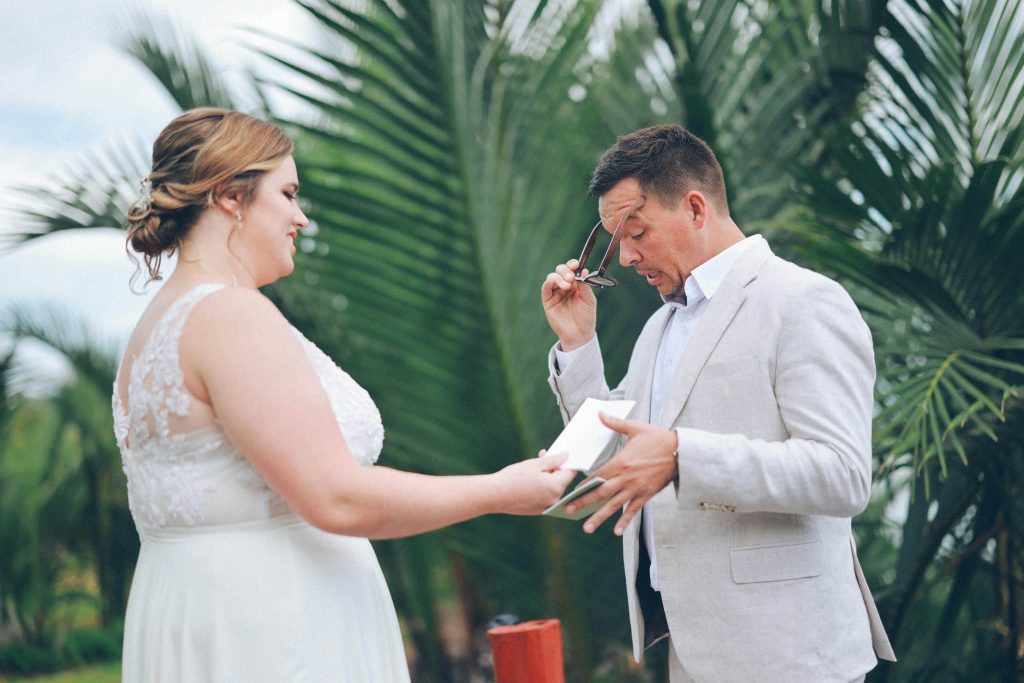
If a traditional handwritten note doesn’t feel authentic to you or your fiancé, think outside the box. You can still incorporate all the emotional elements we’ve discussed so far while selecting a mode of delivery that feels more natural to your relationship.
Maybe it’s an email or a beautifully worded text message. Maybe it’s a voice memo they can replay throughout the day, or a short video montage with a voiceover that captures your shared history. Some couples even record a private podcast-style message or create a small photo booklet with captions.
The format matters far less than the intention behind it. Choose a medium that feels true to who you are as a couple, and it will land just as meaningfully as a letter.
Final thoughts: Creating a wedding day letter that your partner will cherish
At the end of the day, writing the perfect wedding day letter isn’t about being poetic or profound. It’s about authenticity to you, your partner, and your relationship.
It’s also about creating a pause in this day to honor the love you’ve built and the partnership you’re stepping into. Whether your letter is handwritten, typed, recorded, or filmed, what your partner will remember most is how it made them feel—grounded, connected, and chosen.
When you write with sincerity, specificity, and a tone that feels true to the two of you, your letter becomes more than words on a page. It becomes a keepsake your partner can revisit for years.
So, put pen to paper or voice to recording. Remember, you’re not aiming for perfection; you’re aiming for connection. And that’s what will make your wedding day letter unforgettable.

Dr. Vivian Oberling is a licensed clinical psychologist with degrees from UCLA, Harvard, and Stanford. In her private telehealth practice, she works with adults navigating anxiety, identity shifts, and relationship dynamics—whether they’re dating, partnered, or parenting. She also provides executive coaching and behavioral health advisory support to tech startups and legal tools reshaping how we think about love, marriage, and psychological safety. Dr. Oberling combines 10+ years of clinical expertise with modern, real-world insight to help people move through uncertainty with clarity and connection.
0 Comments