
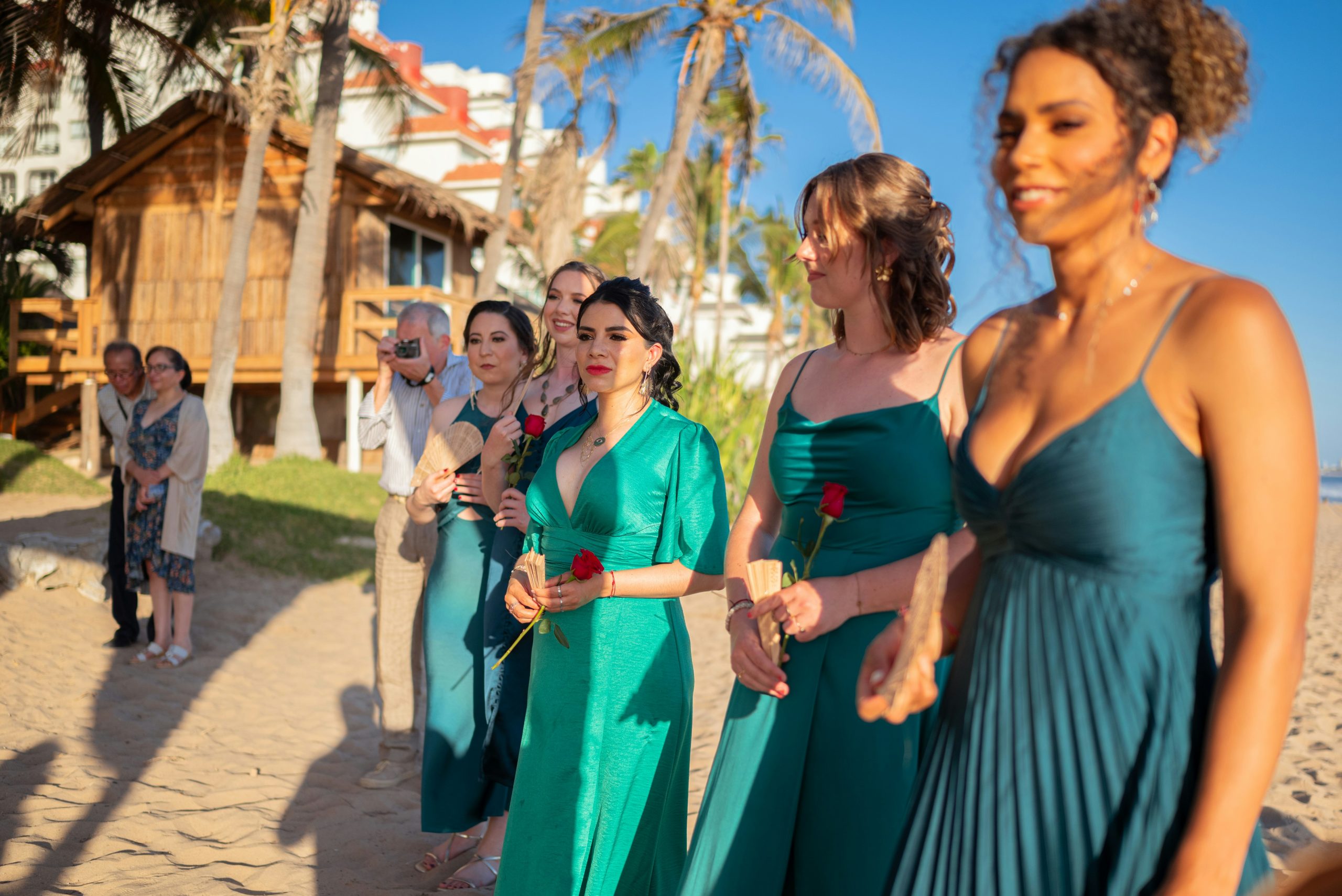
Ever stood in front of your closet, holding that really cute white/beige dress and thought… Can I wear this to [name]’s wedding?
You’re not alone; this has been one of the most persistent etiquette debates in wedding history. Wearing white to a wedding seems like a simple outfit choice, but it can stir up big feelings for lots of different people. It sits right where tradition, family expectations, and the whole ‘don’t steal the spotlight’ worry all collide.”
In this article, we’ll break down the modern etiquette of wearing white, the psychology behind why this color sparks so many feelings, how to navigate the gray areas (ivory? cream? a white floral print?), and what to do if you accidentally commit a wedding-wardrobe faux pas. We’ll also talk about cultural sensitivities and the shifts in contemporary weddings that are changing the rules.
Why does it matter?
To understand why this is even a debate, it helps to look at what white represents in a Western wedding. For generations, the color has symbolized purity and new beginnings. Even if you see it as just a pretty dress, the cultural meaning behind it has stuck around.
Psychologically, white taps into two things people pay attention to at weddings: who the spotlight belongs to and making sure it stays on the couple. Weddings naturally create a sense of “this is their moment.” When a guest walks in wearing an all-white outfit, it pushes against that long-standing expectation and can feel unexpectedly disruptive.
There is also the emotional ripple effect. If attention shifts away from the couple, even unintentionally, it can stir protective feelings from family, friends, and sometimes the couple themselves. It ends up being less about the dress and more about what people believe it represents.
Why do people get upset about guests wearing white?
Even if the couple says it’s fine, wearing white can still draw side glances. It might seem overblown, but weddings are emotionally loaded moments. People are vulnerable, everything feels heightened, and anything slightly out of place stands out more than usual.
White also signals “center stage” in Western weddings. When a guest wears it, it can feel like a small challenge to that unspoken structure, even if no one says it out loud.
Family history plays a role, too. Many families have old stories about someone wearing white when they shouldn’t have, and those memories quietly shape expectations. Even if the couple is laid-back, older relatives may react based on those past experiences.
You’re not responsible for managing everyone’s feelings, but understanding these dynamics makes it clearer why the “no white” rule still sticks around.
So… can you wear white to a wedding?
The honest answer is usually no, but it depends.
The traditional rule is still alive and well in many families. But weddings today do look different than weddings fifty years ago. Many couples genuinely don’t care if a guest wears white. Some even prefer a neutral or monochrome color scheme and want guests in white, cream, or lighter colors.
The best way to think about it would be to start with the context rather than universal rule-following. Who’s getting married? How traditional is the couple and family? What’s the vibe? How close are you to the couple? Is the white dress a relaxed sundress… or something that looks like it belongs in a bridal magazine?
When wearing white is pretty much a no
A good rule of thumb? Avoid anything that could be mistaken for bridal. A white gown, a sleek white jumpsuit, or a structured white cocktail dress can cause problems; not because you’re necessarily doing anything wrong, but because weddings make people read meaning into everything.
As a general guide, if you’re not close with the couple, err on the side of caution. And/or if the wedding leans traditional or includes older family members who deeply value etiquette, wearing white will probably go wrong.
There’s also a funny twist: if the bride is wearing a non-white outfit for cultural or personal reasons (like red, gold, blush, or something jewel-toned), showing up in white can actually feel more attention-grabbing. So, consider all these before making a decision.
When wearing white might be fine
Now for the nuance, because not all white is created equal.
A patterned dress with a white base? Usually fine. A beige or cream linen dress for a daytime garden ceremony? Also generally okay. Many couples in modern weddings don’t mind white or neutrals at all — especially at beach ceremonies, vineyard brunch weddings, or more minimalist events.
But here’s the caveat: even in permissive settings, an all-white formal dress still gives people pause. You never want to be the guest everyone whispers about during cocktail hour.
The simplest solution? When in doubt, ask. Couples today are used to fielding these questions, and most genuinely prefer the clarity.
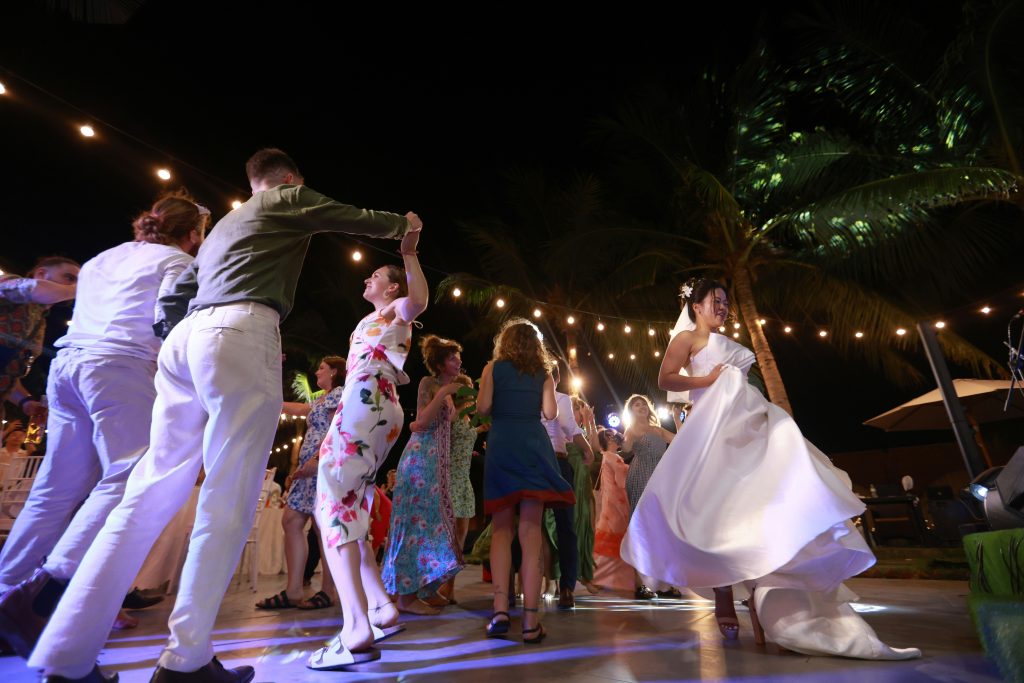
Cultural context changes the rules completely
One of the biggest misconceptions about wedding etiquette is that it’s universal. It’s not. White doesn’t hold the same meaning everywhere.
In many South Asian, East Asian, Middle Eastern, and African wedding traditions, brides wear bold colors; think red, gold, pink, green, or intricate patterns. In some cultures, white is actually associated with mourning. In these situations, white may be fine, or color is encouraged and expected, making white a taboo, but for another reason.
On the flip side, some modern Western couples want a fully neutral, white-on-white aesthetic and explicitly ask guests to wear lighter shades.
So if you’re attending a cross-cultural wedding, ask or observe what others are planning to wear. The etiquette depends on the cultural story being told that day.
How to handle a white-outfit mishap
It happens. Maybe the lighting is different than what you expected, or your dress looks more ivory in person than it did online, or you didn’t realize the bride’s style was extremely traditional. Suddenly, you’re the guest in white, and you feel like you’re glowing under a spotlight.
Take a breath. The best approach is subtle damage control. If you have a jacket, scarf, or shawl, throw it on to break up the color. Move through the event with calm confidence; panicking or apologizing loudly actually draws more attention.
If you sense the bride feels a certain way, a brief, private acknowledgment goes a long way. Pulling her aside for a moment and sharing something like, “I just realized this looks whiter than I thought — didn’t mean to step on any toes. You look stunning, and today is about you.” Then let it go.
The goal is to keep the emotional temperature low, so the focus returns to the couple.
Choosing an outfit to fit the vibe
When you’re deciding what to wear, a helpful question to ask yourself is: Does this outfit support the vibe of the event, or compete with it? You don’t need to blend into the background ( you’re allowed to look great), but weddings work best when guests dress in a way that complements the moment rather than challenges it.
Focus on choosing colors and textures that feel festive and respectful instead of worrying about strict rules. The goal is to wear something that fits the couple’s vibe, not something that accidentally looks like it belongs to the main event.
Final thoughts: It’s less about color and more about consideration
At the end of the day, the “Can you wear white?” question isn’t really about white. It’s about relational awareness. It’s about showing up in a way that honors the couple’s moment and reduces any unnecessary friction.
Weddings are vulnerable and meaningful rituals. Your job as a guest is simple: witness the day and help create an environment that feels warm, grounded, and drama-free. If wearing white complicates that, skip it. If the couple truly doesn’t mind, or even prefers it, then go for it.
As a guest, it’s one day, so keep the true intention in mind as you decide what to wear, and then move on to the celebration.

Dr. Vivian Oberling is a licensed clinical psychologist with degrees from UCLA, Harvard, and Stanford. In her private telehealth practice, she works with adults navigating anxiety, identity shifts, and relationship dynamics—whether they’re dating, partnered, or parenting. She also provides executive coaching and behavioral health advisory support to tech startups and legal tools reshaping how we think about love, marriage, and psychological safety. Dr. Oberling combines 10+ years of clinical expertise with modern, real-world insight to help people move through uncertainty with clarity and connection.
0 Comments