
Few things shake up a relationship quite like having kids. Kids not only change your partner, but they change you. This tiny human arrives, and suddenly, everything is or (at least) feels different. Sleep goes out the window, the to-do list grows, the financial responsibility shoots up… the list can go on. Even couples who have done the work to build a rock-solid foundation can find themselves thrown for a loop.
The bright side? You’re not alone. I would argue that there is not one couple whose relationship has not been altered by having children. In this article, we’ll break down what commonly shifts in a relationship when you become a parent and how psychology can help you understand it better.
Identity shifts that occur with parenthood
People have strong opinions about whether parenthood changes your identity. Some say, “I’m still the same person—I just have a kid,” as if change is something to keep away at all costs. But denying that shift can actually be more harmful.
Parenthood brings new roles, values, and emotional layers that naturally reshape how you see yourself and your partner. But let’s reframe it: it’s not about losing who you are, it’s about expanding. And even growth brings grief—whether it’s missing your old freedom or the version of your relationship before kids. That grief doesn’t mean regret; it means your brain is sorting through what stays, changes, and is still emerging.
And here’s the kicker: you’re not doing it alone. You’re building a new identity while your partner is doing the same—parallel processes that sometimes sync beautifully and sometimes collide. Part of staying connected is learning how to redefine your identity as a couple, not just as co-parents, but as evolving individuals in a shared life.
Being a parent means losing control of your life
Pre-parenthood, you chose how to spend time together, how to travel, when to talk, and when to be alone. But once you are a parent, the choice in your life starts to slip away. Instead of feeling self-directed in life, it starts to feel reactive. You’re constantly responding to cries, schedules, and needs that aren’t your own.
This can leave both partners feeling like they’re living on autopilot, just trying to make it through the day. Losing a sense of control—even temporarily—can shake your identity, your confidence, and your connection with each other. It’s easy to start missing the version of your life where you felt like the author of your own story. Some can push through this season and adapt, while others may find this a true challenge that doesn’t just dissipate with time. This can result in more chronic impacts to the relationship, as you both find ways to reclaim moments or a bigger sense of agency.
The psychological load of multiple roles
Becoming a parent means suddenly wearing a lot more hats—you’re still a partner, but now you’re also a parent, a co-scheduler, a provider, a teacher, a therapist-in-training, and more. When we’re stretched too thin across roles, that’s when exhaustion, resentment, and disconnection start creeping in. It’s not just physical fatigue—it’s mental and emotional bandwidth running low.
It’s also a shift in priorities. Some roles—like caregiver or provider—move to the top, demanding more energy, while roles like romantic partner or friend quietly slide down the list. That shift isn’t always intentional, but it shows up in how much (or how little) attention your relationship gets.
Roles can also mess with how you see yourself. Maybe you were once the funny one, the spontaneous one, or the steady rock in the relationship. Now, to your partner, you’re “the one who always forgets the diaper bag” or “the one who’s never home on time.” These stories that start to pop up in the relationship can rewire how partners interpret each other, and not always in a flattering way.
Cognitive flexibility
With all those roles, you’ll be switching back and forth between them. That’s where cognitive flexibility comes in—your brain’s ability to switch between roles, tasks, and emotional states. Parenthood puts a huge strain on that skill. You’re expected to bounce between soothing a toddler, replying to work emails, supporting your partner, and managing household logistics—sometimes within the same hour.
The more overloaded we get, the harder it becomes to move between these roles smoothly. And that cognitive friction adds up, plummets your mood, and makes it harder to problem solve. We can then get stuck—stuck in task mode, in conflict mode, or in survival mode. And guess who gets the brunt or is usually at the center of the conflicts? Your partner.
Sleep deprivation and its impacts
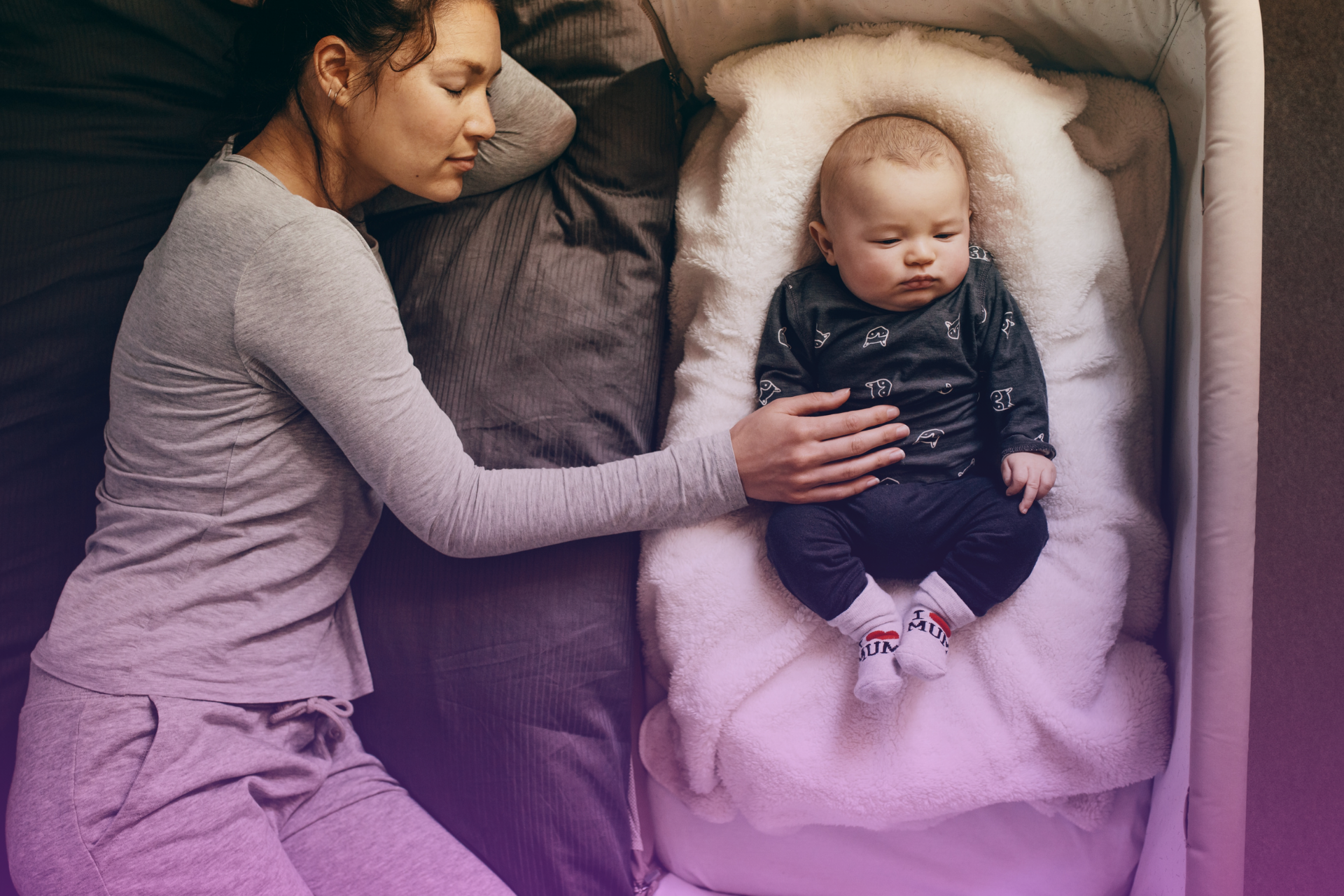
We all know that lack of sleep can make us wonky, but most people underestimate the impact of sleep on the human body and mind. Research shows that even one night of poor sleep increases irritability, lowers empathy, and makes it harder to regulate emotions. One study even found that couples who slept poorly were more likely to argue, and those arguments were more likely to escalate and feel unresolved.
Why? Because sleep impacts the brain’s prefrontal cortex, which is the part of our brain responsible for emotional regulation and decision-making. So, sleep isn’t just “nice to have”—it’s foundational to how we think, feel, and connect. That’s why prolonged sleep loss has been used in extreme settings to wear people down. And while new parents aren’t being tortured, the effects can feel surprisingly similar.
Communication distortions
Couples are often told that the key to a healthy relationship is “good communication.” But having kids doesn’t just challenge your communication—it can change everything about how and when you communicate.
Let’s take a typical example:
- Before kids: A partner says, “Hey, can we talk later tonight about what happened at dinner?”
- After kids: That same partner mutters something mid-diaper change, gets a nod that may or may not mean “yes,” and the moment is forgotten—or worse, misunderstood as avoidance.
Minor miscommunications start to pile up. Tone gets misread, patience runs thin, and emotions flare more easily. One person feels ignored; the other feels blamed. Suddenly, a relationship that once had a solid foundation of communication starts to feel like you’re speaking different languages—or worse, like you don’t want to talk at all.
Kids bring out your oldest wounds
No one tells you that becoming a parent is one of the most emotionally regressive experiences you’ll ever have. Having a kiddo often brings your own childhood stuff roaring to the surface, especially in how you parent and how you want your partner to co-parent.
Maybe your partner gets passive-aggressive and it reminds you of your father. Maybe you start making more detailed daily plans and they feel controlled, like they did growing up. These are classic attachment echoes–experiences we have early on that impact how we define, view, and interact in close relationships.
Depending on your attachment styles, the experience you have as a parent may activate old patterns of behavior. You might even find yourselves arguing about things that, on the surface, seem ridiculous—like the “right” way to cut a sandwich, how many activities a toddler should be in, or whether you should have hand-me-down onesies or brand new ones.
But these fights aren’t really about sandwiches or schedules. They’re often stand-ins for deeper fears: Do you respect how I show up as a parent? Do you appreciate what I’m doing? The content of the argument may be trivial, but the emotions underneath are anything but. In therapy, we don’t just try to resolve the argument—we dig for the meaning underneath.
Sex, affection, and intimacy
Let’s not sugarcoat it: sex and intimacy change after kids. But it’s not just about hormones or logistics—it’s about mental load and emotional safety.
One partner might feel totally “touched out” from the demands of caretaking. The other might feel neglected or unsure how to initiate. Both may secretly wonder, Are we ever going to have sex again?
For many, it may seem more about desire or not. But really, it’s more about your emotional and mental state. Spending every waking moment managing chaos and prioritizing others’ needs leaves little room to tap into that space for intimacy. Psychologically, sex becomes another “task” that is easier to push down the list. That lack of space to physically connect and maintain intimacy can stall your connection.
Power dynamics shift—often without discussion or choice
Even egalitarian couples who split chores 50/50 (however that is defined) before kids often find themselves slipping into default gender roles post-baby—sometimes by necessity, sometimes by unconscious bias. And it’s not always about who works and who stays home.
It’s about who becomes the default parent, who carries the emotional calendar, and who gets seen as the “expert” on the child’s needs. That imbalance can quietly breed resentment, jealousy, and exhaustion.
Couples often assume that if something feels unfair, it’ll get talked about. But in reality, new parents are more likely to defer, avoid conflict, or internalize guilt (“They’re so tired, I shouldn’t bring this up”). It’s a protective factor and it works when there are more important things at hand (like a hungry baby).
How to stay connected
The good news? Your relationship doesn’t have to unravel after kids—it just needs to adapt with time and intention. Staying connected means being intentional, even in small ways.
- Do regular check-ins—scheduling here is a positive! Talk about what’s working and what’s not.
- Use “when/then” language to express needs and minimize any interpretation of blame.
- Ask for what you need—don’t expect mind-reading, especially when both of you are overloaded. And this also means asking for support outside your relationship as well (ahem, therapist)
- Redefine intimacy beyond sex. Small gestures of affection matter, and those can be powerful during this time.
It’s not about going back to who you were—it’s about growing together, one honest moment at a time.
Final thoughts: Children do change your relationship, but you can define how
Having kids doesn’t ruin a relationship. But it does dismantle the old version of it. Think of it like a house renovation. The bones of the house stay the same, but the layout may shift, rooms take on new purpose, and the completion always takes much longer than predicted.
If it feels hard, that’s because it is hard. But it’s also a massive opportunity. The stress, the arguments, the confusion—they’re signals. Not that love is lost, but that love is trying to evolve and grow to encompass tiny humans as well.
So give yourselves grace. Inform yourself. Have the conversations. Give yourself the compassion. Ask the scary questions. And remember: you’re not just raising a child—you’re also building a relationship that your child will one day look to as a model of partnership.

Dr. Vivian Oberling is a licensed clinical psychologist with degrees from UCLA, Harvard, and Stanford. In her private telehealth practice, she works with adults navigating anxiety, identity shifts, and relationship dynamics—whether they’re dating, partnered, or parenting. She also provides executive coaching and behavioral health advisory support to tech startups and legal tools reshaping how we think about love, marriage, and psychological safety. Dr. Oberling combines 10+ years of clinical expertise with modern, real-world insight to help people move through uncertainty with clarity and connection.
0 Comments