
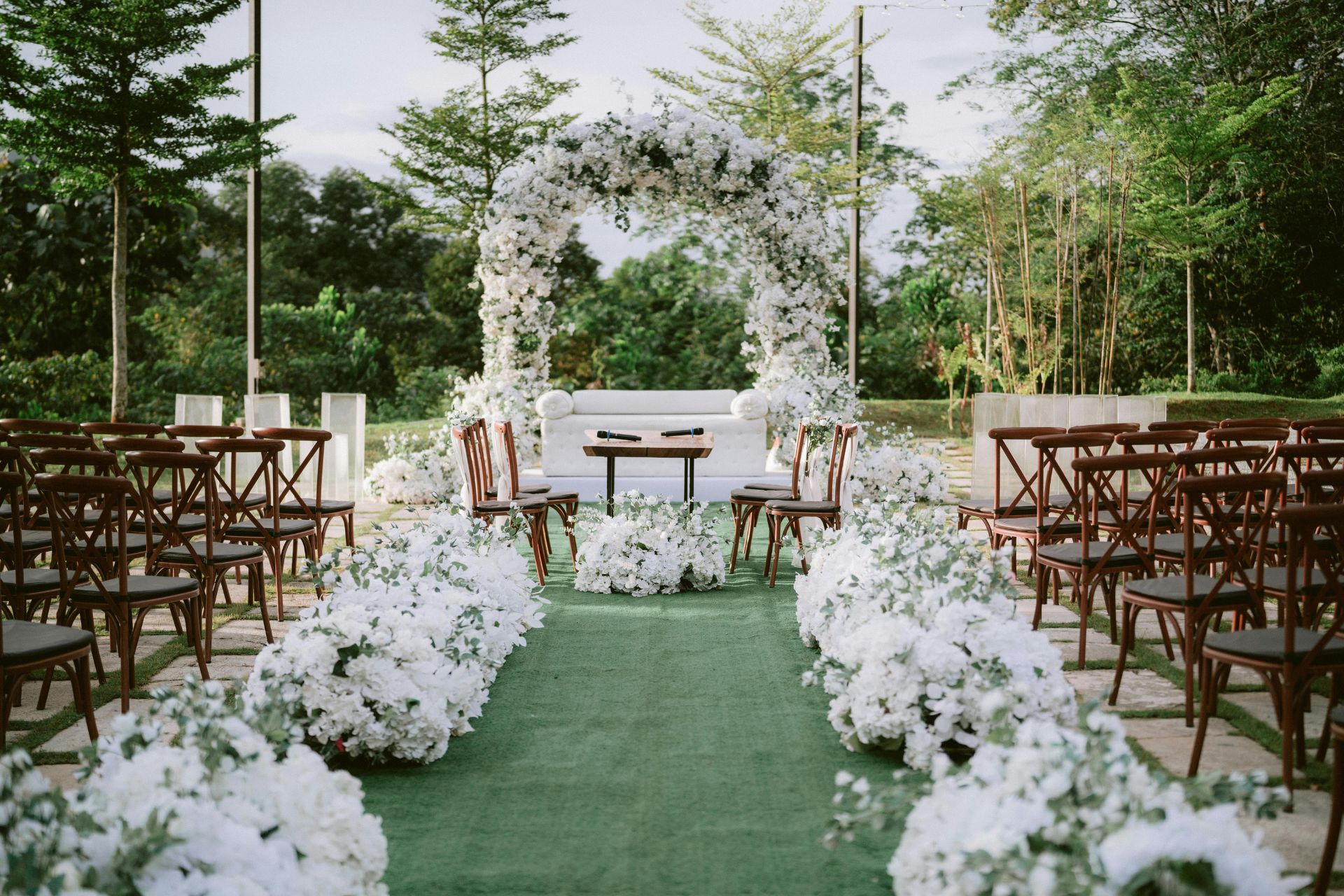
You’ve pinned the bouquets, saved the centerpiece inspo, and maybe even debated peonies vs. garden roses at midnight. Now comes the hard part—actually finding and hiring a florist. And here’s the thing: floral quotes can feel like deciphering another language. One couple’s “simple greenery” somehow costs $4,000, while another’s full rose archway is… the same price?
Flowers are often one of the biggest wedding expenses after the venue and catering. But for most of us, it can feel like talking to someone in a different language; what drives up the prices, and how can you make smart, creative choices without feeling like your entire budget is going to this one vendor?
Here we’ll walk through how to hire a wedding florist without overpaying. We’ll walk through how floral pricing actually works, the right questions to ask during consultations, red flags to watch for, and where flexibility can save you thousands without sacrificing style.
The psychology behind why florals feel “worth it.”
There’s a reason flowers hit us on such an emotional level. Research shows that simply being around flowers can boost positive emotions and life satisfaction for days afterward. In weddings, florals carry even more meaning—symbolizing abundance, celebration, growth, and beauty.
That emotional charge can make us more impulsive or lead us to overlook practical constraints, such as a budget. When couples see mockups or photos, they’re not just evaluating arrangements—they’re responding to the feeling those designs evoke. That’s why it’s easy to overspend: your brain starts linking “more flowers” with “more joy.” And to be fair, a florist’s job is to sell a dream and a service, so of course, they’ll showcase the most stunning version of that dream.
Recognizing this dynamic can actually be empowering. Being aware of how your emotions might show up helps you notice when they do, so you can make clearer, more grounded decisions. You can still honor the meaning and beauty of your day without letting the moment hijack your budget.
Start with clarity, not Pinterest
Before diving into the Pinterest rabbit hole, get clear on what you and your partner actually want. What role should flowers play—statement piece, minimalist accent, or romantic texture throughout? If that feels overwhelming, start simpler: how do you want the day to feel—natural, colorful, bright, or neutral?
Write down your top three floral must-haves (like “a bouquet that feels wild but elegant” or “lush greenery on the arch”), then list your nice-to-haves. This keeps consultations focused on what truly matters, rather than what just looks pretty online.
Pro tip: Pick your top 10 inspo photos and note what you actually love—color palette, shape, or vibe. You might realize it’s the airy, organic feel you’re drawn to, not the $10-per-stem dahlias.
Understand what you’re actually paying for
To better understand when you’re overpaying and when you’re not, let’s explore what goes into the price.
- Labor and time: Floral work is physically demanding—early-morning market runs, hours of conditioning blooms, setup at the venue, teardown at midnight.
- Seasonality: Flower prices fluctuate weekly based on supply, weather, and global demand, so depending on when your wedding is, there may be a surcharge.
- Design expertise: A good florist isn’t just arranging flowers—they’re translating your aesthetic into texture, proportion, and color harmony. That elusive vision you’re trying to describe? It’s their job to bring it to life in a way that makes you say, “Yes, that’s it!”
- Logistics: Delivery vehicles, refrigeration, assistants, rental vases, candles, wiring, and floral foam—all add to the bottom line.
So yes—prices often go up when it’s for a wedding versus, say, a 50th anniversary party. But understanding what’s behind those numbers helps you spot markups that aren’t justified—like inflated delivery fees or unnecessary rentals.
Vetting florists: Go beyond the Instagram grid
A gorgeous feed doesn’t automatically equal reliability. Questions to ask before you book to give you the bigger picture:
- Ask about average client budgets: If your budget is $2,000 and they tend to work with minimums of $6,000, you’ll both be frustrated.
- Ask how many weddings they do a weekend: Check if they do multiple weddings per weekend. Too many events can stretch a team thin, which can impact your event and your sanity.
- Request photos of past work from your venue type: If they’ve worked specifically at your venue before, score! But if not, ask for photos of venues they’ve done that have been close to yours; outdoor setups, hot climates, or destination logistics require different expertise.
- Ask about substitution policies: If peonies are out of season, do they automatically swap for garden roses, or will you get a call first? What can they guarantee, and how does that tie into pricing?
- Read reviews for their communication style: A talented florist who’s hard to reach, takes weeks to return emails, and just has a communication style that’s… prickly can still create major (and unnecessary) stress during the wedding week.
You’re not just looking for someone who makes beautiful flowers; you’re looking for someone who’ll also make the process as easy, organized, and stress-free as possible.
Know the seasonal sweet spots
If you’re flexible, choosing in-season blooms is one of the easiest ways to cut costs. Here’s a quick cheat sheet:
- Spring: Tulips, lilacs, ranunculus, sweet peas.
- Summer: Dahlias, lisianthus, hydrangea, cosmos.
- Fall: Chrysanthemums, amaranthus, zinnias.
- Winter: Evergreens, roses, anemones, dried textures.
And if your dream flower is off-season? Ask for a look-alike. Many high-end florists can recreate the shape or feel using more affordable or in-season stems. For instance, garden roses can mimic peonies’ lushness almost perfectly in late summer.
Bundle your floral “zones.”
Think of your florals in three zones: high-impact, medium-impact, and low-impact.
High-impact zones are your ceremony arch, bridal bouquet, and entry installations—the pieces that show up in nearly every photo. Medium-impact zones include reception centerpieces, bar arrangements, and cake florals. And low-impact zones? Those are the extras—cocktail tables, bathrooms, signage—nice to have, but not essential.
Invest most in the high-impact areas, keep the medium ones balanced, and scale back (or reuse!) for the low-impact spots.
Wondering how to reuse florals on the same day? That ceremony arch can easily move behind your sweetheart table for the reception. Bouquets can double as bar arrangements. Repurposing saves hundreds while keeping the look cohesive and intentional.
Ask for itemized proposals
During the consultations, request a line-by-line quote—not just a single package number. Things to look for:
- Number and type of arrangements
- Flower varieties (and any “premium” stems)
- Rental items
- Labor and delivery costs
Why does this matter? When everything’s itemized, you can make smart, flexible adjustments. Maybe you remove two guest-table arrangements to fund a lush ceremony backdrop—or swap out pricey stems in your reception centerpieces while keeping them in your bouquet. Without those line-item details, you lose the power to make thoughtful trade-offs.
Don’t skip the sample arrangement
If your floral budget exceeds $2,000, consider asking for a (paid) sample arrangement before signing the contract. It’s standard in the industry and saves potential heartache.
Seeing your color palette and proportions in real life helps you calibrate expectations—and allows for changes before the big day. Some florists even deduct the cost of the sample from your final invoice if you book.
Be strategic with color and scale
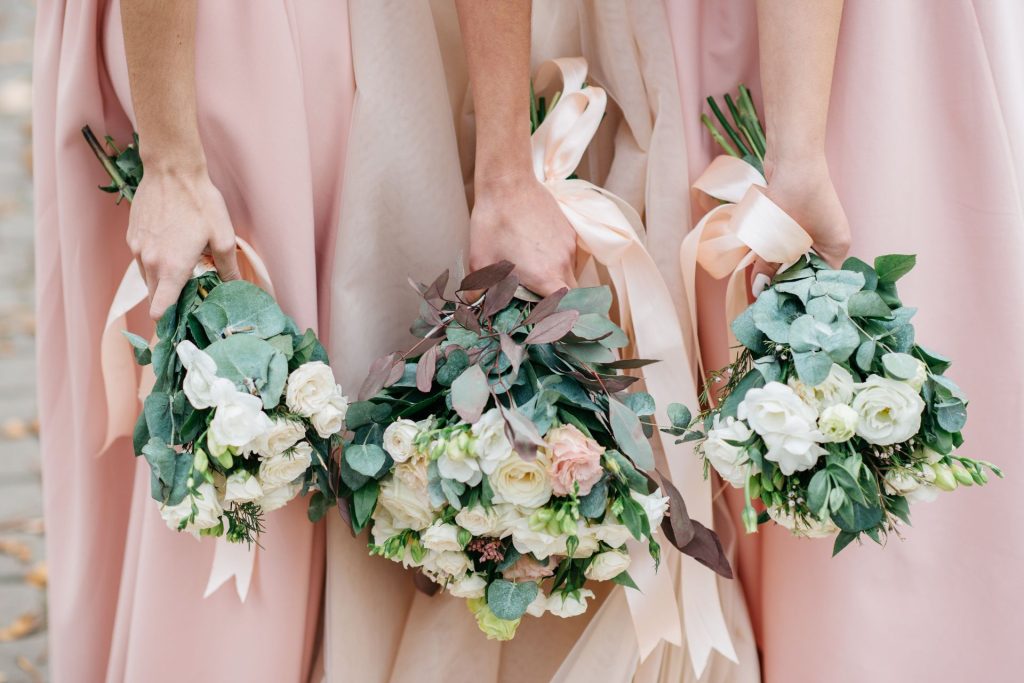
Florists price by stem count, but visual volume isn’t always linear. Larger, looser greenery (like eucalyptus or ferns) can fill space affordably, while clustered arrangements with expensive blooms can drive up costs quickly.
A smart trick? Anchor arrangements with texture (grasses, berries, filler blooms), then use your premium flowers sparingly for focal points. You’ll get the same lush look for less! And you don’t have to know precisely which fillers you want —just share your desire with your florist and see what they come up with.
DIY with caution
For many couples, that first floral quote sends them running straight toward the DIY route. And while DIY flowers can sound tempting, they’re rarely the money-saver people hope for. Wholesale orders require pickup, hydration, storage, and arranging—all under serious time pressure. If you genuinely love floral design or have a skilled friend to help, it can be fun, but it’s still a lot of work. And you’ll need to weigh whether the savings are worth the added stress.
A smarter middle ground? Try a hybrid approach. Hire a florist for the bouquets and ceremony setup, then handle simple centerpieces yourself. That way, you get professional design where it counts, without stretching your budget (or your sanity).
The red flags of overcharging
To help make sure you aren’t being taken advantage of, here are some signs your quote might not match the value:
- Flat delivery or setup fees that exceed 20% of the total cost.
- No written contract or vague “floral package” pricing.
- Pressure to add extras “for balance” or “scale.”
- Unexplained markups on rentals or reused inventory.
Now, these don’t automatically mean you’re being overcharged—but they are a sign to dig a little deeper and ask questions. And remember, overpaying isn’t just about the dollar amount; it’s about paying more than the value you’re actually getting.
The psychology of negotiation (and why it works)
Many couples feel awkward negotiating wedding services, worried it’ll come across as tacky or disrespectful. But research in behavioral economics shows that framing matters—it can actually help you reach better outcomes.
Instead of thinking you need to haggle or strong-arm vendors, try reframing the interaction as collaborative and curious. For example, “We love your style and want to work with you, but our budget maxes out at $3,500. Do you have any ideas or options to make that work?”
Questions like this lower defensiveness, signal respect, and acknowledge the florist’s expertise while inviting their creative problem-solving. In other words, you’re building a partnership—not demanding discounts.
This also underscores the power of asking questions throughout the process. You might not be a florist, but you are the client—and it’s always better to ask now than regret it later. Of course, texting your florist every day with new questions is overkill, but staying curious about your budget, design tweaks, and alternative options (especially as you finalize your order) is key to setting yourself up for success.
Avoid the “comparison traps.”
This isn’t directly about hiring, but it’s a major factor in why many couples overpay for florals. When you’re planning your wedding—and simultaneously attending others or scrolling through endless inspiration online—it’s easy to start comparing your plans to everyone else’s. Before you know it, you’re adjusting your vision to “match” what feels like the new norm.
To avoid that trap, set boundaries once you’ve booked your florist. Limit the scrolling, because continuing to browse floral inspiration will only make you second-guess your decisions. Remember, what makes a wedding beautiful isn’t symmetry or price—it’s coherence and emotional resonance. And if something about your design suddenly feels “off,” pause to ask whether it’s genuinely your preference or just the influence of someone else’s vision.
The bigger picture: Beauty with boundaries
Hiring a florist isn’t just about petals and pricing—it’s about creating a celebration that truly reflects you as a couple and the stage of life you’re stepping into. It’s the art of balancing dreams with resources and boundaries.
So, how do you hire a wedding florist without overpaying? You slow down. You learn how floral pricing works, notice where your emotional triggers lie, and communicate with professionals as partners, not just vendors. You spend intentionally on the details that matter most to your shared story.

Dr. Vivian Oberling is a licensed clinical psychologist with degrees from UCLA, Harvard, and Stanford. In her private telehealth practice, she works with adults navigating anxiety, identity shifts, and relationship dynamics—whether they’re dating, partnered, or parenting. She also provides executive coaching and behavioral health advisory support to tech startups and legal tools reshaping how we think about love, marriage, and psychological safety. Dr. Oberling combines 10+ years of clinical expertise with modern, real-world insight to help people move through uncertainty with clarity and connection.
0 Comments