
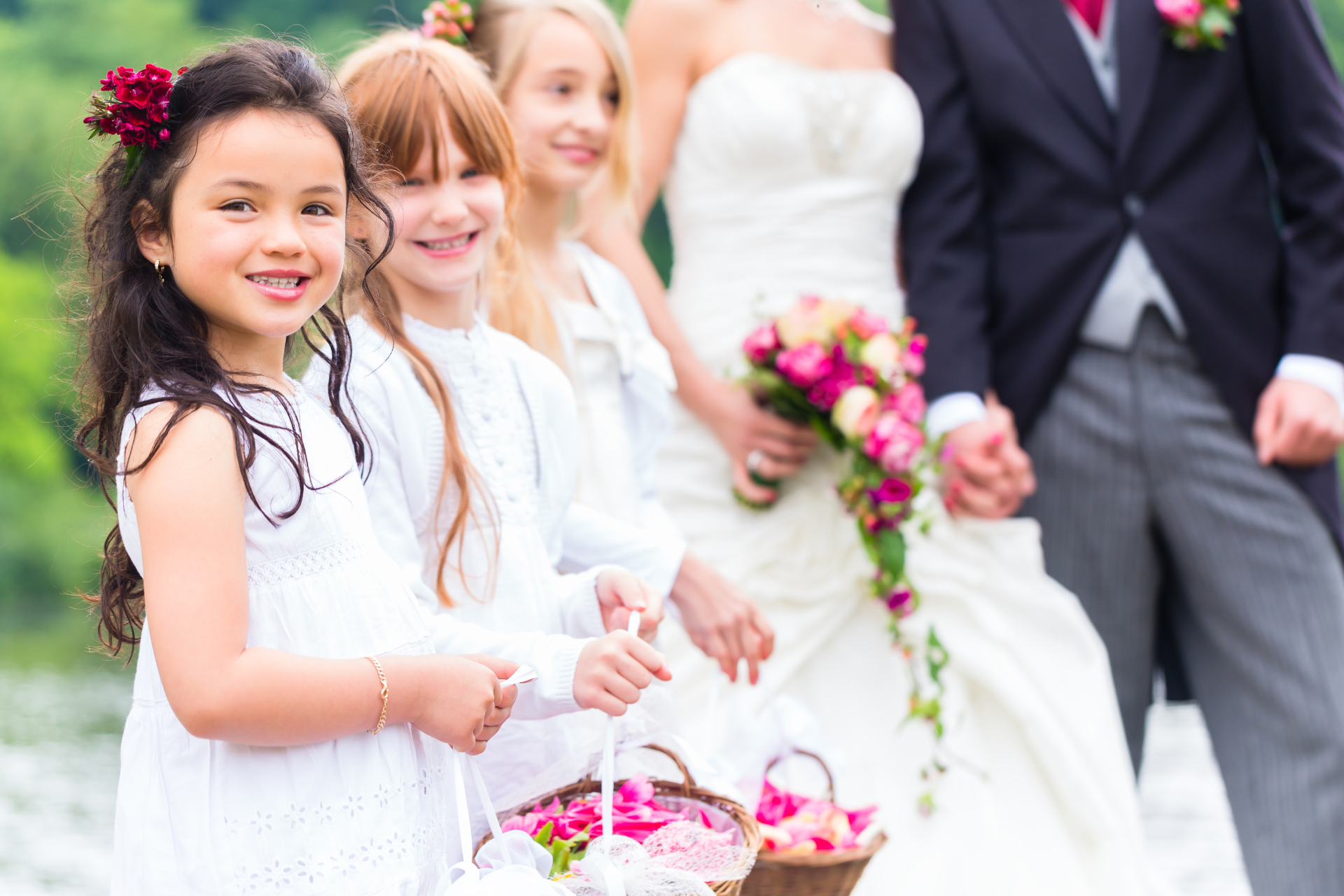
Few wedding decisions spark stronger opinions than this one: Should you invite kids to your wedding?
At first, it might seem like an easy answer—until you remember that your best friend just had a baby and will want to bring her angel. Or someone reminds you about that time your cousin’s toddler running amok in the church last Christmas mass…
The “kids or no kids” question hits a deep intersection of logistics, family expectations, and personal values—and how you handle it can cause unexpected ripples.
But you’re not alone. This article will walk you through how to make the decision that’s right for you, one that considers your personalities, relationship dynamics, and the possible consequences that can arise. We’ll unpack the psychology of inclusion and boundaries, explore real strategies for communicating your decision gracefully, and help you find a middle ground if you’re feeling stuck.
At first glance, it might seem like a simple logistical choice—budget, space, or timing. But for many couples (and their guests), it runs deeper than that. Weddings are symbolic events about family, continuity, and community. So when you decide who’s “in” or “out,” it can unintentionally communicate your values—who you see as central, who you’re prioritizing, and what kind of family culture you’re building together. Naturally, that can stir up a lot of feelings, whether those perceptions are accurate or not.
From a relationship standpoint, this decision also offers insight into how each of you manages boundaries and navigates your broader support network. One partner might prioritize harmony (“I don’t want to upset anyone”), while the other seeks autonomy and control (“It’s our day; we can decide what we want”). Neither approach is wrong—but the process of making the decision together can reveal your conflict style, attachment needs, and even your early family conditioning around inclusion, belonging, and control.
The psychology of inclusion and belonging
Even when guests understand your reasoning, exclusion can still sting. Research on belongingness shows that humans have a strong need to feel part of significant social events—especially those tied to love, family, and identity. So, if someone reacts emotionally, it’s not just about the logistics of childcare; it’s also about feeling left out of a milestone moment.
Looking at it in this way can help you respond with empathy, even if you do feel a bit of irritation. Your empathy doesn’t mean you’re reopening negotiation—it just shows awareness, which goes a long way in preserving that relationship.
Things to consider
Before making your decision, zoom out and consider all the factors that might be at play.
The family culture (on both sides)
If you come from a family-oriented culture, not inviting kids might break an unspoken rule. In many families, children are seen as part of the collective—an extension of the adults’ experience. Excluding them can feel like excluding the family as a whole.
The logistics
Are there practical constraints to consider? Maybe your dream venue doesn’t allow children, or you’re working within a strict budget or limited space. Understanding how much of your choice is shaped by logistics versus preference helps clarify what’s really driving your decision.
Your guests
Think about who’s on your guest list and what season of life most people are in. Are many of them parents with young kids who might struggle with childcare? Or is your guest list mostly adults ready for a night out? Recognizing these realities helps you anticipate reactions and respond with empathy instead of defensiveness.
Your emotional bandwidth
Some couples love the joyful chaos that comes with having kids around; others feel overwhelmed by the added noise and unpredictability. Ask yourselves honestly: What can we realistically handle on that day? Your wedding should match your emotional capacity, not just your vision board or what others want.
Ultimately, thinking through these factors helps you make a decision that feels authentic and aligned with the kind of celebration you want to create.
Brainstorm all your options
It doesn’t have to be “yes, children” or “no children.” There are opportunities in between that could work for you. So, before you feel forced to make a binary choice, consider all your options—even if you don’t think you’ll choose.
By opening yourselves up to all options, you can get the creative juices flowing, ensure you’ve covered everything, and make a clear choice knowing what your options may be. Some examples to get you started are:
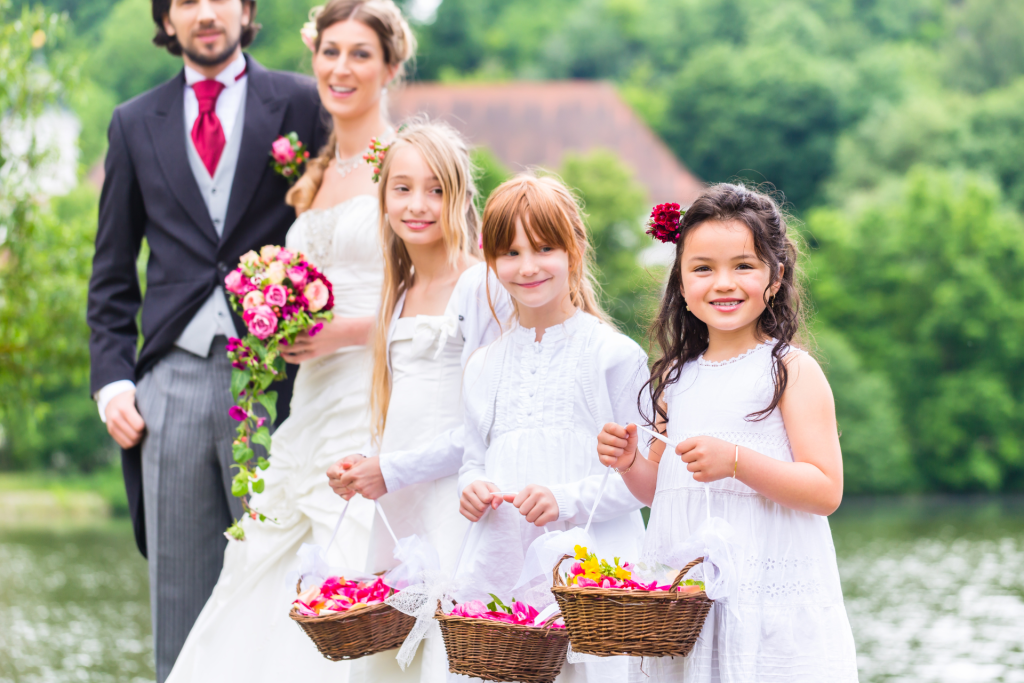
- Kids at the ceremony, adults-only reception: This allows inclusion for the meaningful part of the day while preserving a calmer atmosphere later.
- “Inner circle” exception: Inviting only nieces, nephews, or godchildren keeps things personal without opening the floodgates.
- Childcare on-site: Some couples hire professional childcare near the venue—a gesture that shows thoughtfulness and removes barriers for parents.
- Designated “family area”: Creating a kids’ corner, quiet zone, or outdoor play space can make families feel welcome while minimizing disruption.
So, get those creative ideas flowing—jot down every possible option on a whiteboard, Google Doc, or even a stack of sticky notes to see the full range of your choices.
Narrow down your options
Once you’ve laid everything out, it’s time to shift from brainstorming to refining. Look at your list and start filtering through what actually feels realistic—financially, emotionally, and logistically. Which options feel most aligned with our vision for the day? Which ones create more stress than joy?
This is also the point to reality-test your ideas. As you narrow down your choices, check in with your venue’s policies, revisit your budget, and imagine what each option would look and feel like on the day itself. If you can picture it clearly and it still feels good, that’s a sign you’re on the right track.
Finally, bring it back to your shared priorities as a couple. You’re not just choosing who attends—you’re defining the kind of experience you want to create. The goal isn’t perfection; it’s alignment. Pick the option that best balances your values, comfort level, and the tone you want for your celebration.
Stay strong in your decision
Once you’ve made your choice, stand behind it together. Most friction comes not from the decision itself, but from mixed messages. Be clear and consistent about who’s invited and who’s not—you can do this with kindness and grace by:
- Using clear language on the invitation (e.g., “We’re so excited to celebrate with you—this will be an adults-only celebration”).
- Including helpful details on your wedding website, like local babysitting options if it’s a child-free event, or parent-friendly information if kids are welcome.
- Looping in close family or the wedding party so they can help reinforce your decision calmly if questions arise.
- If children are invited, clearly communicate any limits (such as age or number of kids) and how parents can confirm details.
- If you have exceptions, then be sure you communicate with them early on.
Standing firm doesn’t mean being rigid; it means honoring the boundaries you set as a couple.
Prepare for people’s reactions (and your own)
At the end of the day, no decision will make everyone happy. Even with the best intentions and the most thoughtful explanation, someone may still take your choice personally.
Try reframing how you think about others’ reactions: their response isn’t necessarily a reflection of your decision—it’s often a reflection of their own emotions, expectations, or worldview.
You can validate someone’s feelings without taking responsibility for their emotional experience. A small communication tip: swap out “but” for “and.” For example, say, “I understand how you’re feeling, and we absolutely love your kids and have decided to keep the reception adults-only. We hope you’ll still be able to celebrate with us!”
It’s completely normal to feel a mix of guilt, relief, or even anxiety about how others perceive your decision. You care about these people—that’s why they’re part of your celebration. And you can still honor those relationships while choosing what’s best for you and your partner.
Support each other as a couple
This is one of those subtle pre-marriage “mini stress tests.” It’s not just about kids—it’s about collaboration, communication, and compromise. Use it as practice for future joint decisions (like parenting styles, family holidays, or household boundaries).
A few tips:
- Don’t make the decision in front of family; you’ll likely get more “advice” than is actually helpful. Talk about it privately, make a choice together privately, and then share the news.
- If you’re coming at the issue from different viewpoints, help each other hear your POV by using “I” statements.
- Be sure you’re asking each other what might be under their opinion or desired choice. Don’t just assume you know (“It’s because you don’t want to tell your cousins no”); ask them why and what is pushing them or holding them back.
- Check in with each other throughout the process. Ask what you both need and how to share the load.
When couples work through these choices intentionally, they’re not just planning a wedding—they’re building relational resilience that will last them long past the wedding ceremony.
Make sure you plan for the practical realities
We’ve covered the emotional side of things, but in a wedding, you do have to look at the logistics. If you do include kids, consider:
- Consider kid-friendly food options, quiet/activity zones, and spaces for them to decompress (and their parents!).
- Be flexible and try to plan for unpredictability. Have a few plan Bs just in case.
- Consider a kid-focused coordinator or family liaison to support parents.
If you go child-free:
- Check the local childcare options early and share vetted resources.
- Hold firm if guests try to negotiate exceptions; once one exception is made, others follow.
Having a plan can help you stay strong to your decision even when faced with a bit of pushback.
Final thoughts
The decision about inviting kids is rarely about kids alone, even if you want it to be. It’s about clarity, boundaries, and how you balance your relationship with your community. Whatever you choose, the key is to decide intentionally, communicate clearly, and stay emotionally grounded when others react (and lean on your partner).
And remember, this is just one of many choices you’ll make together that blend love, family, and boundaries. How you navigate it sets the tone for how you’ll handle future decisions as a team: with empathy, honesty, and a shared sense of purpose.

Dr. Vivian Oberling is a licensed clinical psychologist with degrees from UCLA, Harvard, and Stanford. In her private telehealth practice, she works with adults navigating anxiety, identity shifts, and relationship dynamics—whether they’re dating, partnered, or parenting. She also provides executive coaching and behavioral health advisory support to tech startups and legal tools reshaping how we think about love, marriage, and psychological safety. Dr. Oberling combines 10+ years of clinical expertise with modern, real-world insight to help people move through uncertainty with clarity and connection.
0 Comments