
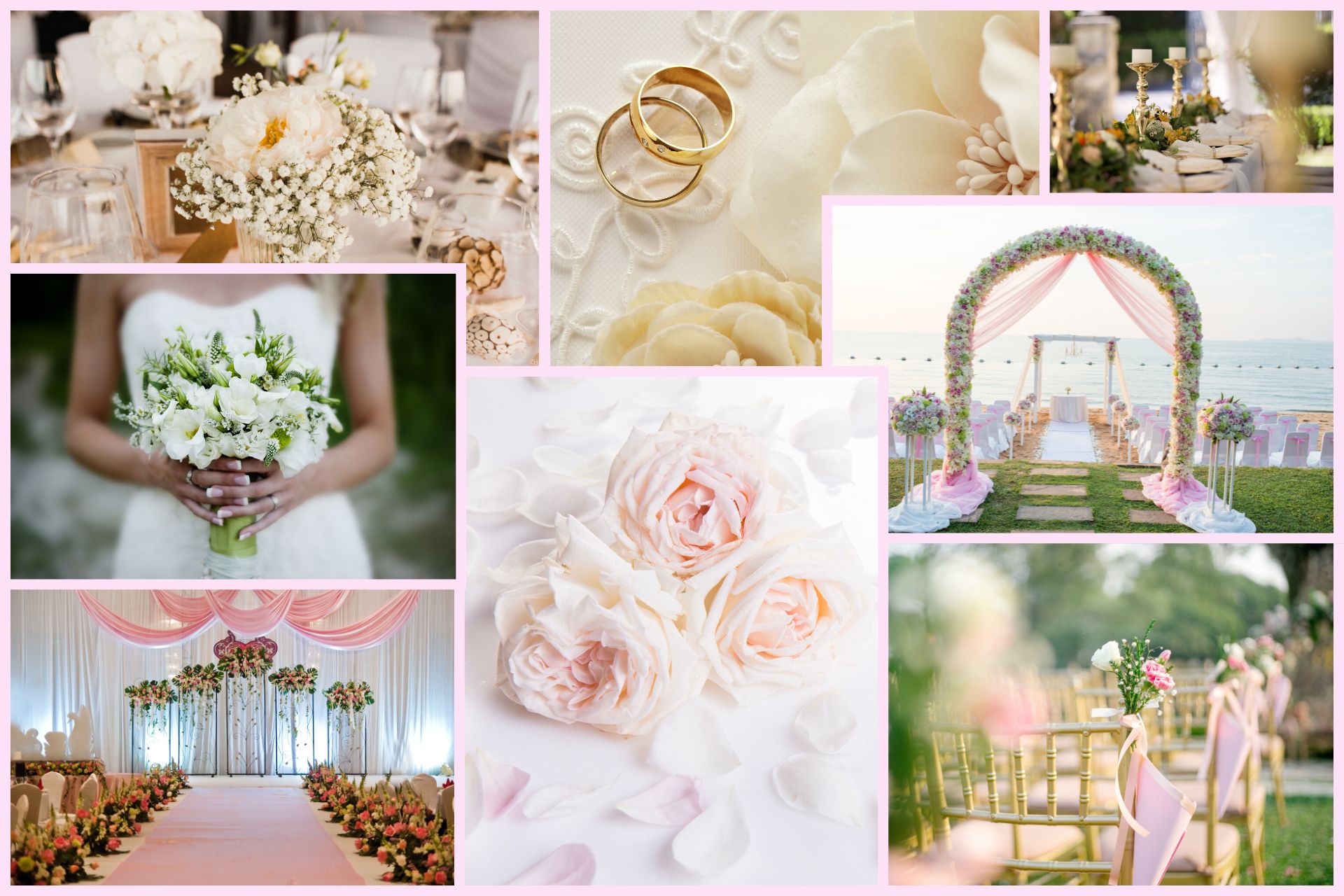
Oh, Pinterest. It can feel like your best friend and your worst enemy. One minute, you’re innocently pinning “simple outdoor weddings,” and the next, your board has 348 pins, five color palettes, and a floral arch that costs more than your car.
Pinterest is magical—it helps you start to visualize your dream day, gives form to ideas you could never quite explain out loud, and opens the door to inspiration you might never have imagined. But it also has a dark side. Before you know it, you’ve fallen down a rabbit hole of options, with expectations creeping far beyond what’s realistic—or even enjoyable. And somewhere along the way, the focus quietly shifts from planning a celebration about you and your partner to comparing your day against strangers’ highlight reels.
If you’ve found yourself doom-scrolling floral tablescapes at 2 a.m. or feeling a pang of anxiety every time you open your wedding board, you’re not alone. Let’s unpack why Pinterest overwhelm happens, how to recognize when it’s setting in, and practical ways to keep your inspiration joyful and grounded.
How Pinterest triggers stress
At its core, Pinterest is designed to be endless. With each click, new “related” images appear, triggering our curiosity and dopamine levels; we trick ourselves into believing that the “perfect” _____ is just one more scroll or click away. But just to make sure, we’ll pin that idea and get back to it.
From a psychology standpoint, that type of interaction is setting you up for choice fatigue. That feeling when you just have too many options, that you can’t decide or feel unfulfilled no matter what you choose. A classic 2000 study found that people offered 24 flavors of jam were ten times less likely to buy any jam than those offered just six. More options didn’t inspire people—it just tends to paralyze them.
So, the same logic applies to wedding planning. What happens when you try to decide on one centerpiece when you have 200 or even 20 ideas pinned?! With so many choices, it can feel overwhelming, and you might start to second-guess your decision once you land on one.
The comparison trap
Then there’s social comparison theory, which explains how humans instinctively measure themselves against others to gauge how they’re doing. Pinterest (and other social apps) amplifies that instinct by putting endless options at your fingertips—but instead of feeling like choices, they start to look like reminders of what your life isn’t. And those images? They’re curated perfection: no messy backdrops, no bad lighting, no budget limits.
That’s when feelings of worry, dread, or overwhelm start to creep in. And it’s not because you’re unconfident or indecisive—it’s because you’re human.
Stress-relief strategy #1: Set an intention before you pin
One way to help reduce feeling overwhelmed while still being able to use Pinterest? Trying to clarify and pin with intention. So, before you open Pinterest, stop and answer “What’s my goal today?”
Is it to find bouquet inspiration? Tablescape ideas? Bridesmaid dress ideas? The more specific you are, the less chance you’ll get sucked down the Pinterest black hole. Think about this as research, not a free-for-all.
Also, set a time limit. 10 to 15 minutes max—and stop once you’ve found three to five strong examples. That’s enough to inspire, not overload. If it helps, think of it like grocery shopping with a list. You’re there to find ingredients for your vision, not to buy every new product that catches your eye.
Step two: Pin less, feel more
Repeat after me: The less I pin, the better I’ll feel.
That “just in case” pinning impulse is sneaky—but do you really need 30 photos of the same floral cake? Probably not. Cap each board at 10–15 pins that capture your core vibe. Focus on how you want the day to feel: cozy and intimate, joyful and high-energy, or calm and timeless. When you anchor to emotion instead of aesthetics, your choices get clearer.
Pinning fewer leaves allows more room for creativity to breathe. You start trusting your instincts instead of chasing trends. Because the best visions don’t come from collecting more—they come from knowing what truly resonates with you two.
Step three: Curate, refresh
Don’t let your Pinterest board become a metaphorical junk drawer. Check in with your board every week with fresh eyes, and ask yourself:
- Does this pin still match our overall vision?
- Does this make me excited or meh?
- Does this feel too… much? Trendy?
- Do any of these pins totally contradict each other?
- Does this image make me smile?
Delete. Delete. Delete.
Let’s reframe—editing your board isn’t erasing your wedding, it’s clarifying them and helping you make them a reality. And, you can always re-pin later on.
Curating your board so it isn’t cluttered will reduce decision fatigue; that mental drain that comes from juggling too many open loops. When you prune your board, you give your brain closure. And that is priceless.
Step four: Pause when you start comparing
How did they afford that?! Ours will look nothing like that… She looks like a model in her dress, but I just look …fine? I wish our photographer’s style looked like that. Did we plan enough?!
When these kinds of thoughts start creeping in, that’s a sign that you’ve slipped into comparison mode. And this kind of thinking usually leaves us feeling anxious, down, irritated, and unmotivated.
What’s the best thing to help this spiral? To take a break. Close the app and focus on a different task. Maybe something to lighten your mood–a nice cup of tea, a quick walk around the block, or catching up with a friend.
Also, try some cognitive restructuring. Reframe how the message your brain was sending you, like “My wedding isn’t good enough,” to something like, “That’s just not my style.” Every reframe like this can lower anxiety and increase self-trust—something that always gets taxed during wedding planning.
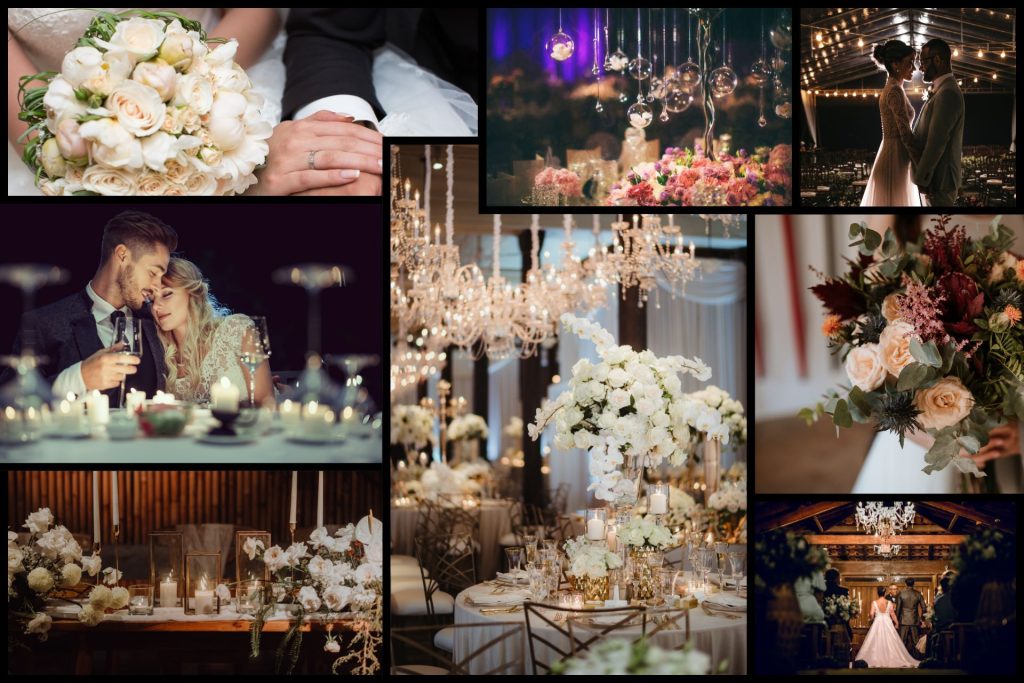
Step five: Teaming up with your partner
You’re not getting married to yourself, so if you’re deep in solo Pinterest mode, it’s time to reassess.
Lean on your partner. Include them in the planning and play to each other’s strengths. Create a plan for when one of you starts to spiral down the Pinterest rabbit hole—because having someone to put it all in perspective can make all the difference.
Here are a few ways to make teamwork part of your planning:
- Collaborate on what each of you envisions for the wedding, and build boards together so both voices are represented.
- Communicate the signs that you’re feeling overwhelmed, and let your partner know specific ways they can support you in those moments.
- Vent together—sometimes it’s not about fixing, just about laughing (or eye-rolling) at the chaos.
- Carve out no-wedding time to reconnect as a couple and remind yourselves why you’re doing all this in the first place.
After all, the point of the wedding isn’t to have matching Pinterest boards—it’s to celebrate the partnership that already makes you a team.
Step six: Move it out of Pinterest
While Pinterest can be incredibly helpful, it isn’t real life. Real life—your venue, your budget, your timeline—comes with actual constraints (and that’s okay).
As soon as you can, start translating your inspiration into the real world. Talk to vendors early on and use your Pinterest board as a conversation starter: Is this look doable within our space and budget? Are there creative alternatives that capture a similar vibe? The sooner and more often you reality-check your board against what’s actually feasible, the more you’ll protect yourself from unrealistic expectations and the stress of chasing an unachievable standard.
In psychology, this process is called reality testing—checking perceptions against facts. It’s a proven strategy for keeping anxiety from spiraling and staying grounded in what’s possible. By inviting external feedback, you anchor your vision in reality rather than fantasy.
And here’s the best part: the pros (aka vendors who live and breathe weddings every day) often have ideas that are even better than what you pinned.
Step seven: Digital detox
Suppose you’ve reached the “scrolling while half-asleep” phase, it might be time for a digital detox. And not just a quick break from the app—but a full shift from digital to analog.
Print out your favorite photos and pin them to a real, physical board. Collect fabric swatches, flower samples, or color chips that you can actually touch and smell. Moving your vision into tangible objects helps move it from an overwhelming scrolling habit into a sensory, grounded experience.
Close the app, grab some scissors and tape, and enjoy the creative process in 3D. It’s not about perfection, but bringing your ideas to life in a way that feels human again.
Final thoughts: Pinterest is a tool–know when to use it, and when to drop it
Pinterest is an incredible tool that puts a world of ideas right at your fingertips. The key is to remember that it’s just that—a tool. Like any tool, it’s most effective when used with intention, not indiscriminately. Let it inspire and support you, but when it stops serving that purpose, it’s time to set it aside—or at least create some firm boundaries around how you use it.
So pin what moves you. Delete what drains you. Collaborate with your partner. Then close the app, grab a drink, and live the day you’ve been dreaming up. Because at the end of the day, the most fulfilling weddings aren’t found on Pinterest—they’re lived in real time, full of laughter, mismatched napkins, and moments no algorithm could ever predict.

Dr. Vivian Oberling is a licensed clinical psychologist with degrees from UCLA, Harvard, and Stanford. In her private telehealth practice, she works with adults navigating anxiety, identity shifts, and relationship dynamics—whether they’re dating, partnered, or parenting. She also provides executive coaching and behavioral health advisory support to tech startups and legal tools reshaping how we think about love, marriage, and psychological safety. Dr. Oberling combines 10+ years of clinical expertise with modern, real-world insight to help people move through uncertainty with clarity and connection.
0 Comments