
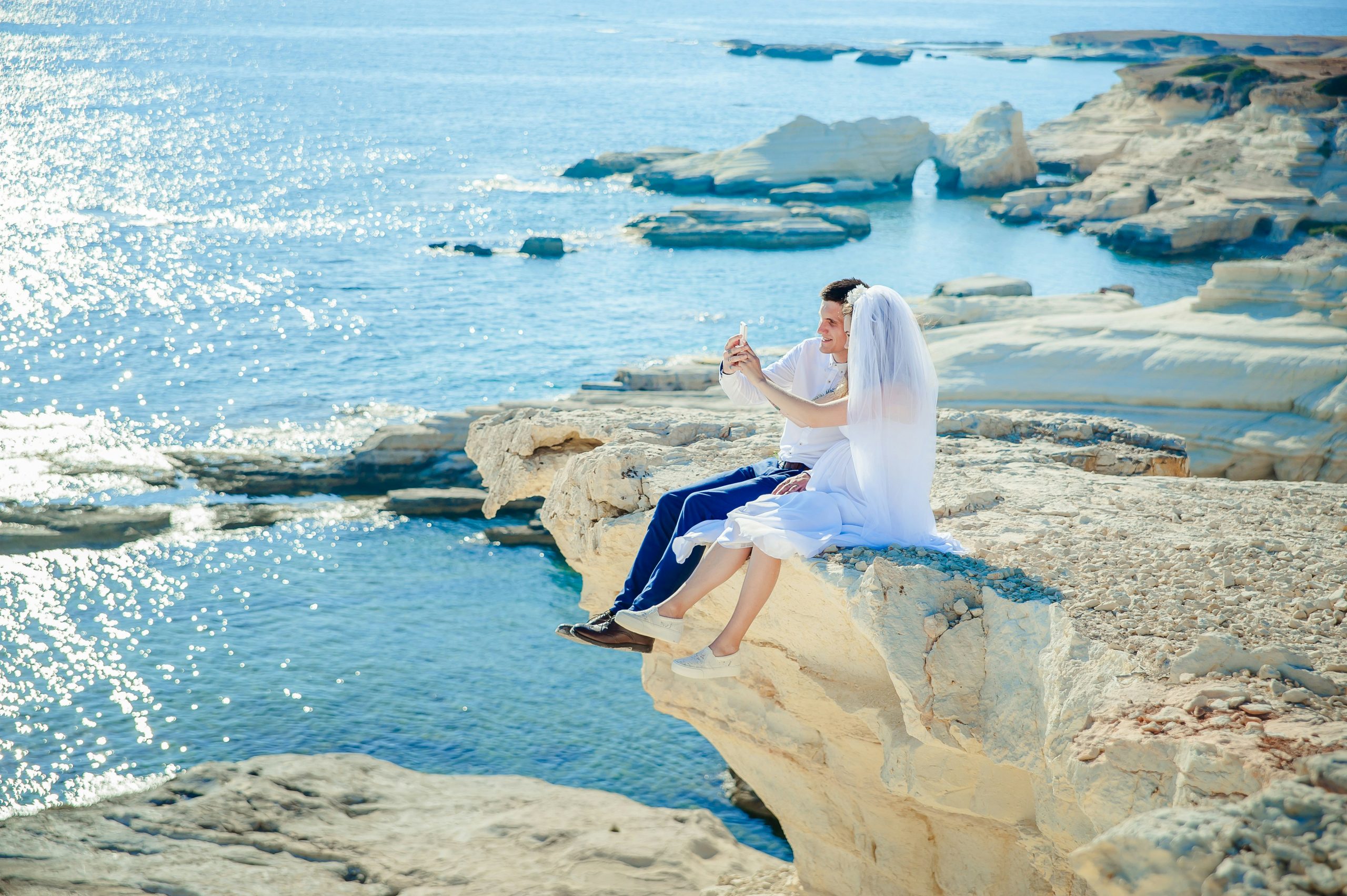
While planning a trip can always come with some stress, planning your honeymoon is often a whole different ballgame. In practice, the planning usually happens alongside wedding planning, which means you’re likely emotionally fried, financially stressed, and deep in decision fatigue. Given that, it’s no wonder honeymoons often get delayed, postponed, or end up feeling more stressful than fun to plan.
A honeymoon can be much more than just a trip. It marks and supports the transition from wedding mode into married life. For many couples, it’s the first extended stretch of time together after months or even years of planning, negotiating, and showing up for everyone else.
This article walks you through a realistic honeymoon planning checklist. We’ll cover how to choose the right kind of trip for you, how to time it without burnout, what to budget for beyond flights and hotels, how to avoid common emotional landmines, and how to plan a trip that helps you come back feeling more connected than when you left.
Step1: What do you really need from this honeymoon?
Before diving into destinations or hotel searches, start with one grounding question: What do we actually need as a couple after the wedding?
Some couples need deep rest and a break from socializing. Others crave adventure. Some want novelty and stimulation, while others want familiarity and ease. In many cases, partners want different things and don’t realize it until plans are already in motion.
Talking openly about what each of you needs helps you align expectations, support each other, and narrow down destinations more easily. When you start from shared needs instead of preferences alone, decisions become clearer and unnecessary tension is far less likely.
Step 2: Decide when to go
There’s no rule that says your honeymoon has to happen immediately after the wedding. A lot of couples actually benefit from waiting a few weeks or even a few months. That pause can mean lower costs, more energy, better weather, or simply being able to enjoy the trip instead of sleeping through it. Some couples opt for a short mini-moon right after the wedding and save the bigger trip for later.
Take a second to check in with how you’re feeling right now and what you still have on your plate. Do you need time to recover, and if so, how much? If the wedding leaves you emotionally or physically wiped, hopping on a plane the next morning might not feel all that relaxing. On the other hand, if travel feels exciting and grounding for you, going right away could be exactly what you need.
The right answer is different for each couple. The key is finding the option that fits your needs now.
Step 3: Set a honeymoon budget
Most couples budget for flights and lodging and forget everything else. While it’s understandable with all that is going on, this also leads to more stress down the line.
When setting your honeymoon budget, include:
- Transportation within your destination
- Food beyond hotel breakfasts
- Experiences and excursions
- Travel insurance
- Airport transfers and tips
- Souvenirs and incidentals
- Buffer money for spontaneity or mistakes
A clear, well thought out budget protects your well-being on the trip. It reduces decision fatigue and prevents small choices from turning into constant mental math or unnecessary tension. A great honeymoon isn’t about luxury. It’s about lowering stress enough to give you the space to enjoy being together.
Step 4: Choose a destination that fits your travel personalities
It can be easy to get swept up in a fantasy or Instagram reels of the “it” vacation. But is that what really matches your travel vibes? Don’t be the couple who hate crowds, booking a packed European itinerary (in the summer, no less) or the ones who struggle with uncertainty, who choose a remote adventure with no structure.
So, be honest about your actual travel patterns. Do you like planning or winging it? Do you need creature comforts? Do language barriers stress you out? Do you recharge through movement or stillness?
One of the most common honeymoon regrets is, “We should’ve picked something easier.” There’s plenty of time later for ambitious travel.
Steph 5: Decide how much structure you want on the trip
Some couples thrive on loose plans. Others feel anxious without a framework. Neither is wrong, but mismatches create tension. Consider how you have traveled together in the past, or if this is your first trip together, think about each of your preferences.
In general, some structure is helpful. Consider pre-booking airport transportation, one anchor experience you’re excited for, and at least the first night of meals.
The rest can be flexible or more scheduled, depending on what feels good. If one partner wants more plans than the other, agree on a compromise in advance. For example, one planned activity every other day. Having this agreement ahead of time prevents power struggles later.
Step 6: Book lodging for more than just aesthetics
A beautiful hotel can still be a terrible honeymoon fit. So look past the cover and consider noise levels, privacy, bed comfort, and location. Is it walkable? Will you need transportation constantly? Does the environment feel calming or stimulating?
Many couples underestimate how sensitive they’ll be post-wedding. Sleep quality matters. Quiet matters. Space matters. So, think ahead for yourselves.
Step 7: Pack with intention
Packing stress is real, and overpacking is almost a given. Instead of starting with outfits, start with what helps you feel regulated while traveling. Think comfortable clothes, sleep aids, skincare you trust, medications, familiar snacks, or noise-cancelling headphones.
Once those essentials are covered, build outfits around comfort and versatility. You don’t need a different look for every moment. You need clothes that let you feel like yourself and move through the trip with ease.
Step 8: Align expectations around togetherness versus alone time
Honeymoons often come with an unspoken expectation of constant closeness. Creating a trip that actually feels good for both of you helps to talk about what works ahead of time. It may feel unnecessary, but couples are often more sensitive after the wedding high and months of planning stress.
Have a conversation about alone time before you go. Is it okay to read separately, nap on your own, or choose different activities for a few hours? Couples who normalize small amounts of space often feel more connected overall. It also helps normalize different social and sensory needs in a way that doesn’t feel like rejection.
Step 9: Talk about sex expectations
This step moves away from logistics and into physical and emotional intimacy. It’s also a conversation very few couples actually have, even though it’s one of the most common sources of quiet disappointment or resentment.
Weddings are exhausting. Travel can be exhausting too. Sexual intimacy may be the last thing on one or both partners’ minds during a honeymoon. To keep expectations from becoming pressure, talk openly about what you’re each hoping for and how flexible you can be. Desire naturally fluctuates under stress, and that’s completely normal. In many cases, removing pressure creates more intimacy, not less.
Physical connection can look like cuddling, laughing, sharing a shower, or simply resting together. There’s no honeymoon quota to meet.

Step 10: Plan for emotional come-downs and mood swings
Post-wedding blues are real, and so is the emotional whiplash. After months of anticipation, the sudden quiet can feel disorienting. Some people feel sadness, anxiety, or irritability during honeymoons and worry that something is wrong.
Nothing is wrong. Transitions stir emotions. And travel can amplify them.
Normalize this ahead of time and consider how it can impact plans, the honeymoon’s pace, and even the location.
Step 11: Create one daily ritual for connection
With Step 9 in mind, be intentional about connection. Choose one small daily ritual for your honeymoon. It doesn’t have to be elaborate. It could be coffee together without phones, a short walk, or sharing one highlight and one low point from the day.
These simple rituals build a sense of safety and help strengthen your foundation as a couple. They don’t need to be deep or profound. They just need to be consistent.
Step 12: Decide how unplugged you want to be
Some couples want full digital detox. Others need to check in with work, family, or kids. Misaligned expectations here cause conflict fast, and who wants that on their honeymoon?
Talk about phone use, social media posting, and contact with others. Set boundaries that feel supportive, not restrictive. Even just creating an agreement of how to bring up that you’re noticing too much distraction from your partner and how to respond.
Step 13: Prepare for minor conflicts without catastrophizing them
It’s almost guaranteed you’ll have at least one disagreement on your honeymoon. It might be about directions, food, timing, or spending. That’s normal, so try not to let your mind jump to worst-case scenarios.
Travel can bring up control issues, stress responses, and old patterns. On a honeymoon, those moments can feel bigger because there’s pressure for everything to be perfect.
Let go of that expectation. When disagreements happen, focus on repair. Apologies matter, and navigating minor conflicts together helps you build skills you’ll use throughout your marriage.
Step 14: Don’t forget to plan your return home
This doesn’t mean just planning your flight home, but also how to rejoin life as a married couple. Try to avoid scheduling major obligations immediately after you return. Give yourselves a buffer day. Unpack together. Reorient slowly.
This helps translate the honeymoon’s closeness into daily life, rather than trying to get right back to the grind of everyday life.
Final thoughts: The ultimate honeymoon isn’t a perfect trip
The ultimate honeymoon planning checklist isn’t about doing everything right or creating a highlight reel. It’s about planning in a way that supports who you are as a couple, especially during a major life transition. When you focus on your needs, energy, and emotional reality, the honeymoon becomes less about the destination and more about how you experience it together.
A successful honeymoon doesn’t mean zero stress, zero conflict, or constant romance. It means normalizing those moments so they don’t take over the experience, allowing you to enjoy your time together and come home feeling more rested and connected than when you left.
When you let go of perfection and plan with honesty, flexibility, and intention, your honeymoon becomes more than a trip. It becomes the first chapter of married life, and a meaningful one at that.

Dr. Vivian Oberling is a licensed clinical psychologist with degrees from UCLA, Harvard, and Stanford. In her private telehealth practice, she works with adults navigating anxiety, identity shifts, and relationship dynamics—whether they’re dating, partnered, or parenting. She also provides executive coaching and behavioral health advisory support to tech startups and legal tools reshaping how we think about love, marriage, and psychological safety. Dr. Oberling combines 10+ years of clinical expertise with modern, real-world insight to help people move through uncertainty with clarity and connection.
0 Comments