
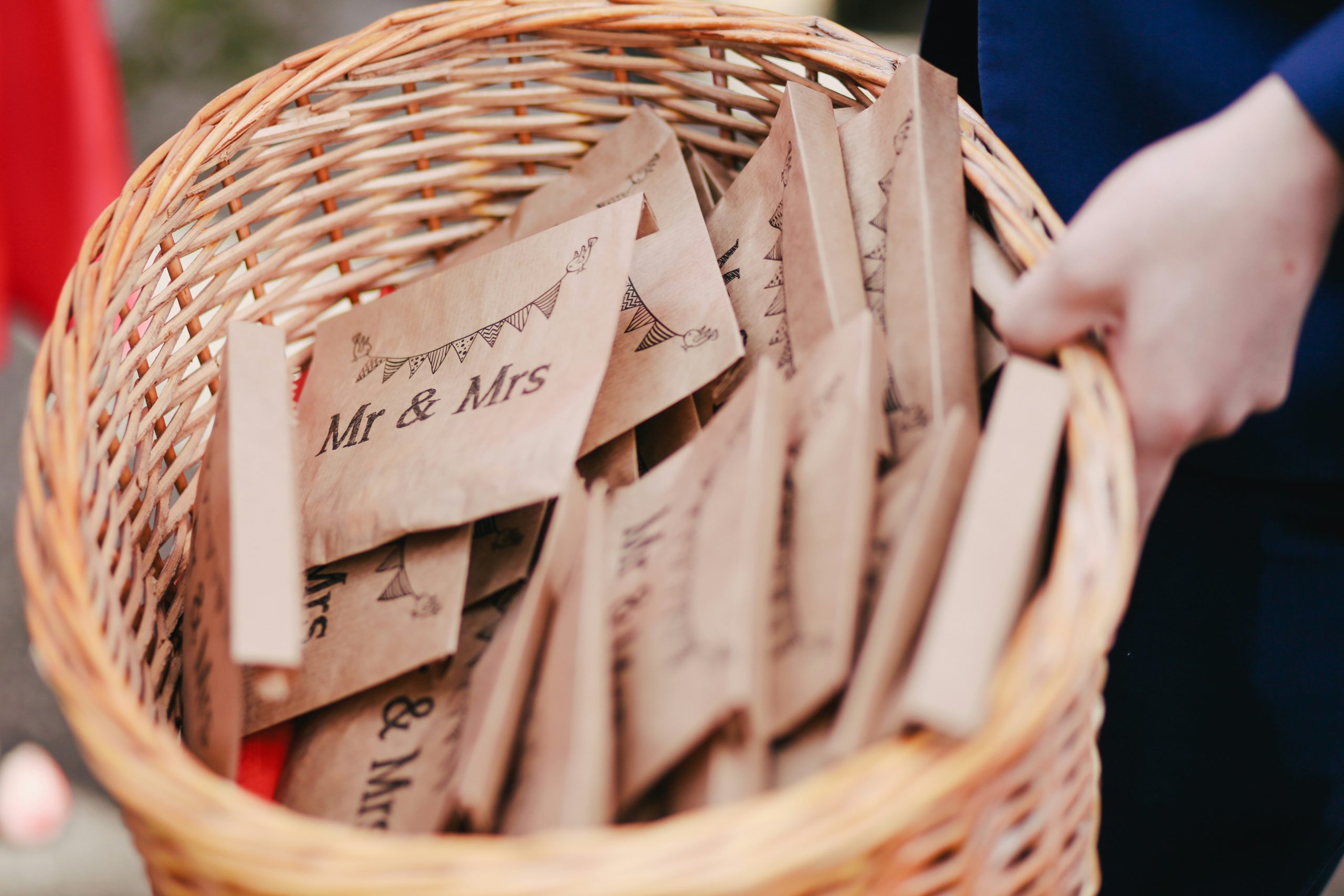
Let’s be honest. How many wedding favors have you actually kept, or even brought home from the reception? For most people, wedding favors get quietly abandoned at the venue, left on a hotel nightstand, or brought home and promptly forgotten. And it’s not because guests are ungrateful or couples aren’t thoughtful. It’s usually because the favor feels unnecessary or adds clutter without much thought.
From the couple’s side, favors can feel like a small detail, but they often come with a surprising amount of pressure. You don’t want to look cheap. You don’t want to waste money. You don’t want to add clutter to people’s lives. And at the same time, you want to send guests home with a genuine token of appreciation.
This article shares wedding-favor ideas that guests actually keep and offers, through a psychological lens, guidance on choosing a favor without overthinking it.
Why so many wedding favors miss the mark
Most favors “fail” for one of three reasons: they’re too generic, fragile, or symbolic without being functional.
Generic favors feel interchangeable. Guests can tell when something was chosen because it was easy, trendy, or bundled in a package deal. Fragile favors create stress. People worry about breaking them on the way home, especially if they’re flying or juggling kids. Symbolic favors, while meaningful to the couple, often don’t translate for guests, especially after the ceremony ends.
People are more likely to keep items that either meet a practical need or carry a (broad) emotional association they can easily access later. When a favor does neither, the motivation to keep it fades quickly, no matter how pretty it looked on the table.
The golden rule of keepsake favors
Here’s a simple rule that holds up surprisingly well: if your guest would buy this for themselves or happily use it within a month, it’s a strong contender.
That doesn’t mean your favor has to be expensive or luxurious. It just needs to make sense in real life after the festivities, or be something guests genuinely enjoy in the moment at the reception. The best favors slip easily into daily routines without asking people to change their habits or make room for something that doesn’t belong.
And if you wouldn’t be excited to receive it yourself at someone else’s wedding, that’s usually your answer.
Edible favors are almost always a win
One of the safest options is edible favors. They don’t create clutter, don’t require any long-term commitment, and they’re usually a crowd-pleaser. And if someone doesn’t want to take theirs home, it’s easy to pass it along to another guest or enjoy it right then and there.
Custom cookies, macarons, chocolate bars, and similar treats tend to disappear quickly for a reason. They’re meant to be enjoyed, not saved or stressed over. Guests don’t feel guilty tossing the packaging once they’re done, and there’s something inherently generous about giving a favor that’s meant to be enjoyed in the moment.
Local treats work exceptionally well. A small jar of local honey, jam, olive oil, or candy tied to the wedding location adds meaning without being overly sentimental.
One thing to consider if you go the edible route: quality matters more than variety. In other words, one excellent item is better than a handful of mediocre ones. And clear labeling helps guests know precisely what they’re taking home.
Little luxuries guests will actually use
Another great category of favors is small, everyday indulgences. These are the things that feel thoughtful and special.
Candles are a perfect example. A small, well-scented candle feels cozy and indulgent without being too much. Neutral, warm scents usually land better than anything overly sweet or intense. Pairing a candle with simple matchboxes, or even offering matchboxes on their own, works well.
Other options that are often used include hand soaps, bath salts, coffee blends, or loose-leaf tea. These feel like little treats guests can enjoy on their own time, not obligations they’re stuck with.
The key with these kinds of favors is keeping things low-key. Guests don’t want products that scream wedding. Simple labels or small tags almost always feel more polished than big logos or bold dates. When a favor looks like something you’d find in a boutique instead of a souvenir shop, it’s much more likely actually to get used.
Practical favors that blend into daily life
Practical favors work best when they solve a real problem your guests actually have, not when they’re just another item to take home.
Tote bags are a good example of this. A sturdy canvas bag with a simple, neutral design can easily become a grocery bag, beach bag, or kid activity bag long after the wedding. Bags that are thin or mostly centered around your wedding date, names, or slogans are much less likely to get reused and often end up forgotten by the end of the weekend.
Reusable water bottles make sense for outdoor weddings, hot weather, or destination events where guests are on the go. Cozy blankets work well for evening ceremonies or cooler climates, especially when they’re actually needed during the event.
With practical favors, context is everything. When the favor clearly fits the environment and the guest experience, it feels thoughtful and considerate. When it doesn’t, it can start to feel forced and like clutter.
Guest-focused favors that feel personal
Guests are much more likely to keep favors that include their own name in a practical way. Place cards that double as keepsakes, like acrylic name cards, ceramic tiles, or engraved coasters, often make it home and actually get reused. Handwritten notes, even short ones, also carry a surprising amount of emotional weight and are frequently saved.
What tends to work less well is personalization that asks guests to memorialize the couple. Items with large photos, bold monograms, or prominent wedding dates can feel awkward to work into everyday life.
The sweet spot is simple acknowledgment. When a favor quietly says, We’re glad you’re here rather than remember us forever, it lands much more naturally.
Experience-based favors guests talk about
Some of the most memorable favors aren’t physical objects at all.
Late-night snacks (instant ramen bar, anyone?), espresso carts, or custom cocktail moments often stand out far more than anything guests carry home. These experiences enhance the wedding’s real-time feel, which is what guests remember most.
Another fun option in this category is interactive favors that create a shared moment. Things like blind box–style favors tap into curiosity and play, giving guests something to engage with together at their tables. The value isn’t just what’s inside, but the experience of opening it, comparing notes, and sharing a quick moment of surprise. Even if the item itself doesn’t live on forever, the memory often does.
Donations made in honor of guests can also work when communicated clearly and simply. This approach is most effective when the cause is deeply meaningful, and the messaging is straightforward.
Experience-based favors succeed because they focus on connection rather than accumulation. They prioritize how guests feel in the moment, not what they’re expected to keep afterward.
What to consider before you decide
If you’re stuck between a few options, it helps to pause and ask yourself a couple of simple questions.
- Would I want to take this home if I were a guest?
- Does this fit the vibe of our wedding?
- Does this feel thoughtful, or does it feel like I’m checking a box?
- Am I choosing this because I love it, or because I feel pressure to have something?
Pay attention to how your body reacts when you think about your choice. If a favor feels like just one more thing to manage or stress over, it’s probably not the right one.
And remember, skipping favors is always an option. Guests don’t leave weddings upset that there weren’t any favors. They leave remembering how welcome they felt and how much they enjoyed celebrating you both.

Favors that don’t make the cut
Some favor ideas that sound fun in theory, but don’t always land with guests. Hangover kits are a typical example. These tend to be novelty-driven, alcohol-focused, or covered in cheeky slogans, which don’t always resonate with every guest; so they’re usually better suited for welcome bags or bachelor and bachelorette events.
Other favors that often get left behind include fragile décor items like mini frames or glass ornaments, heavily monogrammed pieces with the couple’s names and date, and novelty items like shot glasses, joke bottle openers, or themed sunglasses. Bulky favors or inside-joke items tend to miss the mark, too.
If a favor needs explaining, careful transport, or a sense of obligation to keep it, it’s probably not the right fit.
How much to spend without overthinking it
There’s no magic number when it comes to wedding favors. What matters far more than price is how well everything fits together.
A simple, thoughtfully chosen favor usually feels more meaningful than an expensive one that doesn’t quite match the vibe. If you’re working with a tighter budget, focus on quality over quantity or go with something consumable. If you have a little more wiggle room, put it into good design and packaging rather than more stuff.
At the end of the day, favors are just a gesture. They’re not a measure of how much your guests mean to you.
Final thoughts on wedding favors that guests actually keep
When it comes down to it, the wedding favors guests actually keep aren’t the trendiest, most expensive, or most Instagram-worthy. They’re the ones that feel easy. Useful. Thoughtful.
A good favor doesn’t need to carry the weight of defining your entire wedding day. It just needs to fit the purpose: to provide a small token of appreciation and/or enhance your guests’ experience in the moment. When a favor feels aligned with your wedding, your values, and your guests’ real-world routines, it quietly does its job.
And if you decide to skip favors altogether? That’s okay too. Guests don’t measure weddings by what they took home. They remember how welcome they felt, how connected the celebration was, and you were there to celebrate with them. If you keep that in mind, you really can’t get this decision wrong.

Dr. Vivian Oberling is a licensed clinical psychologist with degrees from UCLA, Harvard, and Stanford. In her private telehealth practice, she works with adults navigating anxiety, identity shifts, and relationship dynamics—whether they’re dating, partnered, or parenting. She also provides executive coaching and behavioral health advisory support to tech startups and legal tools reshaping how we think about love, marriage, and psychological safety. Dr. Oberling combines 10+ years of clinical expertise with modern, real-world insight to help people move through uncertainty with clarity and connection.
0 Comments