
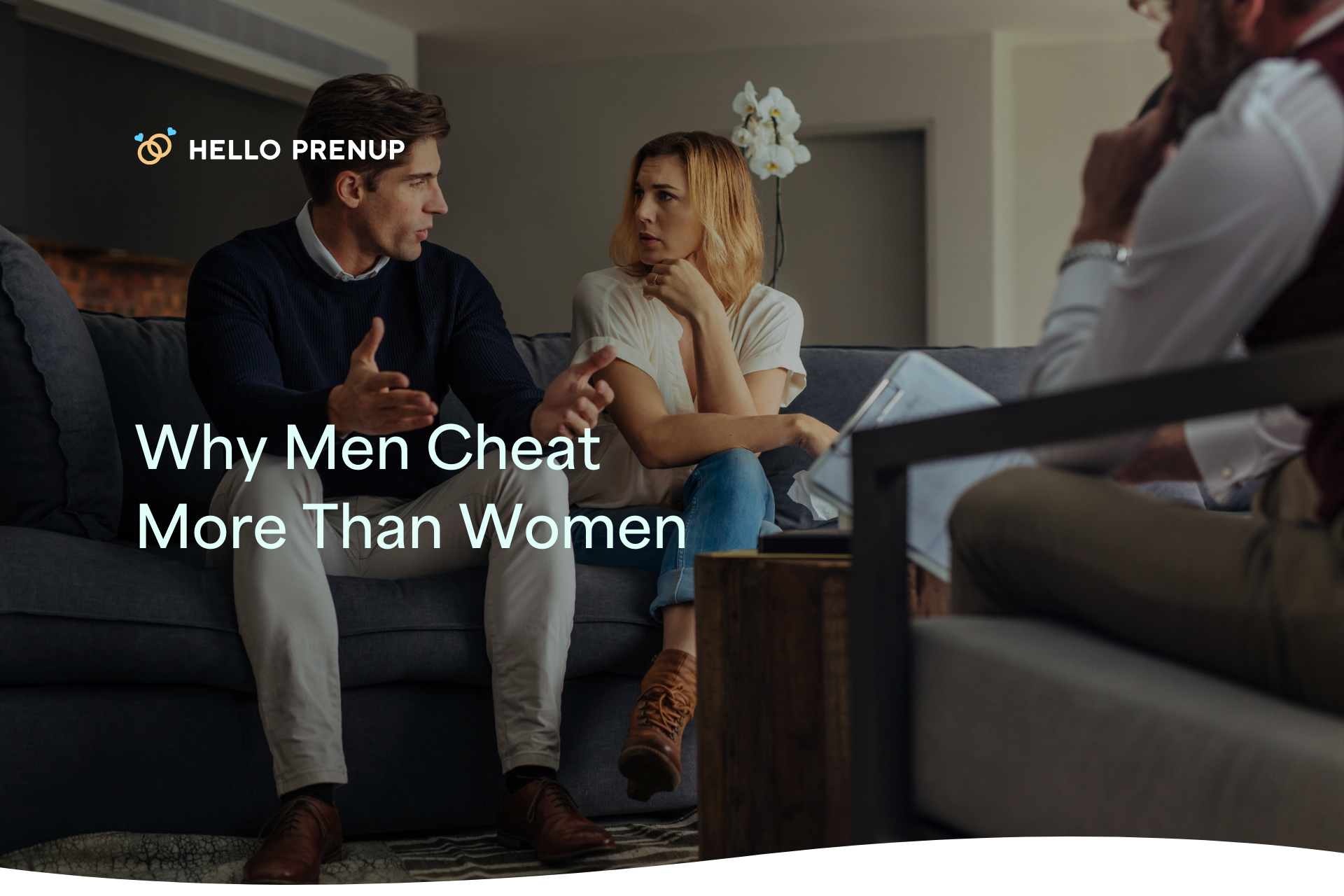
While infidelity trends are notoriously difficult to track at the national and international levels, there are findings to support the trend that men are more likely to cheat than women. Are there expectations? Of course. As a man, are you destined to cheat? Of course not. However, based on the current data, let’s explore further what might be at play.
The data
What are the actual trends and data? Based on current research, this is what we’re seeing about infidelity:
- Men report higher rates of infidelity. Research indicates that up to 34% of men and 19% of women reported engaging in extramarital sex at some point in their lives.
- Age and life stage matter. The gap in infidelity rates between genders tends to be more pronounced in middle-aged individuals.
Why?! (The theories behind why men cheat more)
The (main) theories on male infidelity behavior patterns can be broken into three areas:
Biological & Evolutionary
- Reproductive strategy. Some evolutionary psychology theories suggest that men have evolved to pursue multiple partners to increase their genes’ likelihood of passing on.
- Mate selection and novelty. Research indicates men may be more inclined to seek novelty and variety, behaviors associated with reproductive success in ancestral environments.
- Higher testosterone levels. Testosterone has been linked to higher libido and greater risk-taking behaviors, which can contribute to infidelity.
Psychological
- Self-esteem and validation. Men may seek extramarital relationships when they need to boost their self-esteem or firm up a sense of worth.
- Emotional connection vs. physical satisfaction. Men may also cheat for the physical benefits, while research has theorized that women are more likely to seek emotional connection when they engage in infidelity.
- Social Exchange Theory. This theory posits that men may weigh the perceived benefits of infidelity against the potential costs. They may be more inclined to cheat if the perceived benefit is greater.
- Attachment theory. Men with insecure attachment styles, particularly avoidant ones, are more likely to engage in infidelity. Their behavior may stem from difficulties with emotional intimacy and how that interacts with their partner’s attachment style.
Social & Cultural Influences
- Societal norms and permissiveness. Traditional gender roles and societal messages can reinforce the idea that infidelity by men is more socially acceptable or expected.
- Peer influences. Men who have friends who engage in or condone infidelity may be more likely to cheat themselves.
- Workplace dynamics. Opportunities for infidelity can increase when work environments promote close interactions. Workplaces with blurred personal and professional boundaries can increase the risk of extramarital affairs.
- Men often report lower guilt levels. Research indicates that men, on average, report feeling less guilt and conflict after infidelity than women.
- Double standards. Societal double standards may contribute to a higher tolerance for men’s extramarital behavior compared to women’s, which allows the behavior to occur more often.

How to mitigate this for your relationship
Even with this data, don’t assume this is inevitable for your relationship. But it’s helpful to understand the trends and to have strategies to strengthen your relationship and its foundation. A strong foundation will decrease the probability of infidelity, but more importantly, it will set the stage for a fulfilling, long-lasting relationship.
Communication, communication, communication
Open and honest conversations about expectations, boundaries, and needs can foster trust and reduce the likelihood of infidelity. It also increases the probability that issues will surface earlier, allowing you both to address it before it significantly impact the relationship.
Prioritize Emotional Connection
Creating a strong emotional bond helps partners feel secure and valued, reducing the drive for external validation. Need more guidance on how to do this? Here you go.
Understand individual triggers
It is crucial to develop self-awareness about your sensitivities and gain insight into your partner’s vulnerabilities. By identifying these emotional triggers, you can proactively predict when they come into play and develop strategies to navigate challenges. This will help foster a collaborative, understanding relationship that supports you both.
Seek counseling or therapy
Know when to bring in support, especially from a neutral professional. Couples experiencing trust issues or significant stressors can benefit from a couples therapist to navigate challenges before they escalate.
Do infidelity clauses in prenups and postnups help?
Some people may wonder if an infidelity clause in a prenup or postnup can actually deter people from cheating. There’s no data from the legal community on this, but there have been many court cases of people still cheating even when they have an infidelity clause. (For example, you can check out this article that discusses a case where a man cheated despite his infidelity clause costing him millions of dollars). So, bottom line–don’t depend on an infidelity clause to deter cheating. In addition, infidelity clauses are often unenforceable in many states, such as California. Some people still include them as a boundary-setting tool to make sure the other partner knows that cheating will not be tolerated.
Final thoughts
Infidelity is a multifaceted issue influenced by biological, psychological, and social factors. While data show that men are more likely to cheat than women, understanding the underlying causes can empower couples to build trust and fortify their relationships.
So, all in all, while the data suggest that men are more statistically likely to cheat, it’s essential to remember that infidelity (by either partner) is not an inevitable outcome. Each relationship is unique, and understanding the complex interplay of biological, psychological, and societal factors can provide valuable insight. On an important note, none of these theories or data should be used as an excuse for a person’s behaviors; at the end of the day, this may help us to understand why a behavior happened, but the responsibility for the behaviors still lies with the person who engaged in it.

Dr. Vivian Oberling is a licensed clinical psychologist with degrees from UCLA, Harvard, and Stanford. In her private telehealth practice, she works with adults navigating anxiety, identity shifts, and relationship dynamics—whether they’re dating, partnered, or parenting. She also provides executive coaching and behavioral health advisory support to tech startups and legal tools reshaping how we think about love, marriage, and psychological safety. Dr. Oberling combines 10+ years of clinical expertise with modern, real-world insight to help people move through uncertainty with clarity and connection.
0 Comments