
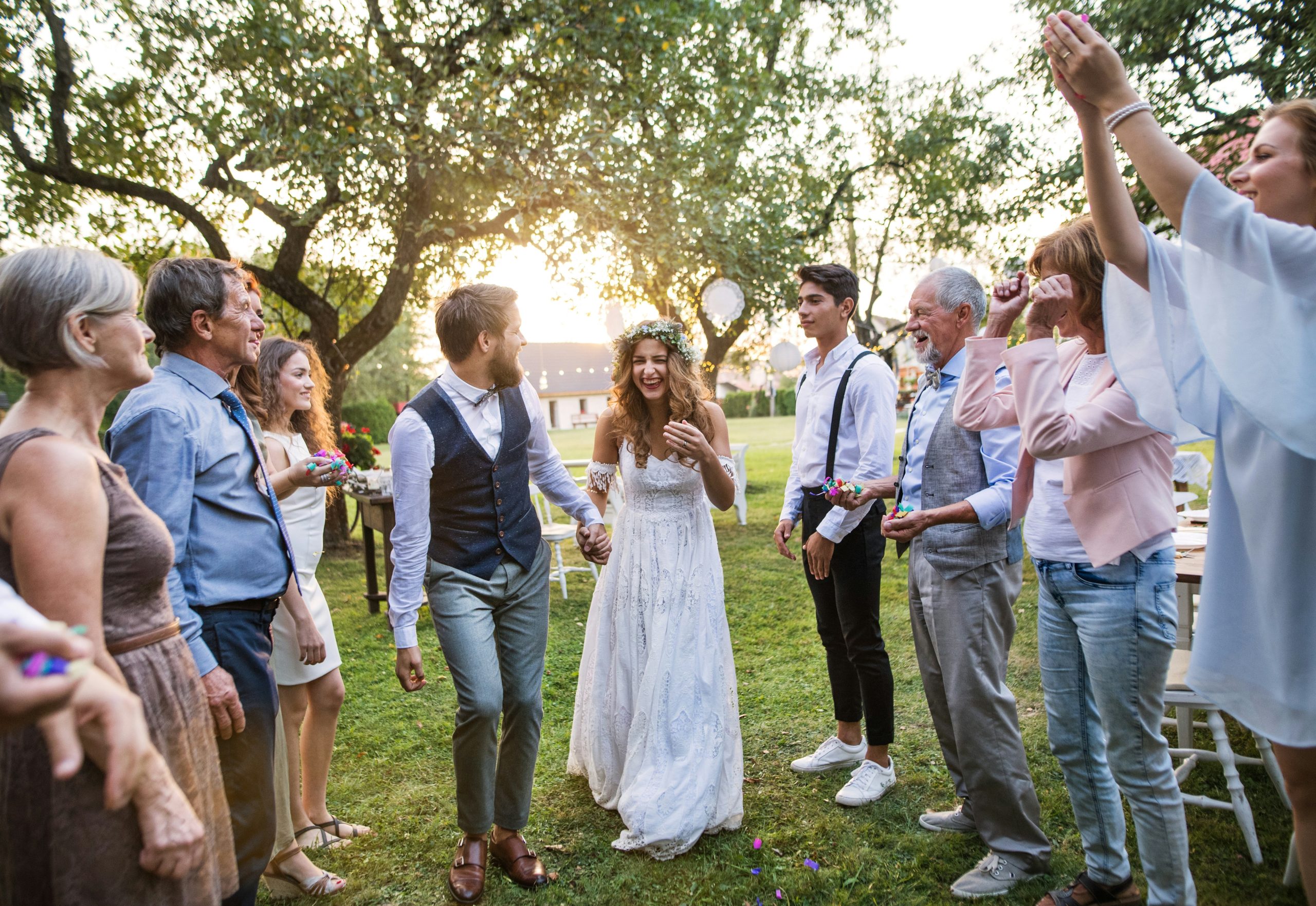
Outdoor weddings can be absolutely magical. The breeze, nature, the sunsets…. But, they also come with a unique stressor: the weather. It is the ultimate unpredictable guest—the one who doesn’t RSVP, who may or may not show up, and who might bring drama if they do.
A lot of couples tell themselves, “We’ll be fine. It’s summer. It never rains that time of year,” or “We can figure out a Plan B if we really need it.” That optimism (and a bit of avoidance) is human and often beneficial. But with this scenario, it’s better to meet the off chance head-on. A good backup plan isn’t a pessimistic move. It’s an emotional safety net. It keeps you grounded, lowers stress, and protects the meaning behind the day.
Here we’ll help you design a backup plan that keeps the romance and reduces worry. We’ll cover the psychology behind why weather uncertainty is so triggering, the must-have components of a solid Plan B, how to communicate with vendors so you aren’t scrambling, and how to stay emotionally regulated even if the skies shift.
The psychology behind weather stress
Outdoor weddings tap into one of the most common triggers: the lack of control. When something big and meaningful is approaching, our brains naturally want predictability. Weather, however? Couldn’t care less about your carefully built timeline.
From a psychological perspective, uncertainty activates the same neural pathways as threat. You may not consciously feel panicked, but part of your body is on alert. This shows up as the urge to check weather apps every 45 minutes, worst-case thoughts (“If it rains, everything will be ruined!”), irritability, or trouble sleeping, as you get closer to the wedding.
This isn’t because you’re dramatic. It’s (neuro)biology. You’re about to host a major life ritual surrounded by family, community, culture, and expectations. Your brain wants everything to go “right,” and weather threatens that.
How can you help settle your brain? With a well-mapped out plan. When you know exactly what will happen if rain or wind shows up, your brain stops scanning for danger and can dedicate more bandwidth to other things.
The three kinds of weather to plan for
Most people think “bad weather” means rain. But other conditions can just as quickly derail an outdoor event.
1. Heat
If the temperature creeps above 85–90 degrees, guests get uncomfortable fast. And once people are uncomfortable, irritability, fatigue, and even conflict spike, especially among older guests and kids.
2. Wind
Wind can knock over décor, mess with hairstyles, ruin microphones, and make ambient sound harder for guests with sensory sensitivities. Couples rarely think about this until the rehearsal… or the moment the centerpieces look like they’re going to take flight.
3. Cold
Even a moderate chill can change the vibe of a wedding. Guests feel tense, stiff, and distracted. People cluster instead of mingling. And photos can show the difference—shoulders raised, forced smiles, shivering flower girls.
Consider your location and the typical weather patterns for that time of year, and then research or ask your vendors and venue about the less common scenarios. This will help you understand which conditions to prioritize while remaining aware of all possibilities.
What a strong backup plan really includes
A good Plan B is detailed, visual, and communicated in advance so no one panics or improvises under pressure.
Have a fully fleshed-out alternative ceremony space
This means you’ve physically seen the space, you know where the chairs will go, confirmed capacity, and understand the flow. You’ve also talked through any décor adjustments with your florist that match the alternative space. And if you’re using a tent, make sure you know the setup timeline; tents often need to be installed hours or even a full day in advance, which can impact both costs and logistics.
Have a backup reception layout
Even if your reception is already indoors, weather can still impact key elements like the cocktail hour location, whether you can use an outdoor terrace for dancing or photos, how guests and staff move through the space, and even where the bar can be placed—especially if rain is in the mix.
Know the trigger point for switching plans
This is crucial. You, your planner, and your venue should agree ahead of time on who makes the call, when the decision will be made, and what specific weather data or conditions will guide it—whether that’s percent chance of rain, wind speed, humidity, or a combination. Without that structure, you risk making a rushed, emotional decision based on optimism bias (“Maybe the radar will shift!”) rather than practicality.
Prep your vendors
A good Plan B is only as strong as its execution. Give yourself the best chance by making sure your vendors are fully in the loop. They should know where their equipment will go, what needs to be covered or protected, and whether any alternate power sources are required, especially for DJs, lighting teams, and photo or video crews. A seasoned vendor team will not blink; they’ve handled this many times. And the more clarity they have, the smoother the day will feel for you.
Build comfort items into the plan
Nothing kills a vibe like guests who are freezing or overheated, and simple items can make a huge difference. Think about ways to keep guests comfortable no matter the conditions—shade and airflow when it’s hot, something warm to wrap up in when temperatures drop, easy access to water, a little bug protection if needed, quick fixes for windblown hair, and even a few space heaters tucked into a tent. Small comforts like these keep the atmosphere relaxed and enjoyable. These small comforts add up to a much more enjoyable experience for everyone.
When each of these elements is mapped out ahead of time, your Plan B stops feeling like a compromise and becomes peace of mind.
How to emotionally prepare for a (possible) Plan B shift
The week before the wedding is often when weather stalking begins, and where couples tend to spin out. Even if you have the world’s best Plan B, you still have to accept the possibility that it might be used emotionally, and it’s not what you originally wanted.
Here’s how to actually stay grounded, both physically and psychologically.
Give yourself permission to feel disappointed
Don’t avoid or rationalize your feelings. You envisioned something for months (or years!), so of course you’d have feelings about it. Suppressing that emotion doesn’t make it disappear; it just redirects it and makes it grow, often showing up sideways as irritability, snapping at your partner, or feeling disconnected from the experience.
Identify what you’re feeling and just accept it. Feeling a certain way doesn’t mean you won’t make the best of the situation. But naming it reduces its power to derail you.
Remind yourself of the wedding’s real meaning
Outdoor weddings are beautiful, but they’re not the reason people are coming. They’re coming to see you commit to one another. When couples zoom too far into logistics (the arch placement, the chairs, whether the lights reflect a certain way), they lose perspective.
In couples therapy, zooming out is one of the most effective grounding tools:
What are we actually celebrating? What will matter 10 years from now?
Decide together what success actually looks like
A “successful” wedding often isn’t defined by: when we stay outside! It’s usually felt deep down: feeling connected or enjoying our day with everyone. Couples who define their emotional goals before the day, things like connection, presence, and meaning, tend to have a much better experience overall.
Stop checking the weather a 100x
Simple, but effective. Pick two check-in times per day and stick to them. Constant checking spikes cortisol and creates a false sense of urgency.
Trust your team
If you’ve chosen good planners and vendors, let them guide you. They’ve navigated more weddings and more weather than you have. When you allow professionals to take the reins, you’ll feel more relief than trying to hold it all.
Putting in this emotional work ahead of time means that even if Plan B comes into play, you’ll be able to shift with ease instead of spiraling.

Consider guest comfort
One underrated part of backup plans is how they shape guest experience. People remember weddings based on how they felt, both physically and emotionally.
If guests are overheated, soaked, or freezing, their focus shrinks to managing discomfort. They don’t mingle as much. They stay glued to their tables. They don’t dance as freely. They might leave early.
But when guests feel physically comfortable, their emotional bandwidth expands. They’re more likely to connect, laugh, engage in conversations, move around, and join the dance floor. That translates to a warmer, more joyful atmosphere and better memories for you.
A quick checklist
To help you start your ideal Plan B, consider including:
- A fully mapped alternate ceremony layout (a visual is highly recommended!)
- A backup spot for cocktail hour
- Décor adaptations that still feel intentional
- Clear vendor communication plan and timeline
- An agreed-upon “decision time”, who will make it, and how to share it with all relevant parties
- Power, lighting, sound, and flooring considerations
- Comfort items for guests
- A communication plan for your wedding party (they’re your messengers and mood-setters)
Cover these bases, and your Plan B will feel surprisingly easy to lean on if you need it.
Final thoughts: Why a solid Plan B gives you freedom
Outdoor weddings are gorgeous precisely because they feel alive. You get sunsets, breezes, nature, light, and yes, unpredictability. But that unpredictability doesn’t have to shake you.
When you build a thoughtful, flexible backup plan, you’re not inviting disaster. You’re inviting calm and clarity. You’re creating a cushion around one of the most meaningful days of your life and creating mental space for you both to enjoy the experience, no matter what happens.
The truth is, the most memorable weddings aren’t the ones where everything went perfectly. They’re the ones where the couple felt connected and present, no matter what the skies decided to do. A strong Plan B is what helps you get there.

Dr. Vivian Oberling is a licensed clinical psychologist with degrees from UCLA, Harvard, and Stanford. In her private telehealth practice, she works with adults navigating anxiety, identity shifts, and relationship dynamics—whether they’re dating, partnered, or parenting. She also provides executive coaching and behavioral health advisory support to tech startups and legal tools reshaping how we think about love, marriage, and psychological safety. Dr. Oberling combines 10+ years of clinical expertise with modern, real-world insight to help people move through uncertainty with clarity and connection.
0 Comments