
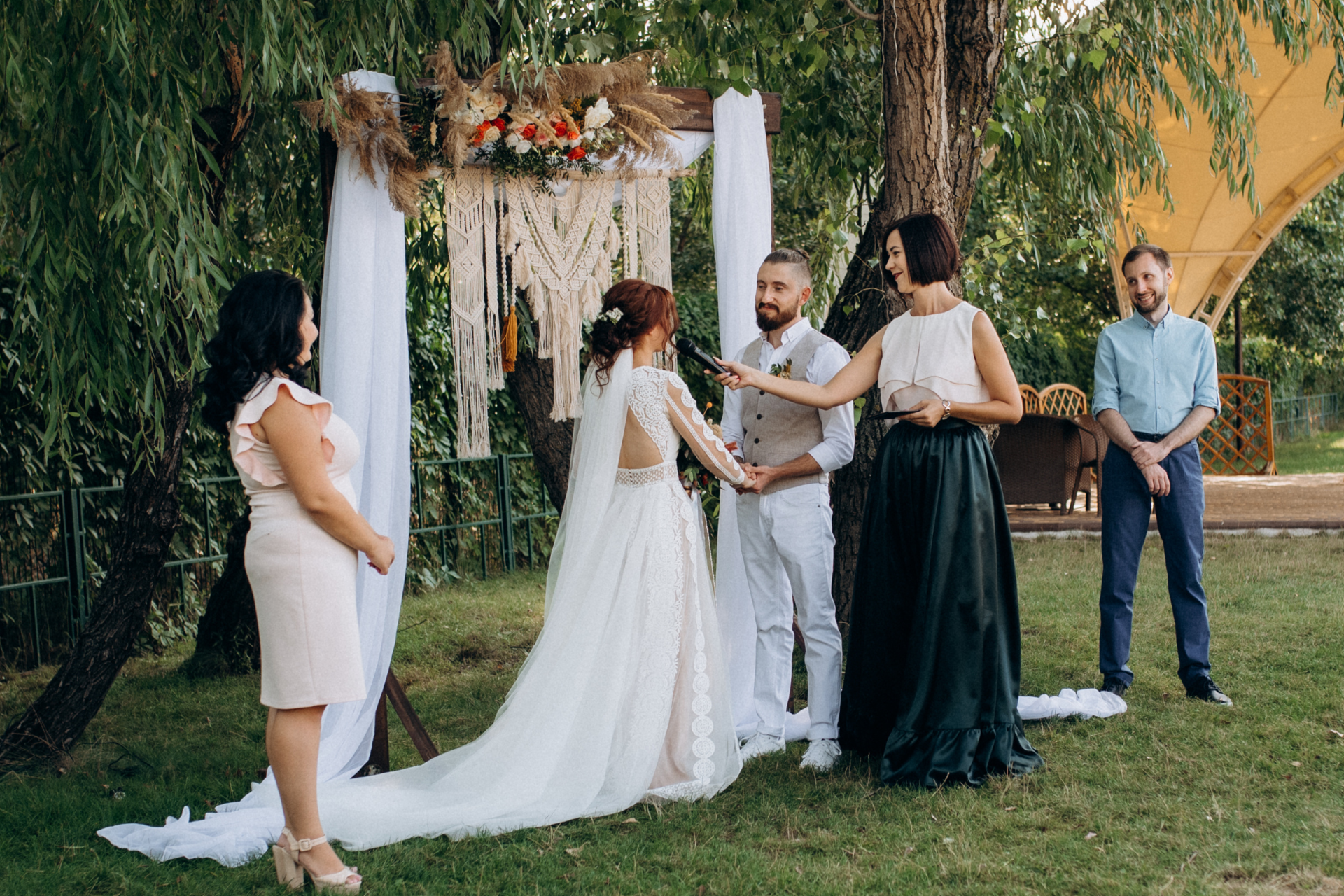
You can finally breathe again—after much thought (or maybe not that much), you and your fiancé have decided not to have a big wedding. No ballroom, no 150+ guest list, no massive catering orders.
But that relief can quickly turn into anxiety. Choosing to have a smaller wedding—or to elope entirely—is a deeply personal decision, shaped by finances, emotional bandwidth, family dynamics, or simply a desire for something more intentional. And for many couples, the hardest part isn’t making that choice—it’s sharing it.
Good intentions aside, the people who love you often have their own ideas about what your big day “should” look like. So in this article, we’ll explore how to share your decision with compassion and confidence, how to navigate tricky reactions (from the disappointed aunt to the friend who assumed she’d be a bridesmaid), and how to stay grounded in your why along the way.
Why this decision can feel emotionally loaded
Why does it matter how big your wedding is? As long as you’re happy and you’re celebrating in the way and with the people you love, who cares how big or small it is?
Well, the reason the size of a wedding can trigger so many feelings? Because a wedding can mean so many things to so many people. And yes, while we’d like to believe that a wedding is only for the couple, weddings sit at the crossroads of culture, identity, and belonging. For the couple and those who love them, they can project (intentionally or not) their values onto the event. And a small wedding may or may not align with those.
Sharing the news of a small or different wedding than others may have imagined is not just about announcing the news, but also about managing disappointment. For others, this may be seen as a loss; not just a lack of a party, but perhaps a loss of tradition or a rejection. And this can land on you, the couple, as feeling judged or misunderstood for wanting something else.
Understanding how others may react to better prepare you for what feelings it may elicit in powerful. Not only will that help you prepare, but naming the tension early on can help you approach these conversations in a way others can hear better.
Start by getting clear on your “why”
As you think about how to tell others, be clear about why you are making this choice. When you are clear on your reasoning, it can help anchor you through the emotional reactions and questions (although you’re also free to not explain yourself if you choose!).
To help with your clarity, ask yourselves these questions:
- What does a meaningful celebration look like for us?
- What are we trying to avoid with a big wedding (stress, debt, performance pressure)?
- What are we trying to create instead (intimacy, presence, simplicity)?
There’s no wrong answer here. Once you know your “why,” write it down—literally. A short sentence or paragraph you can return to when the noise gets loud. To help refocus you both on why this matters.
Choose your timing
When it comes to sharing big news, timing is everything. Think about who you’re telling—your parents, your friend group—and how each person might react. Build that into your plan. Just as important, choose a time and place where you feel relaxed.
Maybe that’s chatting over coffee at your favorite café, taking a walk in the park, or hopping on a FaceTime call over the weekend. Start with the people closest to you (parents, siblings, or lifelong friends) and tell them directly before word gets around. It’s a sign of respect and helps prevent anyone from hearing the news secondhand.
Then, give them time to process their thoughts. You don’t need to cover everything in one big conversation—sometimes the follow-up chat, once the initial emotions settle, is where the real understanding happens.
Think about the framing
How you frame your decision can influence how others perceive and respond to it. Try something like:
“We wanted to tell you first, because you’re important to us. We’ve decided to have a small wedding, and we’re so excited about what that means for us.”
That last line is key because it helps to set the tone. It communicates excitement rather than defensiveness. And when you lead with excitement, others tend to follow your lead.
Expect (and normalize) mixed reactions
Despite your best intentions, someone may still feel left out, surprised, or hurt. That’s not a reflection of your decision—it’s a reflection of how people process change and unmet expectations.
If someone responds with disappointment (for example, “Oh… so I’m not invited?”), try to meet that reaction with empathy, not justification. You might say: “We totally understand that this might be disappointing. We care about you, and it wasn’t an easy call to have a smaller wedding—but in the end, it felt right for us.”
Validating their feelings—and tolerating that discomfort, even when it’s hard to see someone you care about feel upset—will help more than trying to fix it. At the end of the day, your role is to acknowledge their emotions, not to apologize for your choice.
Prepare for guilt—but don’t let it steer you
Guilt often sneaks in after those initial conversations. Worries like “Are we being selfish?” or “Are we letting people down?” start to surface—and that’s when boundaries can become a bit more porous, making it easier to agree to changes you don’t actually want to make.
Guilt is a natural emotional response; it shows that you care about others’ feelings. But it doesn’t automatically mean you’ve done something wrong. In therapy terms, guilt can be adaptive (motivating healthy repair) or maladaptive (fueling self-doubt or over-accommodation).
If guilt starts creeping in, check it against reality. Ask yourself: Did we make this decision thoughtfully? Are we communicating it with kindness? Are we open to connecting in other ways? If the answer to those questions is yes, don’t let guilt steer your choices. Treat the feeling like a wave—acknowledge it, ride it out, and trust that it will pass.
Use clear, unified language as a couple
It’s important to present a united front when sharing the news—whether you deliver it together or separately. Even if one of you would’ve been fine with a big wedding, you ultimately agreed on this path, and supporting each other in that decision matters.
Reflect that unity in your language. Use “we” statements to emphasize that this was a shared choice—it helps insulate you both from outside pressure.
Want to feel even more prepared? Practice. Decide together on your key talking points: what to say, what to avoid, and how to handle pushback.
Avoid offering different explanations each time, even if they’re all true. Inconsistent answers invite debate. The simplest approach? Be a broken record. Settle on a calm, clear line like: “We know it might be hard to understand, but we’ve decided this is what feels right for us.”
And keep repeating it—yes, over and over again. The more consistent and aligned you sound, the more grounded and reassuring your message will feel.
Handle family pressure with clarity and compassion
Family dynamics deserve their own section. Parents, caregivers, and other family members often have bigger or more personal stakes in weddings that go beyond you. They may see your choice as rejecting family tradition, or even themselves.
- Acknowledge their investment: This helps your family feel seen and respected, which can help lower the level of defensiveness that can hinder a productive conversation. “We know how much you’ve imagined this day, and we’re grateful for that.”
- Explain your decision gently. Framing it around your emotional needs (rather than logistics or cost) makes it harder for others to argue and easier for them to empathize. “We realized we needed something smaller and more private—it’s about what feels right for us right now.”
- Offer alternatives. This shows inclusion and gives them a tangible way to stay connected to your milestone, even if it looks different from what they imagined. “We’d love to celebrate with you in another way—maybe a dinner, a family blessing, or a small toast after.”
If they push harder (“You’ll regret not having a big wedding”), remember boundaries are not rejection; it’s protecting yourself and your relationship with your family members.
Reframe what “small” really means
The word “small” can sound like less than, but in reality, a smaller wedding can often hold more: more intimacy, more presence, and more room for the relationship itself.
So, instead of describing your wedding as small, try words that better capture what you’re creating. Intentional, intimate, meaningful, stress-free… Language shapes perception, both yours and others’. When you call it a “quiet weekend surrounded by our closest people” or “a celebration that feels grounded and personal,” it invites others to see the benefit rather than the “absence.”
Remember, reframing your choice isn’t about defending it–it’s about honoring it. You’re not downsizing your wedding, you’re right-sizing it to fit your values, your budget, and/or your bandwidth. And the more you speak about it that way, the more you and other people will start to feel that same sense of calm and clarity.
Communicate it publicly with grace
Once your inner circle knows, you’ll likely need to share the news more broadly—especially if people are expecting an invitation or if you’re posting engagement updates.
Keep your announcement short, warm, and confident. Something like: “We’re so grateful for all the love and excitement around our engagement! After a lot of thought, we’ve decided to celebrate our marriage intimately with a few family members. We can’t wait to share photos and stories from the day—and to celebrate with all of you soon.”
Tone-wise, it’s friendly, not defensive. It frames your choice as intentional and joyful, helping set clear expectations for everyone else. From there, you can decide how to share it—whether through a personal text, an email, or a social media post.
Final thoughts: your day, your pace, your peace
At the end of the day, how you celebrate your marriage should reflect you and your fiancé. Not your parents’ dream wedding, not what your friends did, and not what’s trending on Instagram.
Breaking the news that you’re not having a big wedding isn’t easy, but it’s an opportunity to show that celebrating love can look different. And, how you start this chapter of your lives should reflect your values as a couple. Because the truest kind of celebration isn’t always the biggest—it’s the one that feels like home.

Dr. Vivian Oberling is a licensed clinical psychologist with degrees from UCLA, Harvard, and Stanford. In her private telehealth practice, she works with adults navigating anxiety, identity shifts, and relationship dynamics—whether they’re dating, partnered, or parenting. She also provides executive coaching and behavioral health advisory support to tech startups and legal tools reshaping how we think about love, marriage, and psychological safety. Dr. Oberling combines 10+ years of clinical expertise with modern, real-world insight to help people move through uncertainty with clarity and connection.
0 Comments