
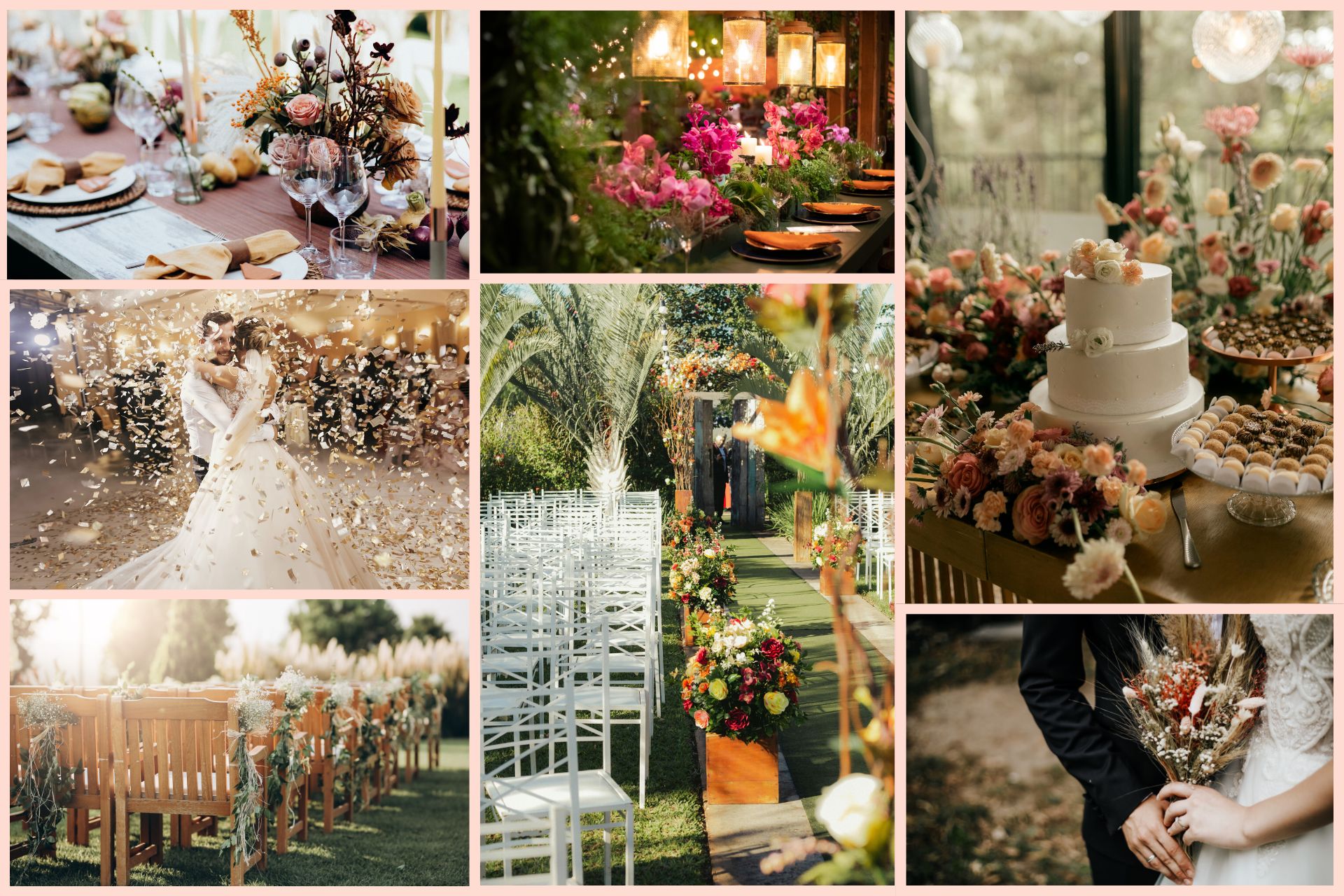
Planning a wedding often starts with an idea. Most couples don’t begin the process knowing the exact shade of green or the precise name of the flower they want as a centerpiece, but they do know how they want the day to feel. The challenge comes in translating that feeling to the vendors who will help bring it all to life.
That’s where a wedding mood board comes in. Think of it as your communication tool; the bridge between your imagination and your vendors’ execution. But not all mood boards are created equal. Too few visuals and your vendors may still be guessing; too many and your vision can get muddled.
In this guide, we’ll help you create a mood board that enables your vendors to truly understand your vision and provides them with the clarity they need to bring it to life.
Does a mood board really matter?
Unless you’re planning to DIY your entire wedding, your vendors are the ones who will bring your vision to life. They’re the operators, the experts in their craft, but they aren’t mind readers. You’re the expert in your own vision. Offering clarity from the start saves you from heartache later and reduces the need for back-and-forth emails.
Do you need to micromanage every detail or create step-by-step instructions for your vendors? Not at all. Lean on their experience and creativity. But keeping things too vague can open the door for misinterpretation. One person’s idea of “formal” might be another’s version of “casual.”
A good mood board helps everyone get on the same page. It becomes a visual guide that answers questions before they even arise, such as whether your “romantic” style means candlelit and classic or minimal and moody.
Start with the vibe
Before you start pinning, whether on a physical board or online, ask yourselves one key question: What do we want our wedding to feel like?
Do you want it to feel intimate and cozy? Grand and sophisticated? Lively and playful? Dramatic and high fashion? You can also start with more abstract words, such as family, connection, or nostalgia. Write down a few words or phrases that capture the emotional tone of the day, then begin collecting images that reflect that feeling.
“Cozy,” “organic,” and “elevated” might lead you toward candlelight, soft textures, and muted earth tones. “Vibrant,” “joyful,” and “modern” might inspire saturated colors, graphic lines, and a sense of movement.
These feeling words are what keep your board cohesive and focused on the story you’re telling, not just on what looks pretty.
Have one visual anchor
Every great mood board has a visual anchor or an image that captures the entire mood at a glance. It might be a tablescape, a piece of fabric, or even a photo from a film still that nails the tone.
This anchor image should evoke a strong emotional response. It’s what your vendors can glance at and instantly get the mood you’re going for. From there, build your board around that image, incorporating supporting visuals such as florals, textures, attire, lighting, and typography.
If you start without an anchor, your board might end up scattered. But with a strong visual, you give everything else direction.
Curate, don’t just collect
Once you get started, it’s easy to fall down the wedding planning rabbit hole and end up with a mood board that takes over your entire living room wall. The key to an effective mood board is curation. Your vendors don’t need all your inspiration—they just need a clear direction.
To keep yourself from getting overwhelmed, try these tips:
- Give yourself space to brainstorm: You don’t need to confine yourself at first. Save anything that resonates with you and allow yourself to dream big and explore various ideas.
- Pause: After some time, step away from your mood board and take a short break from wedding planning. Giving yourself space helps you come back with fresh eyes and a clearer perspective.
- Edit: When you return, narrow your board down to about 15 to 20 images. Remove anything that repeats or doesn’t add something new. If you’re unsure, ask a trusted friend who hasn’t seen it yet to take a look and tell you if any images feel repetitive.
- Organize by category: Create small clusters, so that like goes with like; attire, florals, venue setting, lighting, and entertainment.
When you focus on quality over quantity, your mood board becomes more than just a collection of images. It becomes a clear, intentional guide that helps your vendors see your vision exactly as you envision it.
Use visuals that show context, not just details
A strong mood board doesn’t just show what you like; it shows how all the elements fit together.
If you share a close-up of a bouquet, your florist can get a sense of your preferred flowers and colors. But to really set them up for success, give them context. Include photos of your dress or the style you’re envisioning, as well as images of your ceremony or reception space.
Consider the time of day, too. The way your flowers and tablescapes look can change completely from a glowing sunset to candlelight at night.
Beware color
Color is one of the most common areas where mood boards go wrong. Filters, lighting, and photo edits can make a palette look completely different in real life.
Choose a consistent color palette tool such as Coolors or Adobe Color, and limit yourself to about five main tones. Then cross-check those tones in real-world photos. If your dusty rose suddenly looks hot pink under natural light, make adjustments.
When sharing your board with vendors, include labeled swatches with your exact hex or Pantone codes. This small step makes your florist, stationery designer, and planner’s work much easier and ensures everyone on the same page.
Add notes for clarity
A picture can say a lot, but a few words can prevent misunderstandings. Add short notes explaining what you like about each image, such as “Love the soft, organic texture of this tablescape” or “Prefer the candlelight mood here, but not the chair style.”
You’ll have the opportunity to discuss your mood board with your vendors, but these notes serve as reminders of your vision, eliminating room for guesswork or misinterpretation. A few thoughtful comments can be the difference between vendors getting it exactly right and the final look feeling slightly off on your special day
Use the right tools to bring it together
A mood board can take many forms, but digital boards are often the easiest way to communicate with multiple vendors. You don’t need any fancy software to create a cohesive and polished board. Canva, Pinterest, and Milanote are simple, user-friendly tools that let you organize and arrange your visuals clearly.
When you’re done, export it as a clean PDF or shared link. That way, your planner, florist, photographer, and even caterer can reference the same visual document.
Share it early and invite feedback
Your mood board doesn’t have to be complete before you share it. Send it to your planner, florist, and photographer early, even before design elements are finalized.
You might wonder if that will confuse them or make it harder to make changes. It won’t. Sharing your board early gives you the chance to ask for their input. Questions like “Does this align with what’s possible in my venue?”, “Do these colors photograph well outdoors?”, or “What other ideas do you have along these lines?” can elevate your mood board and refine your vision.
Your vendors are creative collaborators, not just executors. Inviting their input early allows you to benefit from their expertise and often leads to even better ideas than you imagined initially.
Keep it consistent across vendors
Avoid a common mistake by making sure you send the same mood board to all your vendors. Even slight differences between versions can lead to subtle mismatches in tone.
The best approach is to create one master board that represents your overall aesthetic. You can highlight sections for each vendor, such as florals, paper goods, or tablescapes, but the overall mood should stay consistent.
If you’re working with multiple creatives, your planner can help coordinate and maintain that consistency across the team.
Remember, a clear mood board can still be dynamic
It’s natural for your tastes and ideas to evolve as you explore options and see more samples. A mood board isn’t meant to stay frozen; it’s meant to grow with you.
The key is to update it with intention. When making changes, keep them aligned with your original emotional tone, or communicate clearly with your vendors if the core direction has shifted. At the end of the day, if the answer to the question “Does this new direction still feel like us?” is yes, then you’re on the right track.
Final thoughts: A clear mood board is one of the best communication tools
A great wedding mood board is more than just a collage of pretty images. It’s a visual map of who you are as a couple and how you want your day to feel. When done thoughtfully, it becomes your guiding light, informing creative decisions and enabling your vendors to bring your vision to life with clarity and confidence.
Think of it as your shared language to keep everyone (planners, florists, photographers, and designers) aligned and inspired. And as your plans evolve, it can grow too, as long as it stays true to your emotional core.
When you take the time to create a mood board that’s clear, cohesive, and emotionally grounded, you set the stage for a wedding that not only looks beautiful but feels like you.

Dr. Vivian Oberling is a licensed clinical psychologist with degrees from UCLA, Harvard, and Stanford. In her private telehealth practice, she works with adults navigating anxiety, identity shifts, and relationship dynamics—whether they’re dating, partnered, or parenting. She also provides executive coaching and behavioral health advisory support to tech startups and legal tools reshaping how we think about love, marriage, and psychological safety. Dr. Oberling combines 10+ years of clinical expertise with modern, real-world insight to help people move through uncertainty with clarity and connection.
0 Comments