
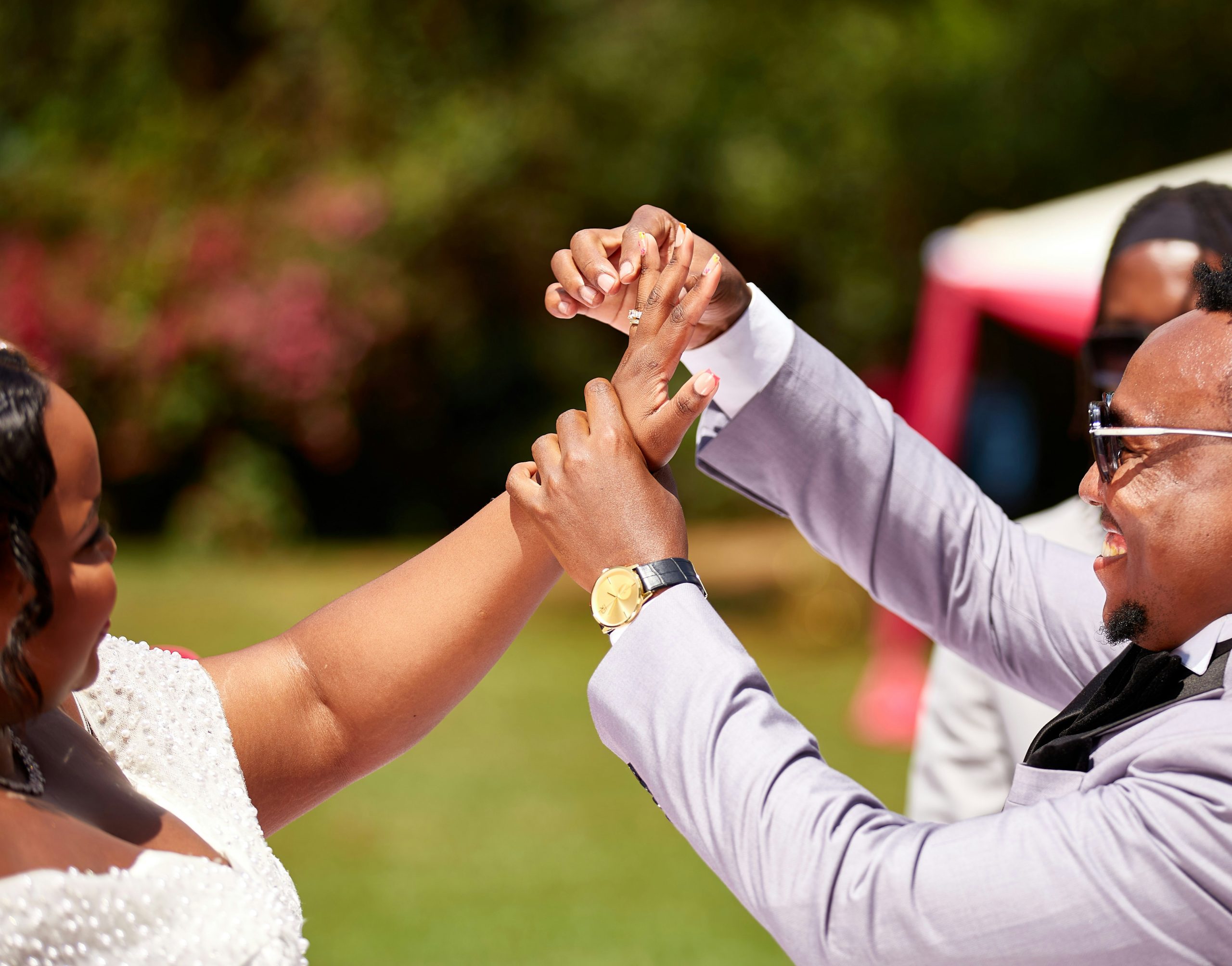
If you’ve been to a wedding in the last few years, there’s a good chance you’ve seen the shoe game. It usually gets big laughs, a few “aww” moments, and just enough playfulness to keep the room engaged.
When it’s done well, the shoe game shows off your connection, your shared sense of humor, and how well you genuinely know each other. When it’s not, it can quickly tip into awkward territory. Think nervous laughs, subtle defensiveness, or that moment when everyone realizes they’re watching something that maybe should’ve stayed private.
This article breaks down what the wedding shoe game actually is, how to pick questions that keep it fun and intentional, and how to avoid it tipping into awkward or emotionally chaotic territory. You’ll also find ready-to-use question ideas, plus tips for skipping the ones that seem harmless but can land weird on a nervous system level.
What the wedding shoe game actually is
The wedding shoe game is a reception activity where the couple sits back-to-back, each holding one of their own shoes and one of their partner’s. A host reads questions aloud, and the couple answers by raising the shoe of the person they think best fits the question.
The questions are usually light and playful, like “Who is more likely to be late?” or “Who said ‘I love you’ first?” The fun comes from whether the couple answers the same way or completely differently, and how confidently they do it.
While it looks simple, the game can subtly reveal how each partner sees the other, what dynamics already exist, and even a hint of unspoken tension. There’s also an element of performing your relationship for the room, whether you intend to or not. That’s why how you set this game up matters more than most couples realize.
The point of the shoe game (and where it goes wrong)
Let’s start with what the shoe game isn’t. It’s not a compatibility test. It’s not a roast. And it’s definitely not the moment to air out unresolved issues, poke at insecurities, or bring up power dynamics that don’t belong outside you as a couple.
So what is the point? Joy. The shoe game is meant to give your guests a glimpse into your love and let the room feel connected, warm, and energized alongside you.
From a psychological perspective, moments like this work best when they reinforce safety and shared meaning. When questions cross into embarrassing or overly revealing territory, the energy can shift quickly. The couple may feel exposed or on edge, and guests are left unsure whether they should be laughing or quietly looking away.
At its best, the shoe game supports the story you want your guests to walk away with about your relationship.
The questions that make or break the game
A lot of couples pull shoe game questions from generic lists online without filtering them. On paper, many of these questions seem funny or edgy. But saying them out loud, or answering in front of others, can bring up different emotions.
Here’s what you need to remember: weddings are already heightened emotional events. As the couple, you’re holding all the adrenaline, anxiety, family dynamics, the spotlight, and (maybe) some alcohol. So, when you’re holding all those feelings, a question that might only be a little annoying on a good day lands a lot harder in this situation. And it’s in front of 100-some people watching.
The questions that tend to create the most chaos usually fall into a few familiar buckets:
- Anything about money, control, or power
- Questions that subtly (intentionally or not) paint one person as irresponsible, immature, or “the problem”.
- Things that hint at past fights or unresolved tension
- Questions that invite comparison, embarrassment, or shame
Even if you laugh it off in the moment, it still has an impact, and it’s not an energy or memory you’ll want to associate with your wedding day. Building your question list with intention will actively build safety and connection, allowing the space to have fun.
Okay, so what questions should we use?
Start with the big picture. What do you want this moment to feel like, for you and for your guests? Silly? Playful? Warm? Lightly revealing?
Once you have a sense of the vibe you’re aiming for, use that feeling as your filter when building your question list.
After you’ve drafted your questions, run through them one more time and ask yourselves:
- Would we still laugh about this tomorrow? If a question could live on as “that awkward moment,” it’s probably not worth it.
- Does either of us cringe or hesitate, even a little? If something feels off to one of you, that’s reason enough to cut it.
- Does this invite connection or judgment? Good questions highlight familiarity. Bad ones invite the room to judge a trait or behavior.
- Is the humor shared, or at someone’s expense? Laughing together builds closeness. Laughing at one partner can undermine it big time.
- Would this feel okay if our parents were answering it about us? It sounds silly, but it’s a surprisingly effective gut check.
The best shoe game questions are gentle mirrors, not spotlights.
Classic shoe game questions that almost always land well
These questions work because they’re familiar, low-pressure, and based on the everyday quirks you already know about each other.
- Who is more likely to be late?
- Who is the better cook?
- Who takes longer to get ready?
- Who is more organized?
- Who is more likely to lose their keys?
- Who plans trips?
- Who wakes up earlier?
- Who is more sentimental?
- Who is more likely to start a movie and fall asleep?
These questions invite laughter without anyone feeling the need to defend themselves.
Relationship-forward questions that build warmth
If you want the game to feel a little more meaningful without getting too heavy, these questions do just that:
- Who said “I love you” first?
- Who was more nervous on the first date?
- Who is more likely to suggest a date night?
- Who has given the best gift?
- Whose love language is [physical touch, acts of service, words of affirmation, etc]?
- Who is more likely to plan a surprise?
- Who is more likely to…
These work because they spotlight care, effort, and emotional presence rather than flaws.
Playful questions that feel fun, but not exposing
These questions lean into some cheekiness without crossing into discomfort.
- Who is more likely to dance in the kitchen?
- Who has the better taste in music?
- Who is more likely to forget an anniversary?
- Who is more likely to crack a joke?
- Who is more likely to cry during a sappy movie?
- Who is more likely to come home with a puppy?
They keep the energy light and connected, especially in front of a mixed-age crowd.
Questions to approach with caution (or skip entirely)
Some questions are popular online but much riskier in real life. The key is to think about how the questions will land for you specifically as a couple. If a question could trigger defensiveness, shame, or be easily misread by either of you or by your guests, it’s probably one to skip.
Be cautious with questions like:
- Spending habits or financial responsibility?
- Who is “the mess” or “the problem”?
- Who is more controlling?
- Who apologizes more after fights?
- Who is more emotional or sensitive?
- Who “wears the pants” in the relationship?
- Who’s more likely to cheat?
- Who will be better at marriage?
- Who’s more likely to get too drunk?
- Who was more wild as a single person?
- Who’s had cold feet?
Even if these reflect private jokes, public settings can change how they land. So, a good rule of thumb: if a question highlights imbalance or conflict rather than how you complement each other, it probably doesn’t belong in the shoe game (couples therapy, anyone?).
How many questions is the right amount?
More isn’t always better.
Most shoe games work best with 10 to 15 questions. That’s enough to build momentum without dragging things out or making things awkward.
The longer the game goes on, the more fatigue sets in (and let’s be honest, it’s already a long day with speeches and everything else). When energy dips, even a harmless question can go wrong. Ending on a high note is always better than squeezing in “just one more.”
Who should choose and approve the questions?
Ideally, both partners review the questions together ahead of time. This isn’t about spoiling the surprise. It’s about consent and alignment. If a friend or MC is hosting, give them a pre-approved list and clear guidance not to improvise. Off-the-cuff questions are where things most often go sideways.
Think of it like curating a playlist. You want flow, tone, and intention, not randomness.
Final thoughts on making the shoe game fun and meaningful
The wedding-shoe game works best when it reflects who you are as a couple. It’s fine to start with a basic structure or question list from the internet, but the magic happens when you make it your own and let it fit into the overall feel of your wedding day.
When questions are chosen thoughtfully, the game becomes more than entertainment. It becomes a shared memory of care, connection, and love. When questions are careless, it can chip away (quietly or loudly) at the sense of safety and connection you’re trying to create.
So, aim for warmth over wit. Connection over cleverness. And the laughs take care of themselves.

Dr. Vivian Oberling is a licensed clinical psychologist with degrees from UCLA, Harvard, and Stanford. In her private telehealth practice, she works with adults navigating anxiety, identity shifts, and relationship dynamics—whether they’re dating, partnered, or parenting. She also provides executive coaching and behavioral health advisory support to tech startups and legal tools reshaping how we think about love, marriage, and psychological safety. Dr. Oberling combines 10+ years of clinical expertise with modern, real-world insight to help people move through uncertainty with clarity and connection.
0 Comments