

In wedding planning, couples quickly learn that some of the smallest tasks are the ones that end up taking the most time—and wedding invitations are a perfect example.
It’s not just about choosing a beautiful design. It’s deciding when to send them, what to include, and how those details quietly shape the tone of your entire wedding.
When guests know what to expect and when, they arrive more relaxed, better prepared, and far less likely to light up your group chat with last-minute questions. That clarity eases stress for everyone and gives your wedding a major advantage before the day even begins.
In this guide, we’ll walk through the exact timeline for sending your invitations, what your suite should include, how to avoid last-minute chaos, and the emotional cues invitations send to your guests. We’ll also look at a few research-backed communication principles that can completely shift how you think about this part of the planning process.
Why invitation timing matters
For many couples, invitations can feel like a formality. It could be something you do out of tradition, or something that feels skippable in the digital age. It is easy to assume they are a minor detail with little impact.
But before you remove them from your plans, consider the psychological benefits. An invitation is an artifact, the first tangible sign of your celebration. It helps make the wedding feel real for your guests, grounding the experience in something they can see and hold.
Invitations also support commitment. Research on behavioral commitment shows that early, active decisions increase the likelihood of follow-through. In wedding terms, when guests receive something physical and early, they are more likely to RSVP, and once they RSVP, they are much more likely to show up.
Invitations also reduce stress for both you and your guests. The more people know about timing, logistics, and expectations, the less they have to guess. They do not need to wonder or piece together details. Instead, they get to feel excited and look forward to your day.
In other words, an on-time invitation does more than organize your headcount. It shapes the emotional tone of your wedding for everyone involved.
When to send save-the-dates
Save-the-dates are your early heads-up to guests about the wedding date. They give people the basics so they can mark their calendars and start planning without needing all the details yet.
So when should you send them? While it depends on your wedding and your guest list, a good rule of thumb is six to eight months before for a local wedding and nine to twelve months before for a destination wedding.
People genuinely appreciate time to coordinate childcare, time off from work, and budgets. This extra lead time increases the chances they say “yes” and feel good about saying yes.
When to send your wedding invitations
After you have given everyone the early heads-up, the next question is when to send the actual invitation. There is an art to this. You may need time to finalize details with vendors, which can affect how soon you can send your invitations, especially if that information needs to be included. But if you wait too long, guests may start wondering whether the wedding is still happening and may reach out with more questions than you want to juggle.
Most planners follow a simple rule of thumb that also makes sense psychologically. Local weddings should have invitations sent six to eight weeks before the wedding. For destination weddings, aim for at least three to four months’ advance notice.
These timelines give guests enough time to plan without feeling rushed, but not so much time that they RSVP and forget about it, which happens more often than couples expect.
If you have multiple events planned, such as a welcome party, group outing, or post-wedding brunch, aim for the earlier end of the timeline. It gives guests a better chance to plan travel in a way that lets them participate fully.
When should your RSVP deadline be?
Okay, let’s talk about one of the main functions of your invitations: the RSVP. When you decide when to send your invitations, you should already have an idea of when you need those RSVPs back. Your deadline dictates how much breathing room you (and your vendors) will have.
For local weddings, set your RSVP deadline 3–4 weeks before the ceremony.
For destination weddings, aim for 6–8 weeks before.
What does this timeline actually give you? It allows you to handle:
- Late RSVP-ers (there are always a few)
- Final catering numbers
- Seating chart decisions
- Accommodation updates
- Transportation headcounts
When that final month rolls around, you’ll be grateful you already have most—if not all—of your RSVPs in. It’s a busy month, emotionally and logistically, and you don’t want to spend it tracking down responses.
What to include in your invitation suite
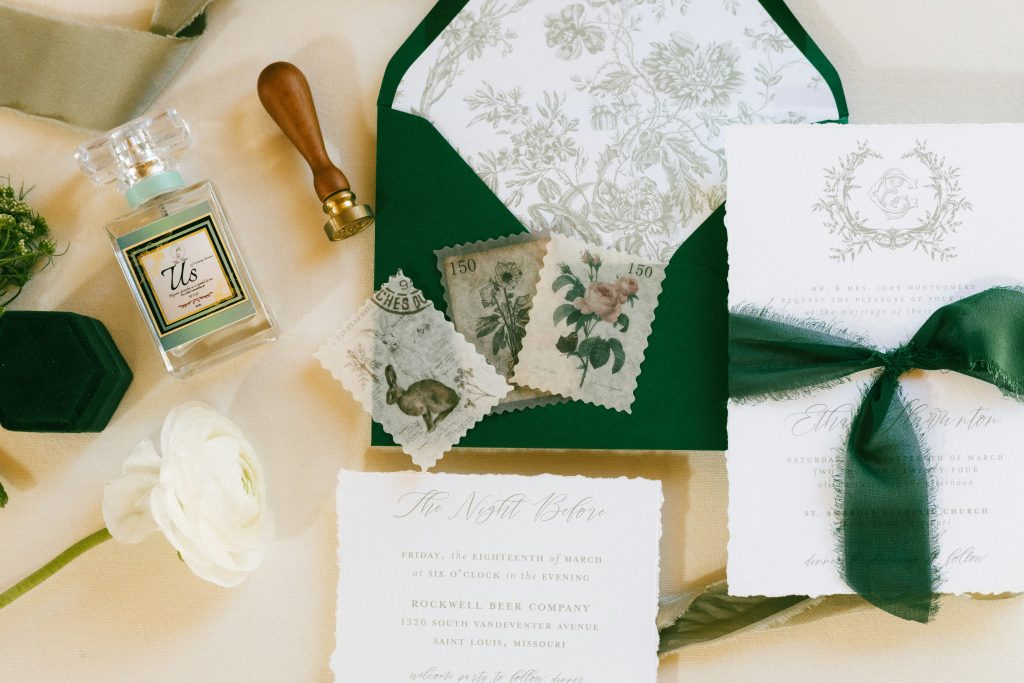
This is where information and beauty meet. Your invitations can be an extension of your wedding’s overall feel, and photographers often style and photograph them as part of your day. While your suite is absolutely part of your aesthetic, it also has a job to do. It needs to include the essential details so guests don’t text you the week of with avoidable questions.
1. The main invitation
Your main invitation should answer the “big three”: who is getting married, when it is happening, and where it is taking place. You can go classic, minimal, modern, or playful… whatever fits your vibe, but keep it readable. No guest wants to decipher a script font that feels like a Renaissance manuscript.
2. A details card
The details card is arguably the most important component for preventing guest confusion. This is where all your information about the ceremony and reception locations, the start times, the dress code, parking or shuttle information, weather considerations, accessibility notes, child-free or kid-friendly details, and any cultural or religious customs guests may need a heads-up about is. Clarity is kindness, and guests appreciate knowing exactly what to expect.
3. A schedule of events
While this isn’t absolutely necessary, if you have more than one event, a clear, linear timeline is always helpful. Events like a welcome party, group excursions, rehearsal dinner details, and the post-wedding brunch. Sharing this in advance reduces the anxiety guests often feel about whether they are expected to attend certain events.
4. An RSVP card or QR code
You can go traditional or tech-friendly with your RSVP card, and QR codes have become completely wedding normal and can streamline the entire process. Make sure to include meal choices if needed, leave space for allergies if you want that information, clearly indicate plus-one eligibility, and ensure your RSVP portal is mobile-friendly since most guests will respond from their phones if it is digital. Also consider who is responding. You can use a hybrid model by including paper RSVP cards for guests who may need or prefer that method, and a QR code for everyone else.
5. Your wedding website
You may be wondering whether you really need both an invitation suite and a wedding website. For most couples, the answer is yes. Your invitation suite sets the tone, shares the essentials, and creates a beautiful first impression, while the website offers the flexibility and depth that paper simply cannot.
A wedding website is the perfect place for detailed travel information, hotel blocks, FAQs, registry links, weather expectations, and updated schedule changes. It can also highlight your story, introduce the wedding party, and include anything else that would feel too crowded on paper. And the best part is that it cannot get lost. Guests can revisit the website any time they need, without worrying about misplaced cards or missing details.
What not to include
Sometimes, in an effort to help, couples provide too much information in the invitation suite. While we do want the invitation suite to provide information, it should be what’s necessary and doesn’t overwhelm your guests.
Keep it simple by skipping overly long dress code descriptions, leaving out your entire weekend itinerary if a significant portion of guests are not invited, keeping registry information off the physical invite, and avoiding long paragraphs of instructions. People skim, and simplicity helps them absorb the details you want them to remember.
How to politely set boundaries in your invitations
People generally handle boundaries better when you offer some contextual framing, meaning you give them the “why” and not just the “what.” Approaching boundaries this way increases cooperation and reduces resistance.
Here are examples to help give you a starting point:
- Child-free events: “While we absolutely love your kidoo, our ceremony and reception will be adult-only. We hope we can celebrate with you!”
- Plus-one limits: “Due to space limitations, we are only able to accommodate those listed on your invitation.”
- Dress code: “Ceremony will be held outdoors on grass—block heels or wedges recommended.”
The common thread is that the language is warm, clear, and factual. Notice if you start leaning toward defensive wording or overexplaining to soften the message.
Feeling stressed? Tips to help
When creating your invitation suite, there are a few common areas to keep an eye on. For example, once you have designed or selected your invitation, give yourself a buffer for proofing. Avoid placing the full order on the same day you finish the design. You need at least 24 hours to step away and return with fresh eyes.
Other tips to keep in mind:
- Order 10–20% more than you think: Lost invitations, pets getting to a few… It’s always good to have extras.
- Confirm addresses: Before you send out your invitation, confirm addresses to lessen the chance they get lost in the mail. And if they do? Well, good thing you ordered extra.
- Use tools: Make use of technology. Whether it is a QR code or a service that funnels all the RSVPs into a spreadsheet for you, there are plenty of tools that can make the process easier.
- Pull in help: As much as you can, accept help and delegate. Whether it is to a wedding planner, a trusted friend, or a family member, consider passing off some of the tasks to help preserve your emotional bandwidth.
These small steps may seem simple, but together they make the invitation process far more manageable and set you up for a smoother, less stressful wedding planning experience.
Digital vs. paper invitations
Modern weddings have entered the era of flexibility, and digital invitations are becoming increasingly common, especially for welcome parties, brunches, and pre-events.
There is no right or wrong way, so here’s a breakdown of what is best about both options. From there, you can decide what will work best for you and your wedding.
Paper invitations
These tend to be best for:
- Formal weddings
- Destination weddings
- Multigenerational guest lists
- Events where you want people to feel the significance of the moment
Paper undeniably carries emotional weight. People display it, save it, and feel invited rather than informed.
Digital invitations
These tend to be best for:
- Eco-friendly preferences
- Compressed timelines
- Budget-sensitive wedding
- Tech-savvy guest lists
Just make sure digital invites are aesthetically aligned with your overall wedding brand so the experience still feels cohesive.
Conclusion: Smart invitation timing sets the tone for a smooth wedding
Invitations may look simple, but they carry more weight than most couples expect. They are the first tangible piece of your wedding story. Sending them on time with the right details does more than help people plan; it sets the emotional tone for your entire day. Good timing builds commitment, clear information reduces stress, and thoughtful wording helps get everyone excited.
As you finalize your suite and double-check those addresses, remember that intentional invitations are an investment in a calmer planning process and a more seamless wedding day. They help guests arrive prepared, present, and ready to celebrate you—exactly as it should be.

Dr. Vivian Oberling is a licensed clinical psychologist with degrees from UCLA, Harvard, and Stanford. In her private telehealth practice, she works with adults navigating anxiety, identity shifts, and relationship dynamics—whether they’re dating, partnered, or parenting. She also provides executive coaching and behavioral health advisory support to tech startups and legal tools reshaping how we think about love, marriage, and psychological safety. Dr. Oberling combines 10+ years of clinical expertise with modern, real-world insight to help people move through uncertainty with clarity and connection.
0 Comments