
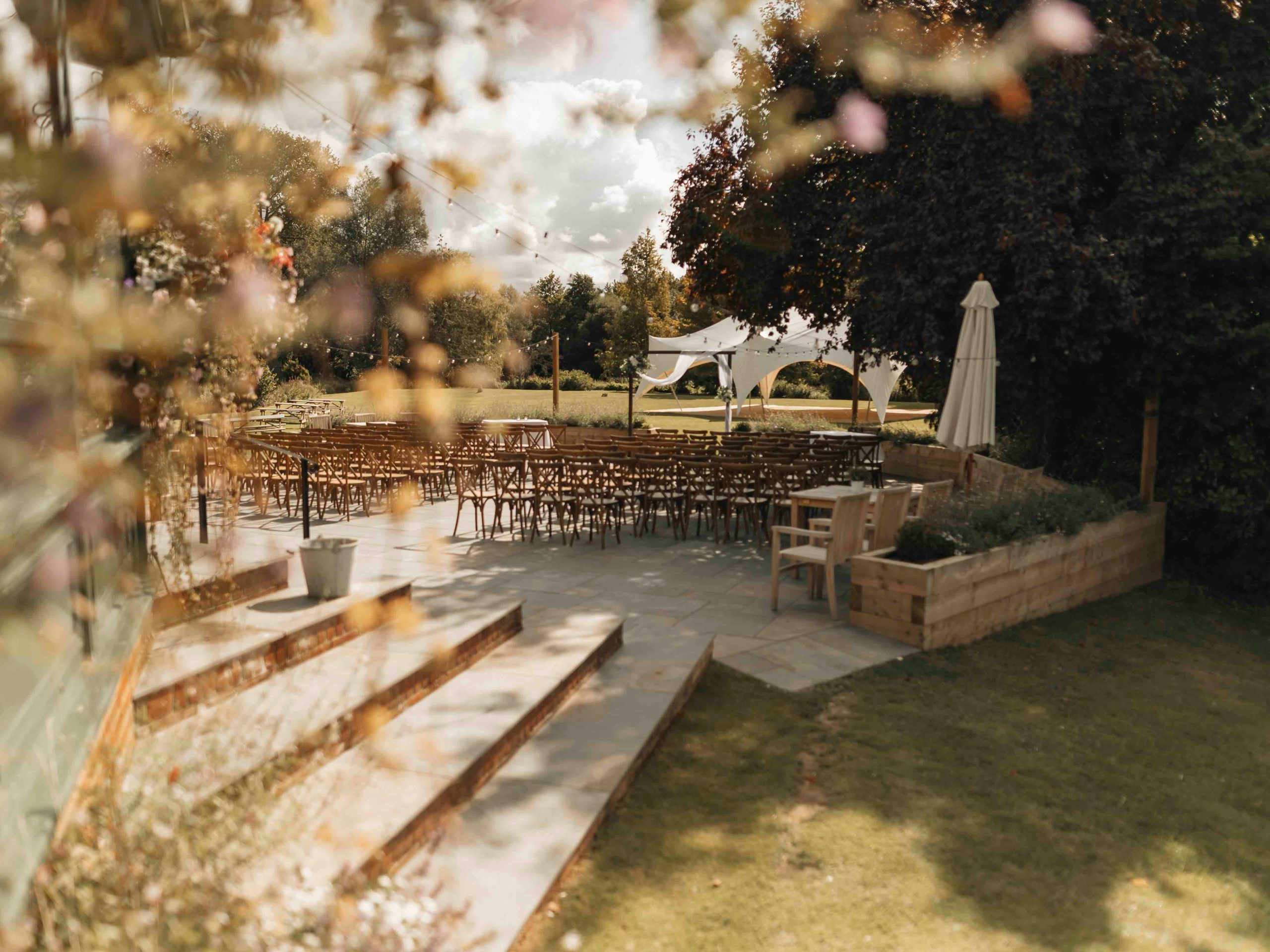
You found the venue. It has the exposed brick, the string lights, the barn doors that open onto a sweeping garden… and the price tag that looks (almost) reasonable. You sign the contract and breathe a sigh of relief to cross that off your to-do list.
But then, somewhere between the contract and the invoice, you notice the cost begins to climb. You’re not alone; this is one of the most common (and stressful) experiences in wedding planning, and it happens to nearly half of all couples who book a venue.
This rising cost is mostly driven by hidden venue costs; those fine-print fees that rarely show up in your initial quote but have a way of adding thousands of dollars to your final bill. We’re talking cake-cutting fees, required vendor packages, overtime charges, and a whole list of other line items that the venue brochure conveniently leaves out. According to The Knot’s 2025 Real Weddings Study, the average U.S. couple now spends around $35,000 on their wedding, with venue costs alone accounting for $8,000 to $22,000 of that, depending on whether food and alcohol are bundled in.
There’s also a fascinating (and slightly uncomfortable) psychology at play here. Research has shown that when we’re in a heightened emotional state, like being newly engaged and touring stunning venues, our brains basically stop doing math. We anchor on the dream, and budget/numbers become secondary. It’s not a character flaw. It’s just how human brains work under romantic pressure. And knowing that? It can actually help you sidestep these pitfalls.
The fees hiding in plain sight
Here are ten hidden costs that catch couples off guard at even the most popular wedding venues.
1. The service charge that’s not quite a gratuity
Many venues add a mandatory service charge, usually 18 to 25 percent of your food and beverage total, that looks like a tip for the servers and staff working your wedding. Often, it’s not. This charge goes to the venue as overhead, and tips are expected separately on top of it. For a $10,000 catering package, that’s up to $2,500 in service charges before a single person gets tipped. Always ask what the service charge covers and what the tipping expectation is on top of it
2. The cake-cutting fee
Yup, this is a real thing. Venues frequently charge between $2 and $5 per guest just to cut and serve a cake you’ve already paid for from an outside bakery. On a 150-person guest list, that’s up to $750 to slice a cake. It feels absurd, but it’s also industry-standard at many event spaces. If you’re bringing in a wedding cake from outside the venue, ask about this fee upfront.
3. Corkage fees
Similar to the cake cutting fee, bringing your own alcohol can trigger a corkage fee per bottle opened, commonly ranging from $15 to $40. This can quietly undo any savings you thought you were getting by sourcing your own bubbly. And at some venues, outside alcohol isn’t permitted at all, locking you into their bar packages entirely.
4. Required vendor packages
Some venues, especially all-inclusive estates, country clubs, and resort properties, require you to use their in-house vendors for catering, DJ, or florals, or choose exclusively from a small preferred vendor list. This limitation can significantly impact other line items in your budget.
5. The outside vendor fee
Other venues may allow outside vendors, but (surprise surprise) there is a fee if its a vendor that is not on their approved roster. Want your cousin who’s a talented photographer? That might cost you a “non-preferred vendor” surcharge.. It’s worth asking whether this fee exists before you fall for a venue that doesn’t happen to have your dream photographer on file.
6. Overtime charges
Most venue contracts specify a rental window, say 5 p.m. to 10 p.m. If your party runs long (and they usually do), you may be charged $250 to $500 or more per hour. What makes this tricky is that the overtime clock starts at the predetermined time no matter what. If cocktail hour runs long, dinner service is slow, or speeches go on, none of that stops the clock. Building in a buffer or negotiating an extended block upfront is almost always cheaper than paying overtime rates on the fly.
7. Parking fees and valet requirements
Many venues, especially those in urban settings or hotels, will frequently charge for parking and some even require valet services, which you may be expected to subsidize or fully cover for guests. Ask whether parking is included, whether a valet is mandatory, and who is expected to absorb that cost.
8. Setup, breakdown, and cleaning fees
Setup and breakdown fees cover the time spent putting out chairs, arranging tables, and post-event cleanup. These are often listed separately from the rental price and can range from a few hundred to several thousand dollars, depending on the venue size. Some venues also charge a cleaning or damage deposit that may or may not be refundable, and the criteria for ‘refundable’ can be surprisingly vague. Get clarity on that before you sign.
9. Ceremony fees at reception venues
Hosting your ceremony and reception at the same venue is fast becoming the norm, but many venues charge a separate ceremony fee on top of the reception rental. This can range from $500 to $3,000 or more, and it often covers minimal extras beyond use of the space for an additional hour or two. It’s a legitimate cost, but one that rarely comes up in the initial pricing conversation unless you ask directly.
10. Weather and contingency “flip” fees
Outdoor and hybrid venues often charge what’s called a flip fee: the cost of quickly converting an outdoor ceremony space to an indoor backup if the weather turns. This can range from $500 to several thousand dollars and, depending on your location and time of year, is a genuine possibility worth budgeting for before you book.
The psychology behind why these fees sting
Venues are part of an industry designed to sell, and they’re banking on a well-known psychological trap called the sunk cost fallacy: our tendency to keep investing based on what we’ve already spent rather than what makes sense going forward. By the time you’ve found out about the additional valet service and cake cutting view, you’ve already told your family, posted about it, and maybe sent save-the-dates. Walking away doesn’t even feel like a choice, so your mind makes the fees feel manageable.
It’s also worth noting that a landmark study by economists Andrew Francis and Hugo Mialon found that higher wedding spending was inversely associated with marriage duration. Couples who spent $20,000 or more showed a statistically higher risk of divorce, largely attributed to the financial stress that follows. To be clear, the big wedding isn’t necessarily the problem. The unmanaged debt afterward is.
This is a solid argument for asking every fee question before you sign anything.
Final thoughts: How to protect yourself
The good news: you’ve read this far, and none of these “hidden” fees will blindside you. Before you book any venue, ask for an itemized list of every possible charge. Even if you feel high maintenance or receive pushback, you need to see every fee that could be charged, not just the base rental.
Ask specifically about service charges and gratuity policy, outside vendor policies and fees, overtime rates, parking and valet, ceremony flip or conversion fees, setup and breakdown costs, and cleaning or damage deposits. Get every answer in writing, too. If a venue’s team is cagey about these questions, that’s giving you a peek at how it may be to work with them.
Your venue is likely the single largest line item in your wedding budget, and it deserves the same scrutiny you’d give any major financial decision. The wedding industry is designed to make spending feel like love, and can be good at guilting couples, intentionally or not. But spending thoughtfully is just as romantic, and a lot more sustainable when the honeymoon is over.

Dr. Vivian Oberling is a licensed clinical psychologist with degrees from UCLA, Harvard, and Stanford. In her private telehealth practice, she works with adults navigating anxiety, identity shifts, and relationship dynamics—whether they’re dating, partnered, or parenting. She also provides executive coaching and behavioral health advisory support to tech startups and legal tools reshaping how we think about love, marriage, and psychological safety. Dr. Oberling combines 10+ years of clinical expertise with modern, real-world insight to help people move through uncertainty with clarity and connection.
0 Comments