

It often takes a village to plan and execute a wedding, so it’s no surprise that one of the most common planning questions is, “Who do we need to get a thank you gift for—and what do we give?”
Weddings bring a whole cast of family, friends, and professionals into the mix. Some show up emotionally. Some show up financially. Some show up by hauling décor in the back of their SUV at 7 a.m. All of that generosity deserves acknowledgment, but not all in the same way.
This article breaks down who traditionally receives a thank-you gift, how to think about gratitude from a psychological perspective, and real gift ideas that feel thoughtful rather than obligatory. By the end, you’ll have a clearer sense of who gets what and how to keep those gestures meaningful amidst the beautiful chaos of wedding planning.
What thank you gifts are actually for
In psychology, gratitude strengthens relationships because it does two things at once: it reinforces supportive behavior and communicates, “You matter to me.” Research consistently shows that when people feel appreciated, they’re more willing to keep helping, feel more connected, and experience stronger relationship satisfaction.
And during wedding planning (a time marked by heightened stress, complex family dynamics, and heightened emotional sensitivity), a well-timed acknowledgment can soften tension and deepen closeness.
So don’t think of thank you gifts as transactions. Think of them as small moments of emotional upkeep, a way to show gratitude and tend to the relationships that helped bring you to your wedding day.
The psychology behind choosing the “right” gift
When thinking about how to show your appreciation, it can be easy to place so much importance, that the next thing you know, you are pressuring yourself to find the most unique, costly, or impressive gift. But what people tend to value most is personalization and emotional accuracy.
Two psychological ideas can help you choose the right gift. First is attunement, which is the ability to notice what someone would genuinely appreciate rather than defaulting to what everyone else gives. A groomsman who hates watches doesn’t need a watch, and a bridesmaid who loves cooking will light up over a great cookbook more than monogrammed jewelry.
The second is the specificity effect. Gratitude lands much deeper when it’s specific. Instead of “Thank you for everything,” try, “Thank you for calming me down when I spiraled about the seating chart and for showing up to every fitting even when you were exhausted.”
Keeping these two concepts in mind when choosing and presenting a thank-you gift will help you land on the gesture that feels truly right for each person.
How much should we spend?
There’s no perfect number, and it really depends on your budget and what you’re thanking the person for. Many couples spend somewhere between $30 and $150 per person, but the meaning matters far more than the price. A thoughtfully chosen $25 gift can feel more special than a $100 one picked in a hurry.
Your wedding party
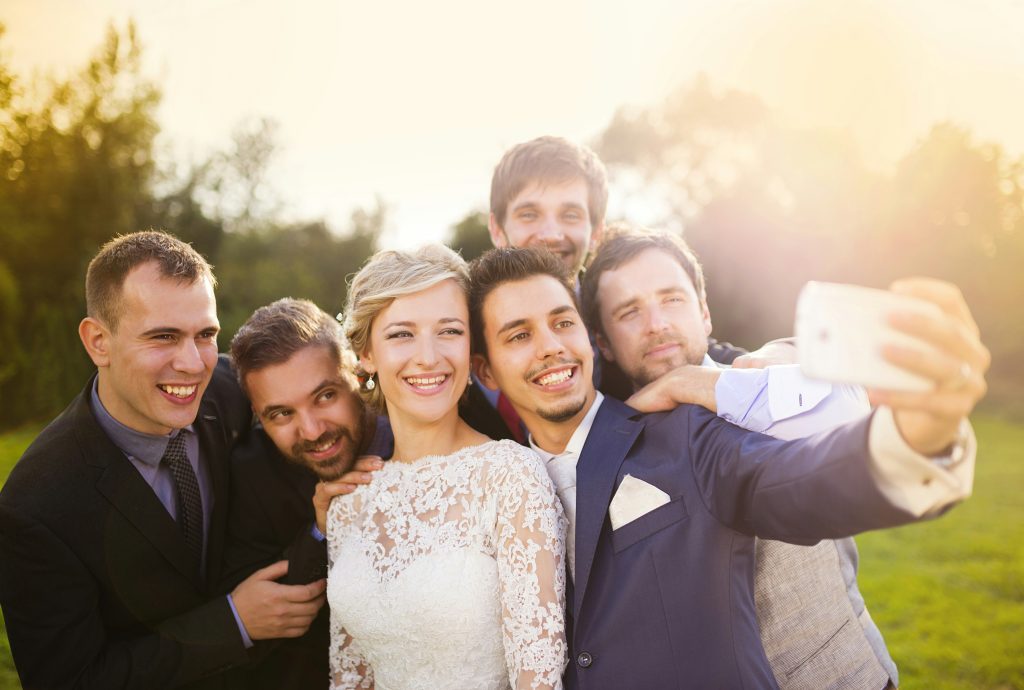
Your wedding party almost always receives a thank-you gift. They’ve put in time, effort, and sometimes a surprising amount of money. Between attire, travel, pre-wedding events, and emotional labor, they deserve something personal.
What to give
The best gifts feel like they belong to that person, not (just) to Pinterest. A few ideas:
- Jewelry or accessories that they can actually use again
- Personalized robes or getting-ready wear
- High-quality travel bag or dopp kit
- Skincare or candle sets
- A framed photo from the wedding or engagement shoot
- A heartfelt letter paired with a simple gift card
If you can, give these gifts during the rehearsal dinner or the morning of the wedding when emotions are high, and the gesture lands deeper.
Parents and parental figures
Parents often carry a unique emotional load during the wedding planning process. Whether they’re financially contributing, helping with cultural traditions, or simply fielding your stress-calls, parental figures usually deserve a thank-you gesture.
What to give
Focus on sentiment and longevity. Consider:
- Custom art or framed vows
- A luxury bottle of their favorite wine or spirit
- A handwritten letter expressing the emotional piece, not just the logistical gratitude
- A group experience, like a dinner out or a spa day
- For culturally specific families, something that ties into heritage or tradition
Remember: even parents who “don’t need anything” rarely forget the feeling of being appreciated. So look at potential gifts with this lens.
Siblings (especially if they pitched in behind the scenes)
Some siblings serve in the wedding party; others quietly do a ton of emotional or logistical support without an official title. If a sibling helped host an event, attended dress fittings, or took on planning responsibilities, they’re usually included in the thank-you list.
What to give
Match the gift to their personality. Things such as:
- Cozy at-home gifts like blankets or candles
- Tech accessories
- A fun experience that the two of you can do together
- Something tied to an inside joke or shared memory
Small, but meaningful, works beautifully here.
Your officiant
Whether your officiant is a professional, a religious leader, or a friend who got ordained online, they play a central role in your actual marriage. Traditionally, you give them a thank-you gift or an honorarium. Many officiants don’t expect anything elaborate, but the gesture holds value.
What to give
Keep in mind who your officiant is:
- A bottle of wine or a gourmet food item
- A gift card
- A donation to their organization if it’s a religious officiant
- For a friend, something sentimental like a handwritten note and photo
If you’re paying them directly for their services, you don’t need an additional gift, though it’s often still appreciated.
Friends or family who hosted events
Anyone who hosted your shower, engagement party, cultural ceremony, or bachelorette weekend should receive a thank-you gift. They likely spent money, but more importantly, they gave their time and energy to create a meaningful moment for you.
What to give
- Gift cards to their favorite restaurant or spa
- A luxurious candle or home gift
- A monogrammed tote or travel item
- Champagne or specialty foods
- A sincere card that names what they did and why it meant something
For any gift you choose, remember that naming specifics is crucial. Saying something like, “Thank you SO much for hosting a beautiful shower. I know how much work went into it, and it made me feel so loved,” makes the gratitude land in a much deeper way.
Vendors who went above and beyond:
This is optional, especially if you’re already tipping them. But sometimes a vendor really steps into a hero role—handling a crisis, extending extra hours, or going far beyond the contract. In those cases, a thoughtful gesture can build goodwill, especially if you’re planning to leave a glowing review afterward.
What to give
- A heartfelt thank-you note
- A small gift card to a local coffee shop
- A photo of them doing their magic (if your photographer captured it)
- For planners, stylists, or coordinators you bonded with, a small personalized item
It’s more about acknowledgment and letting them know their actions didn’t go unnoticed.
People helping on the day-of
Think of the folks who show up early, stay late, or take on tasks so you can be fully present in the moment. The cousin steaming dresses, the friend shuttling items between hotel rooms, the aunt helping to assemble last-minute centerpieces.
What to give
- Starbucks gift card
- Small beauty or care item
- Mini bottle of champagne
- A handwritten card tucked with a photo or memory
Keep it simple, but don’t skip it.
When you don’t need to give a gift
You don’t need to give thank-you gifts to guests who simply attend, people you’ve already tipped appropriately, or anyone who has clearly said a gesture isn’t necessary. Keep this general rule in mind: a thank-you gift is meant to acknowledge a contribution, not presence or attendance.
When to give the thank-you gifts
Timing can really shape how a gift is received, and it’s worth thinking about amid everything else on your plate. For the wedding party, consider giving gifts at the rehearsal dinner or the morning of the wedding while you’re all together getting ready. Parents can receive theirs at the rehearsal dinner or privately in the days leading up to the wedding. Event hosts should receive their gifts shortly after the celebration they planned, and officiants typically receive theirs after the ceremony or the walkthrough rehearsal. Vendors can be thanked at the end of the wedding or with a mailed note afterward. Thoughtful timing helps each gesture feel intentional and heartfelt.
Final thoughts: gratitude is its own wedding tradition
At the end of the day, thank you gifts are about more than checking a box on your wedding planning list. Throughout this article, we covered who traditionally receives a thank-you gift, the psychology behind why gratitude strengthens relationships, how to choose gifts that actually resonate, and when to give them. Hence, the gesture feels sincere rather than rushed.
But the real heart of this topic is simple. A wedding is built on community. Every person who supported you played a part in getting you to this moment. Thoughtful thank-you gifts are a way to pause, notice, and honor that support.
You don’t have to spend a lot or overthink it. When you acknowledge the people who lifted you along the way, you not only strengthen those relationships, but you start your married life surrounded by a circle that feels seen, valued, and connected.

Dr. Vivian Oberling is a licensed clinical psychologist with degrees from UCLA, Harvard, and Stanford. In her private telehealth practice, she works with adults navigating anxiety, identity shifts, and relationship dynamics—whether they’re dating, partnered, or parenting. She also provides executive coaching and behavioral health advisory support to tech startups and legal tools reshaping how we think about love, marriage, and psychological safety. Dr. Oberling combines 10+ years of clinical expertise with modern, real-world insight to help people move through uncertainty with clarity and connection.
0 Comments