
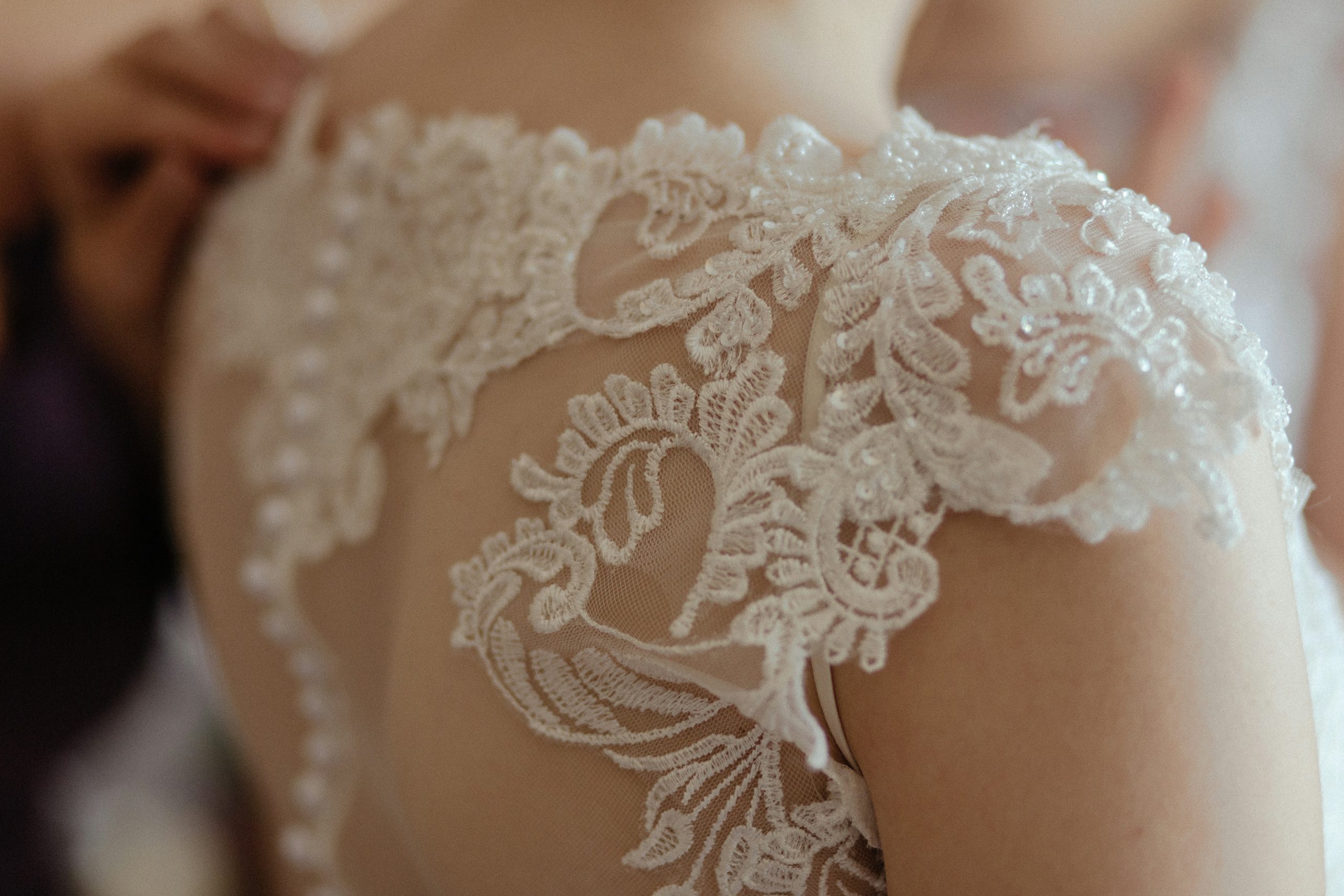
You’ve found the dress! That mix of excitement, happiness, and pure relief… It’s hard to beat.
But if you thought saying yes meant taking it home that day, well… that’s not usually the case. Most wedding dresses need to be ordered, and once they arrive, they almost always need alterations.
If you’ve never been through this before, the timeline can feel like a mystery. People may casually throw out phrases like “final fitting” or “bustle appointment” as if they should be common knowledge. Don’t worry, it’s not. To help decrease any (unnecessary) stress, let’s make things a little less confusing.
Alterations tend to be a process. This guide will help break down the process, provide a sample timeline, and make sure you know what to expect and what to be on the lookout for.
Why wedding dress alterations take longer than people expect
A wedding dress is complicated. Bridal gowns are often built with layers, boning, lace, beading, structure, and delicate fabrics that require a lot more precision than regular clothing. Even small changes can take time because one adjustment often affects something else. Raise the straps, and now the bust sits differently. Take in the waist, and now the hips need to be checked. Hem the dress, and suddenly your bustle placement matters too.
This is also a dynamic process; for many people, their bodies may be shifting slightly in the months leading up to the wedding. This can be due to stress, workouts, travel, hormones, or a change in health routines. And bridal alterations are focused on making sure the dress fits well on you at the time of your wedding, which means timing plays a big part in all this.
When should you start wedding dress alterations?
The short answer? Ideally, about 8 to 12 weeks before your wedding. This gives your seamstress enough time to make the changes, without starting so early that the fit is off by the time your wedding day rolls around.
That said, there are a few exceptions. If your gown needs bigger structural changes, you may want to start a little earlier. Or if you’re getting married during peak wedding season, it’s smart to book sooner since alteration appointments can fill up fast.
And if your dress arrives later than expected, don’t panic! And call your seamstress right away. The same goes if you’re pregnant, postpartum, or expecting your body to change before the wedding, since your fitting timeline may need to be a bit more customized.
The biggest mistake? Assuming alterations are something you “figure out later.” Your calendar and your tailors will fill up quickly, especially in spring and fall. So, even if your first fitting isn’t for a while, it’s smart to book your seamstress soon after your dress comes in.
The alteration timeline, broken down
Here’s what the process typically looks like from start to finish.
Book your alteration appointments: As soon as your dress arrives
The moment your dress arrives at the bridal salon or is delivered to you, it’s a good idea to start planning alterations if you haven’t already.
You do not need to start fittings right away, but you do want to secure your spot with a bridal tailor or seamstress. Good bridal alteration specialists get booked out, and this is one of those wedding tasks that becomes way more stressful when it’s left floating.
Before your first fitting, start to gather things you’ll need, including:
- Wedding shoes
- Undergarments or shapewear
- Any bra or cups you plan to wear
- Accessories that may affect the fit, like sleeves or overskirts
These don’t need to be finalized, but the more of an idea you have, the more your alterations can be individualized. If you’re not sure what else to bring, just ask your seamstress or tailor, and they’ll let you know.
First fitting: 8 to 10 weeks before the wedding
This is usually your main alterations appointment. You’ll try on your dress (yes!) while your seamstress pins it and walks through what needs to be adjusted.
This is also your chance to share what you’re envisioning, even if you’re not totally sure how to describe it yet. As you talk it through, you’ll hear things like, “We’ll take in the bodice,” “the hem needs to come up,” or “we can add the bustle here.”
Since this is the first fitting, the dress isn’t supposed to fit perfectly yet. It may feel too long, too loose, or a little awkward in places. That’s completely normal. Try to see it as the starting point of shaping the dress to you, not the finished product.
At this stage, you’re getting a preview of what it will become. It’s still very much a work in progress.
Common alterations done after the first fitting
This will include: hem length, bust fit, waist and hip fit, strap length, sleeve adjustments, bustle creation, adding bra cups, and tightening or reshaping the bodice.
More significant changes, like changing the neckline, adding sleeves, lowering the back, or completely reshaping the silhouette, may also be possible, but those should be discussed early.
Second fitting: 4 to 6 weeks before the wedding
At the second fitting, your dress should already look much closer to what you imagined. Your seamstress will have completed the first round of work, and now you’re really checking the fit.
This is the time to think about:
- Can I sit comfortably?
- Can I raise your arms?
- Can I walk naturally?
- Does the bust feel secure?
- Is anything digging, slipping, or pulling?
A dress can look gorgeous while standing still, but you won’t be still on your wedding day. Move and do all the things you’ll be doing that day (often for hours), to make sure it feels comfortable and stays put.
Final fitting: 2 to 3 weeks before the wedding
This is usually your last big check-in before taking the dress home. By this point, the dress should fit very close to perfectly. Your seamstress may make a few tiny final tweaks, but this appointment is often about confirming everything is ready.
You’ll also usually learn practical wedding-day things like:
- How to bustle the dress
- How to zip or button it correctly
- How to put on any detachable pieces
- What to do if something shifts during the day
If your gown has a train and bustle, bring the person most likely to help you on the wedding day. Or consider taking a video so you can share it with the person; don’t assume you’ll remember how the bustle works under pressure. You probably won’t.
Pickup and final prep: The week of the wedding
Most brides pick up the gown in the final week or two before the wedding.
Once you bring your dress home, keep it somewhere safe and clean, and leave it in the garment bag unless you really need to take it out. If your seamstress or salon gives you specific instructions for hanging it, follow those too. And as tempting as it is to keep trying it on “just to see,” it’s best to resist. From this point on, your main job is simply to protect it from anything that could go sideways, including pets, snacks, self-tanner, and any well-meaning but chaotic relatives.
If it needs steaming, ask your seamstress or bridal salon for instructions. Some dresses travel well, and some wrinkle if you even look at them wrong.
This is also a good time to make sure your emergency kit includes basics like:
- Fashion tape
- Safety pins
- A small sewing kit
- Stain remover pen
- Extra bustle ties or thread, if applicable
You probably won’t need all of it, but it’s nice to know your dress is not one tiny hook away from becoming a crisis.
How many dress fittings do you actually need?
Most brides need 2 to 3 fittings.
That’s the standard.
Here’s the rough breakdown:
- 2 fittings if your dress needs more basic changes
- 3 fittings if your dress needs more tailoring or detail work
- 4+ fittings if you’re making major custom changes or your timeline/body changes require closer monitoring
A lot of brides assume needing multiple fittings means something went wrong. Usually, it just means your seamstress is doing their job well.
A really good alteration process is not about rushing to “done.” It’s about getting the fit right gradually.
What if you’re trying to lose weight before the wedding?
This is where things can get emotionally loaded very quickly, so let’s be honest about it.
A lot of brides tell themselves they’ll “definitely be smaller” by the wedding, then try to time alterations around a hoped-for future body instead of their current one. That usually creates more stress, not less.
The better approach is this: alter the dress to the body you actually have during the fitting process, while being transparent with your seamstress if you’re expecting any changes.
Bridal fittings tend to go best when you’re not treating your body like a moving target.
This is not just a tailoring issue. It’s also a nervous system issue. The more pressure you put on your body to become “wedding ready,” the harder it often becomes to feel grounded, present, and good in your dress. And ironically, the thing most people remember when a bride looks incredible is not whether the waist was one inch smaller. It’s whether she looked comfortable enough to actually enjoy herself.
A well-fitted dress almost always photographs better than a highly aspirational one.
What to bring to every wedding dress fitting
If you want your alterations to go smoothly, consistency matters. Bring these every time if possible:
- Your wedding shoes
- The exact shapewear or undergarments you plan to wear
- Your bra, if you’re wearing one
- Any accessories that affect the neckline or fit
- A trusted person if you want a second opinion (but not an entire committee)
Bringing the same key items each time helps your seamstress make the most accurate adjustments, which means fewer surprises on your wedding day.
Wedding dress alteration mistakes to avoid
Wedding planning is stressful enough, so let’s make the alteration process not add to it. A few common mistakes are worth avoiding.
Waiting too long to book
This is the big one. Even if your first fitting is still weeks away, book your seamstress early.
Changing your shoes late in the game
If your hem is altered for one heel height and then you switch shoes, it can throw everything off.
Bringing different undergarments every time
The fit of your dress can change depending on what’s underneath. Well-fitted shapewear or undergarments can make a big difference, so it’s important to wear the exact ones you plan to use on the wedding day.
Staying quiet about discomfort
If the dress pinches, slips, pokes, or just feels off, say something. Trying not to seem high-maintenance can backfire fast. You’ll be wearing this dress for hours, and your seamstress can only fix what they know about.
Assuming alterations are minor and cheap
Alterations are often more involved and more expensive than people expect. It’s best to budget for them early instead of treating them like a surprise add-on.
A little planning and clear communication can go a long way, and can make the whole alteration process feel much smoother from start to finish.
How to know when your dress actually fits right
This is the part brides tend to overthink.
A dress fits right when you feel secure in it, can move comfortably, and isn’t spending the whole time adjusting or second-guessing it. Overall, you should still feel like yourself, just a little more elevated.
A lot of brides think the goal is for the dress to feel super tight or overly “snatched,” but there’s a difference between structure and suffering. You should feel supported, not trapped.
And honestly, a good fit often feels less dramatic than people expect. It’s not always some huge movie moment. Sometimes it’s just that quiet feeling of, This is me, but feeling my best. And that’s usually how you know it’s right.
Final thoughts on the wedding dress alteration timeline
If you’ve been wondering when to start wedding dress alterations, the concrete answer is around 8 to 12 weeks before the wedding, but either way, just give yourself enough time to have a few fittings with time for the seamstress to complete the work without rush.
Remember, your alteration timeline is to achieve a gown that fits your body, your movement, and your actual wedding day experience. Because yes, you want the dress to photograph beautifully, but you also want to be able to breathe, hug people, sit through dinner, and dance without silently negotiating with your zipper all night or tugging up your bust.
So if alterations have felt like one of those vague bridal tasks you’re supposed to magically understand, now you know: it’s just a process. A very normal, very fixable, very manageable process.
And when it’s done well, your dress doesn’t just look better. It feels like it was actually made for you.

Dr. Vivian Oberling is a licensed clinical psychologist with degrees from UCLA, Harvard, and Stanford. In her private telehealth practice, she works with adults navigating anxiety, identity shifts, and relationship dynamics—whether they’re dating, partnered, or parenting. She also provides executive coaching and behavioral health advisory support to tech startups and legal tools reshaping how we think about love, marriage, and psychological safety. Dr. Oberling combines 10+ years of clinical expertise with modern, real-world insight to help people move through uncertainty with clarity and connection.
0 Comments